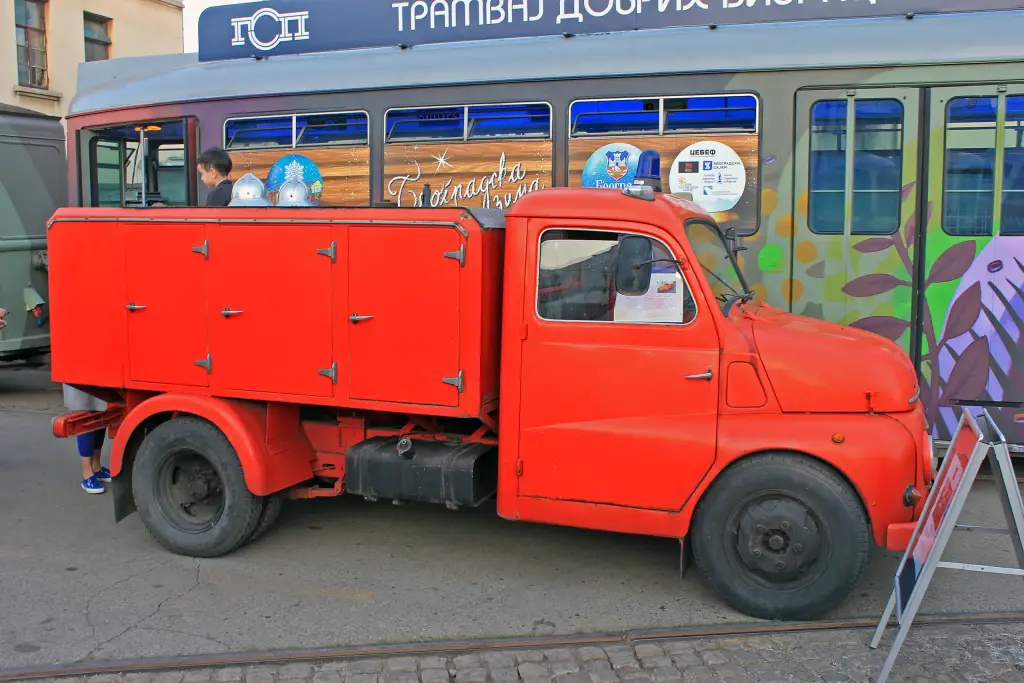
The Zastava 615 was a light utility truck built in Kragujevac on the basis of the Fiat 615. Its best-known derivative, the Zastava 620B, was a crew-cab version with six seats and a flatbed. Both were produced under Fiat licence from 1961 and stayed on the lines until 1976, and both earned a modest cult status in the former Yugoslavia.
Zastava 615 at a glance
| Maker | Zastava, Kragujevac |
|---|---|
| Licence | Fiat 615 |
| Production | from 1961; truck line until 1976 |
| Engine | Fiat 1.9-litre petrol |
| Seats | 2–3 in the pick-up; 6 in two rows in the crew cab |
| Doors | 3 or 4, front doors rear-hinged |
| Payload | 1,200 kg; up to 2 t in some variants |
| Top speed | 89 km/h |
| Kerb weight | 1,762 kg |
| Maximum weight | 3,365 kg |
| Body types | pick-up, crew cab, bakery, meat carrier, ambulance |
| Colour | yellow, with red-and-white striped bumpers |
Based on two short Wikipedia pages: the English one covers the 620B, the Serbian one adds the full list of body variants.
History of the Zastava 615
Fiat 615 in Yugoslavia
Zastava began making the Fiat 615 light truck under licence in 1961, the same period in which the company was building its first Fiat passenger cars. The truck kept the model’s distinctive feature of rear-hinged, “suicide” front doors, a layout that dated from the 1950s and gave the cab its unusual step-in access. Under the bonnet sat Fiat’s 1.9-litre petrol engine, and the chassis was designed for urban goods delivery rather than long-distance work.
The 620B crew cab
The Zastava 620B was the double-cab version, developed from the same Fiat 615 base. It seated six people in two rows, had three or four doors and carried a flatbed behind the cab, which made it suitable for utility crews and public services. It was fitted with a yellow rotating light and a mobile reflector for night work, was painted yellow as the regulations of the time required, and had its front bumper and the rear side panels finished in red-and-white diagonal stripes. Payload was 1,200 kg in the standard version, while some variants were rated at up to two tonnes, which moved them into the heavier C category.
The cab was simple but well suited to its job: windows in the front doors with manual winders, vinyl-covered seats for two or three people and the gear lever mounted under the steering wheel. Buyers could order a metal body instead of the flatbed, and specialised bodies followed. The bakery version carried 1,188 kg of bread in 66 aluminium baskets plus a further 45 kg of special bread, with an electrically ventilated body. The meat carrier was built entirely in aluminium around 30 meat hooks and wide rear doors that took pieces of up to 40 kg. The ambulance carried two stretchers, a partition with a sliding window between the crew and the patients, a heater, a blue rotating light with a siren, fog lamps and a red cross sign.
Long life and a television career
Sales were good until 1969, when the factory began retooling and introducing new technology, but production of the 620B continued until 1976 and some special bodies could be ordered into the early 1980s. Zastava 615 and 620 trucks became something of a cult in the countries of the former Yugoslavia, helped by a prominent role in the television series Kamiondžije (Truckers), which fixed the little yellow truck in the public memory.
Design and features
- Fiat engineering: the 615 cab and chassis came straight from Fiat’s light truck programme.
- Crew cab: six seats in two rows made the 620B a practical vehicle for work gangs and services.
- Purpose-built bodies: factory bakery, meat and ambulance versions on the same chassis.
- Simple maintenance: a 1.9-litre petrol engine and a cab laid out for easy repair.
Zastava 615 versions
- Pick-up: single cab with two or three seats and a wooden, drop-side load bed.
- 620B crew cab: six seats, flatbed and the yellow rotating beacon.
- Bakery van: metal body with racks for 66 bread baskets.
- Meat carrier: all-aluminium body with 30 hooks.
- Ambulance: two stretchers, partition, heater and blue light.
The truck line shared the Kragujevac factory with the Zastava 750 and the Zastava 1300. More vehicles are in the Zastava collection.
Sources
- Zastava 620B, English Wikipedia: origin, engine, equipment, production dates
- Застава 620Б, Serbian Wikipedia: variants, weights, performance, popularity