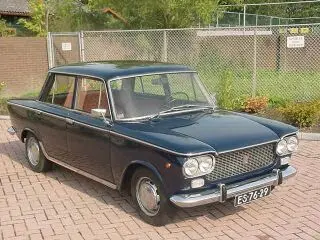
The Zastava 1300 and Zastava 1500 were Yugoslav versions of the Fiat 1300/1500 saloon, assembled in Kragujevac from 1961 and built by Zastava alone after Fiat stopped making the model in 1967. Production ran to December 1979 and came to 201,160 cars, which makes them the most numerous of the larger Zastavas.
Zastava 1300 at a glance
| Maker | Zastava, Kragujevac (Fiat licence) |
|---|---|
| Production | 1961 – December 1979 |
| Based on | Fiat 1300 and 1500 |
| Engines | 1,295 cc 60 hp; 1,481 cc 73 hp |
| Drive | front engine, rear-wheel drive |
| Gearbox | four-speed manual with column change |
| Brakes | disc front, later all-round discs |
| Top speed | about 140 km/h (1300), about 155 km/h (1500) |
| Bodies | four-door saloon; Zastava estate of its own design |
| Nickname | Tristać |
| Late versions | DeLuxe, 1300E |
| Built | 201,160 |
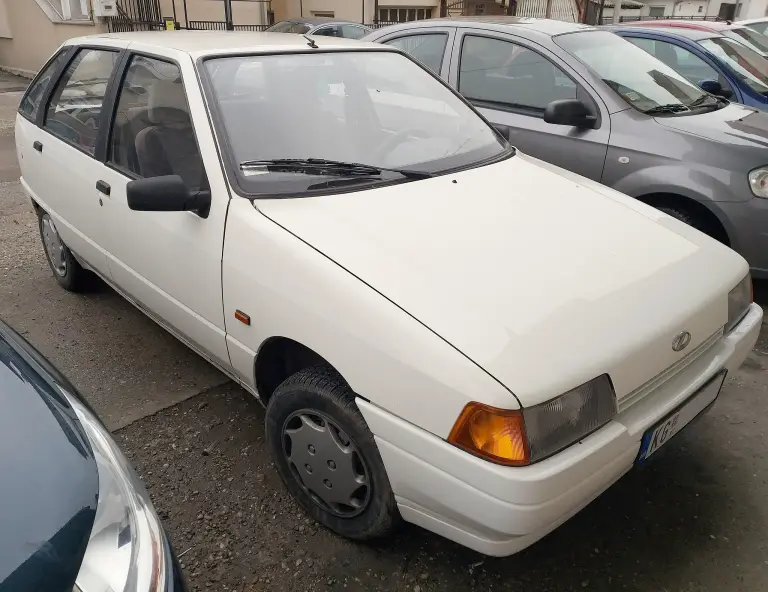
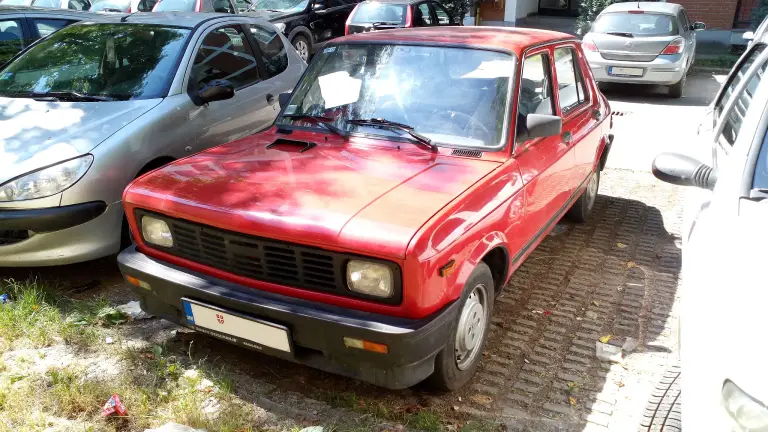
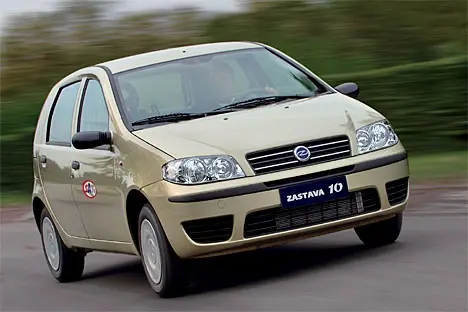
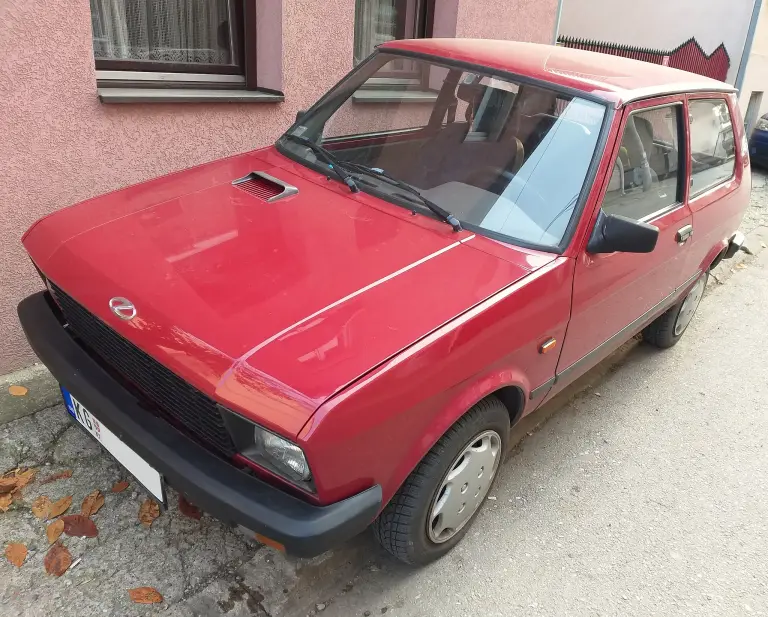
Zastava built the car under Fiat licence, so the English article is about the Fiat original. No free photographs of a Zastava-built 1300 were found on Wikimedia Commons; the candidates were Fiat, Polski Fiat and SEAT cars, so this page uses the photograph already attached to the record.
History of the Zastava 1300
Fiat licence, Yugoslav assembly
Fiat launched the 1300 and 1500 in April 1961 as a family of front-engined, rear-driven saloons that replaced the Fiat 1400 and the 1200 coupé, spider and cabriolet. The two were essentially identical apart from engine size, and both used a four-speed manual gearbox with the lever on the steering column. Front disc brakes were an innovation for the class, and the bodies were offered as saloons, estates, coupés and cabriolets; the coupés and convertibles were later replaced by the 124 line. Zastava, already cooperating closely with Fiat, assembled the 1300 and 1500 in Kragujevac and sold them under its own name.
The 1300 used a 1,295 cc overhead-valve four-cylinder engine of 60 hp at 5,000 rpm, the 1500 a 1,481 cc version of the same design of 73 hp at 5,400 rpm. Both had alloy cylinder heads with twin rocker shafts, and both engines were derived from the six-cylinder units of the Fiat 1800 and 2100 by removing two cylinders. The wheelbase was 2,425 mm; from 1964 the Fiat 1500 was also available as the longer 1500 C with a 2,505 mm wheelbase, more power and servo brakes.
Built by Zastava alone
When Fiat ended production of the 1300 in 1967, Zastava carried on by itself, which turned a licensed assembly job into a Zastava model in its own right. Better equipment was added during the 1970s, and the range was sold with DeLuxe and 1300E names. The Zastava saloon was the same as the Fiat, but the estate version was designed differently in Yugoslavia. The car became the upmarket choice in the country: with all-round disc brakes, rear-wheel drive and up to 72 horsepower, it could reach about 155 km/h, which made it one of the faster cars in Yugoslavia and a favourite of the police as an interceptor. It was also famously thirsty.
The Yugoslav public knew it as the Tristać, from trista, the Serbian word for 300, a play on the 1300 badge. Total production for Zastava came to 201,160 cars built between 1961 and December 1979, when the last one left the line. The 1300 was also assembled in Bogotá, Colombia, by Leonidas Lara (C.C.A.) from 1969, alongside the Zastava 750. Its floorpan and layout fed into the Fiat 124, which replaced it in the Italian range.
Design and features
- Disc brakes: front discs at a time when most rivals still used drums, and later all-round discs on the Zastava-built cars.
- Modern engine family: the 1.3 and 1.5 fours were modular versions of Fiat’s six-cylinder design.
- Comfortable interior: leather-trimmed seats, a carefully finished cabin and a semi-bucket steering wheel.
- Own estate body: the Yugoslav estate did not follow Fiat’s Familiare design.
Zastava 1300 versions
- Zastava 1300: 1,295 cc, 60 hp, the standard saloon.
- Zastava 1500: 1,481 cc, 73 hp, the faster version.
- DeLuxe: better-equipped cars of the 1970s.
- 1300E: the late top specification before production ended in 1979.
The 1300 was the largest Zastava of its day, sitting above the Zastava 750 and later the Zastava Skala. More cars are in the Zastava collection.
Video: Zastava 1300/1500 Start up/Palenje!
Video by Nick S on YouTube.
Sources
- Fiat 1300 and 1500, English Wikipedia: engines, dimensions, Zastava production and numbers
- Застава 1300, Serbian Wikipedia: production dates, performance, police use, nickname
- Fiat 1300, Italian Wikipedia: design, equipment, 1500 C