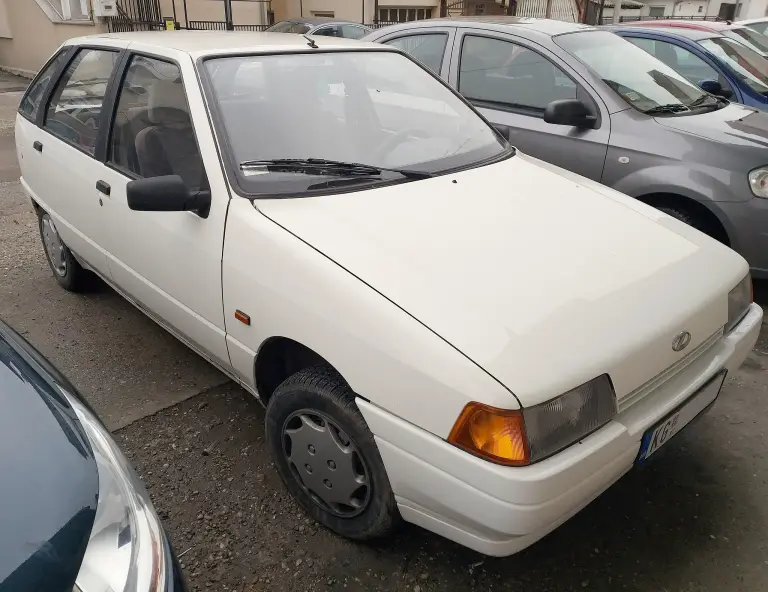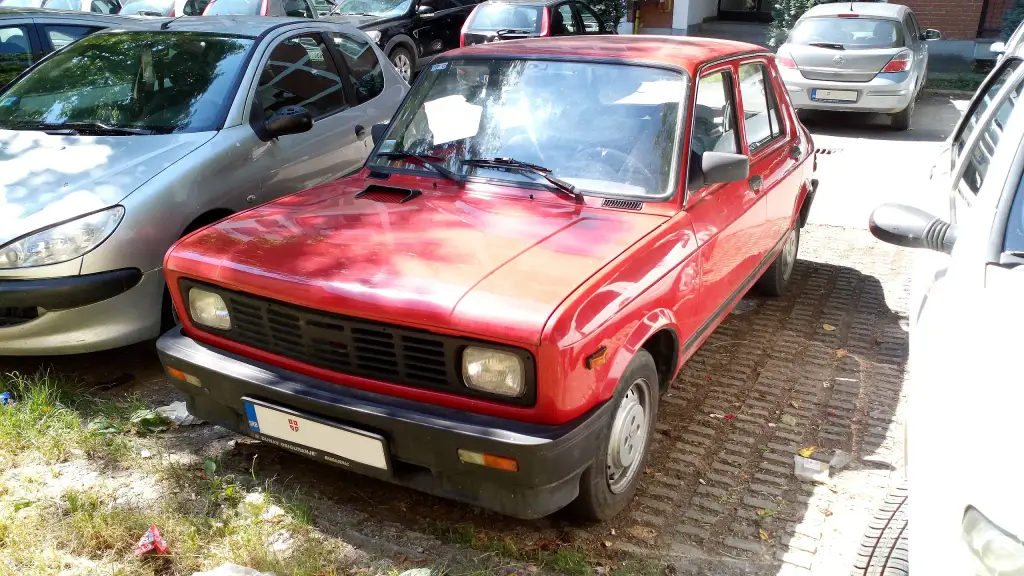
The Zastava Skala is the family name for the cars Zastava built on the Fiat 128 from 1971 to 2008. The first of them, the Zastava 101, was one of Europe’s earliest mass-produced hatchbacks; it later became the Skala, and in 37 years the family reached 1,273,532 cars, including the four-door Zastava 128.
Zastava Skala at a glance
| Also known as | Zastava 101, Zastava 1100, 311/313/511/513, Yugo Skala |
|---|---|
| Maker | Zastava, Kragujevac |
| Production | 1971 – 20 November 2008 |
| Based on | Fiat 128 |
| Bodies | three- and five-door liftback; Zastava 128 four-door saloon |
| Engine | 1,116 cc, 55 hp |
| Drive | front-wheel drive, transverse engine |
| Boot | 325 litres, 1,010 with the rear seat folded |
| Nicknames | Stojadin, Stoenka |
| Best year | 1979, 88,918 cars |
| Built | 1,273,532, including 228,274 Zastava 128 |
| Price in 2008 | just under €4,000 |
The family also included the Zastava Zeta and its turbo version, which were sold alongside the Skala but are not described in the sources used here.
History of the Zastava Skala
An unwanted Fiat hatchback
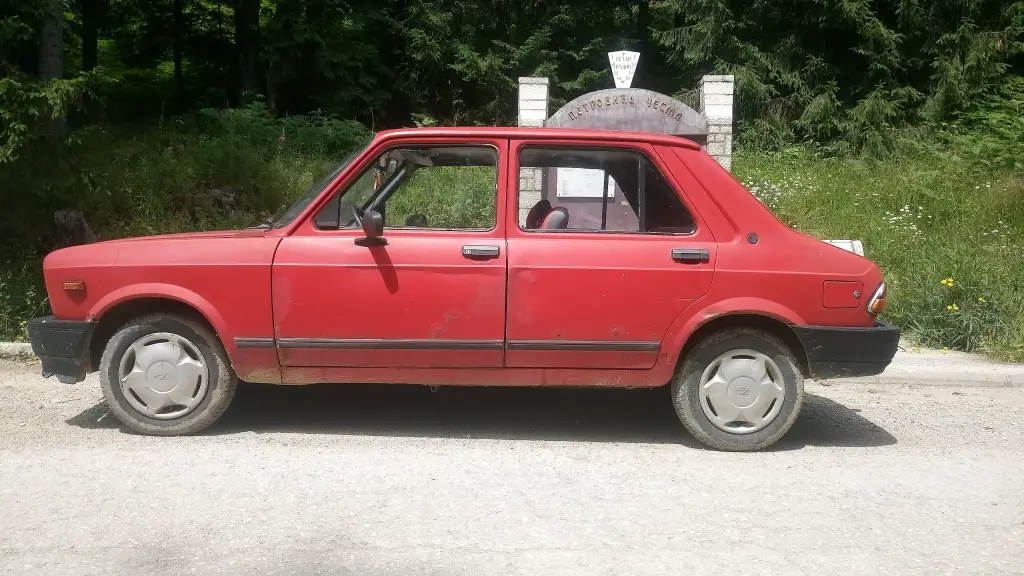
At the end of the 1960s Zastava wanted a family car between the small 750 and the larger 1300, with a versatile body and front-wheel drive. Fiat offered licensed production of the 124, which Zastava refused because it did not want another straight licence deal; the USSR took the 124 instead, and it became the VAZ-2101. Fiat had meanwhile developed several hatchback variants of its new 128, designed by Dante Giacosa and Paolo Boano, and had dropped them because hatchbacks were not yet the fashion in Italy. One of them, the five-door prototype X1B1Z5, was offered to Zastava and became the Zastava 101.
The 101 first appeared on 15 October 1971, sold internationally as the Zastava 1100 or under the numbers 311, 313, 511 and 513. Arriving three years before Fiat’s own 128 3P and before the Volkswagen Golf, it was among the first hatchbacks with the engine and gearbox mounted side by side, and its independent rear suspension coped well with rough Eastern European roads. The 1,116 cc engine designed by Aurelio Lampredi, with a compression ratio of 8.8:1 and Weber, Holley, IPM or Solex carburettors, was happiest at high revs.
Stojadin
At home the car was nicknamed Stojadin, from its similarity to “sto jedan”, Serbian for 101, and in Slovenia Stoenka. It became the national car of Yugoslavia and its best-selling Zastava. In 1973 a 101 won its class in the 17th Tour d’Europe rally, and in February 1975 Zastava sent five standard cars and eleven crew members from Kragujevac to the summit of Kilimanjaro, a 45-day expedition after which the car was marketed as Vozilo uspeha, the vehicle of success. In 1979, 88,918 cars left the lines, the best year, and two years later the 101 was named Yugoslavia’s car of the decade.
In Britain the 311/313/511/513 was sold under the slogan Go New! Go Yugo! as the cheapest new car on the market: in 1984 the entry-level model cost less than £2,400, about half the price of a Ford Escort. Hard PVC coating on the underside, sills and valances was used to fight corrosion from road salt. The millionth car was built in 1991.
Skala and the end
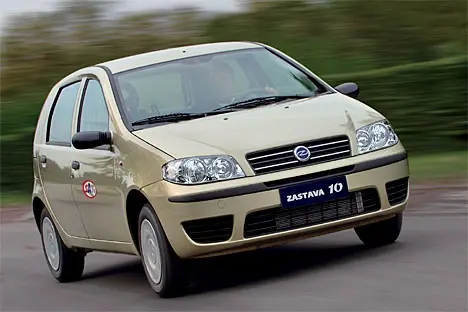
The car was renamed Skala in 1988 and kept that name to the end. In its final years it was sold in a single trim, the 55 hp 1.1-litre Skala 55 with five doors, at just under 4,000 euros in 2008, undercutting the Koral; Zastava estimated it was then the world’s second most affordable car. A revised Skala 55 shown at the 2008 Belgrade show had an aluminium radiator, wheel bearings and CV joints from the Zastava 10, a new instrument cluster with tachometer, softer seats and, at last, a single key for doors and ignition. A natural-gas version with a factory Lovato 40-litre tank was optional. Production ended on 20 November 2008 with the 1,045,258th Zastava 101; with the 228,274 Zastava 128 saloons, the family total came to 1,273,532.
Design and features
- Early hatchback: a five-door body three years before the Volkswagen Golf, with a large tailgate and folding rear seat.
- Fiat 128 chassis: front-wheel drive, transverse engine and independent rear suspension.
- Lampredi engine: a rev-happy 1,116 cc overhead-cam unit with a range of carburettors.
- Rust protection: PVC coating on the underside, sills and valances for export markets.
- Long service life: built for 37 years with only detail changes.
Zastava Skala versions
- Zastava 101: the original three- and five-door liftback of 1971.
- Zastava 1100 and 311/313/511/513: export names for the same car.
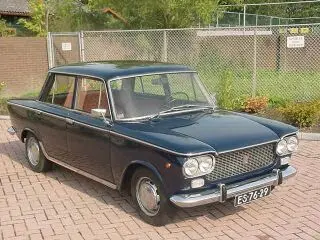
- Zastava 128: four-door saloon on the same base, built from 1979 to 2003.
- Skala 55: the final single-trim model with the 1.1-litre engine.
- Skala 55 natural gas: factory Lovato conversion offered in the last years.
The Skala was the family car between the Zastava 750 and the Yugo Koral, and it shared its base with the larger Florida project. More cars are in the Zastava collection.
Video: zastava skala 55
Video by The Cleaner Garage on YouTube.
Sources
- Zastava Skala, English Wikipedia: history, rally, export markets, 2008 changes, totals
- Застава 101, Serbian Wikipedia: origins, production figures, Polish assembly