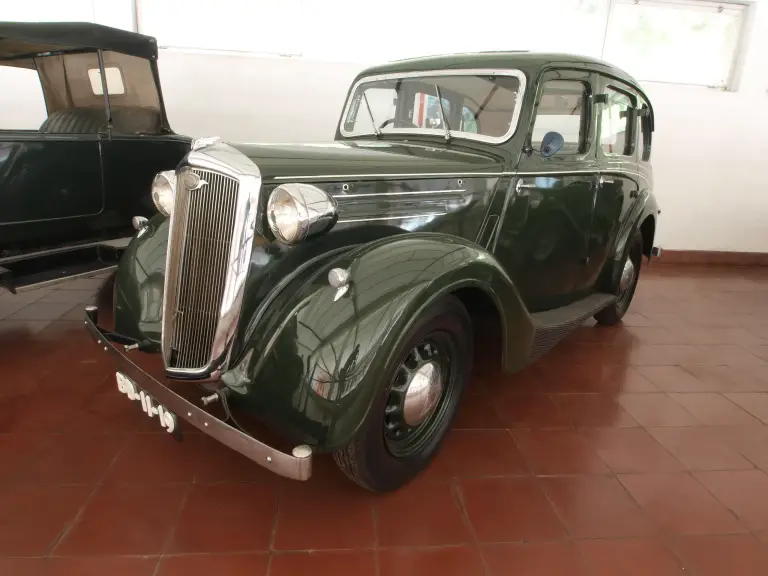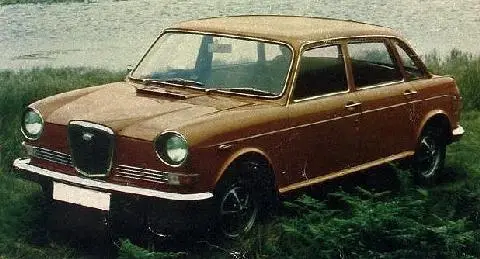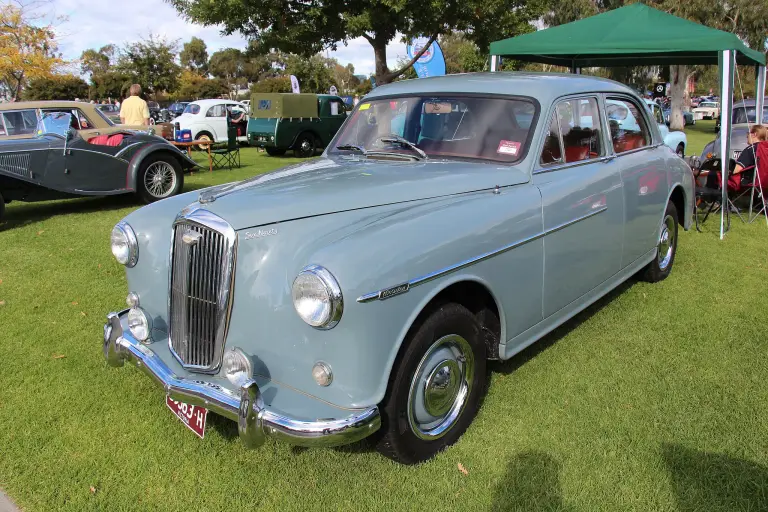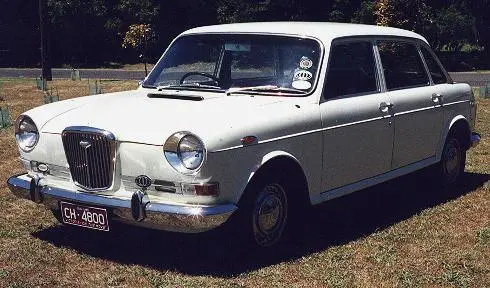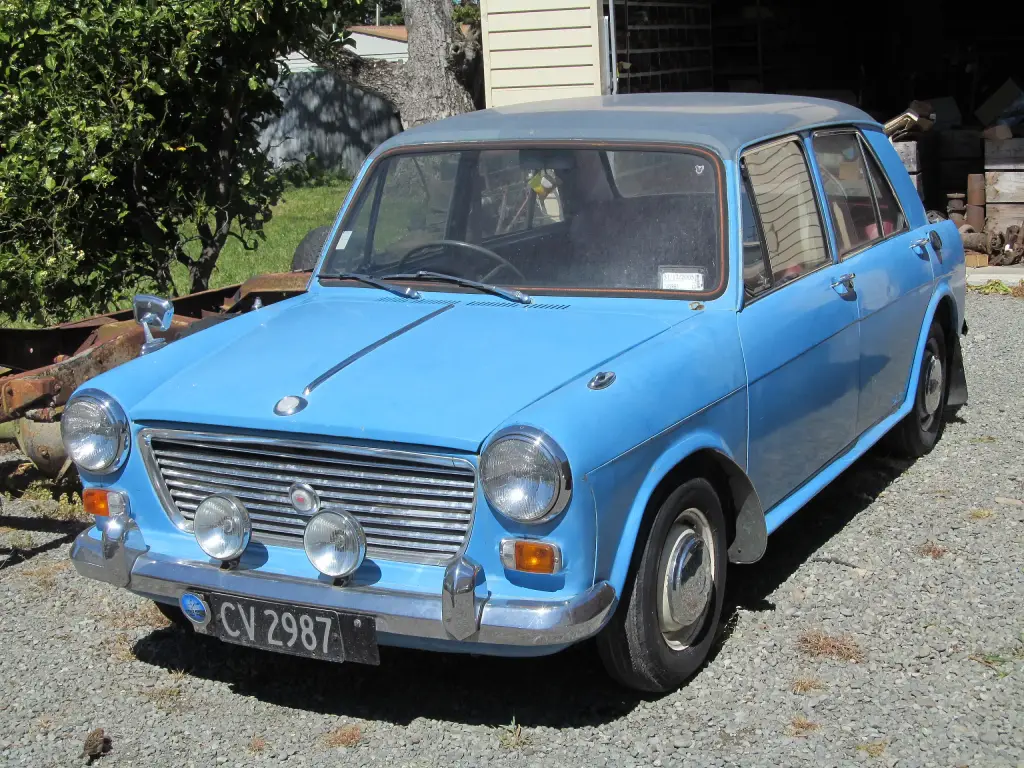
The Wolseley 1100 was the Wolseley version of BMC’s ADO16 family car, added to the range in 1965. It shared its body, front-wheel-drive layout and Hydrolastic suspension with the Austin and Morris 1100s, but carried the upright Wolseley grille with its illuminated badge and a more luxurious interior.
Wolseley 1100 at a glance
| Maker | British Motor Corporation, later British Leyland |
|---|---|
| Wolseley version | from 1965 |
| Range | ADO16, 1962–1974 |
| Bodies | four-door saloon; three-door estate from 1966 |
| Engine | BMC A-Series four, transversely mounted |
| Layout | front-wheel drive |
| Suspension | Hydrolastic interconnected fluid suspension |
| Brakes | front discs with swinging calipers; rear drums |
| Design | Alec Issigonis, styled by Pininfarina |
| Assembly | Longbridge and Cowley; also Belgium, Italy, Spain, Yugoslavia, New Zealand and Malta |
| Total ADO16 production | about 2.3 million, 1962–1974 |
| Wolseley names | 1100, 1275, 1300, 11/55 and Wasp |
The English Wikipedia article covers the whole ADO16 range; the Wolseley 1100 is named only as one of its badge-engineered versions, so most engineering and production facts here describe the range as a whole. Based on one source.
History of the Wolseley 1100
One range, many badges
The ADO16 was launched as the Morris 1100 on 15 August 1962. Rebodied versions for the other BMC marques followed quickly: the twin-carburettor MG 1100 at the end of September 1962, the Austin 1100 in August 1963, the Vanden Plas Princess 1100 in October 1963, and finally the Wolseley 1100 and the Riley Kestrel in 1965. Under the Wolseley badge the range was sold as the 1100, the 1275 and the 1300, and the name 11/55 and Wasp were also used. Austin versions were built at Longbridge and the Morris and MG cars at Cowley; cars were assembled as well in Belgium, Italy, Spain by Authi, in Yugoslavia by IMV, and from CKD kits in New Zealand and Malta.
Engineering
The car was designed by Sir Alec Issigonis as a larger and more sophisticated follow-up to the Mini, and Pininfarina, which had already worked with BMC on the Austin A40 Farina, was commissioned to style it. Like the Mini, the ADO16 was built around the BMC A-Series engine, mounted transversely and driving the front wheels. It had front disc brakes with single-piston swinging calipers, unusual on mass-produced cars of the early 1960s, and Hydrolastic interconnected fluid suspension designed by Alex Moulton. The cabin was comparable in space with the larger Ford Cortina, and BMC engineer Charles Griffin, who took over development from Issigonis, gave the car high levels of refinement and comfort. The Mark I of 1962–1967 was joined in March 1966 by a three-door estate, the Austin 1100 Countryman and Morris 1100 Traveller, and an Automotive Products four-speed automatic became available as an option.
Britain’s best seller
The ADO16 was Britain’s best-selling car from 1963 to 1966 and again from 1968 to 1971, holding around 15 per cent of the new car market at its peak before the Ford Cortina finally outsold it in 1972. It was Wheels magazine’s Car of the Year in 1964. Production ran for twelve years and reached about 2.3 million cars between 1962 and 1974, more than half of them sold in the UK; Autocar reported in October 1973 that roughly 2,365,420 had been built. British Leyland phased the 1100 and 1300 out between 1971 and 1974 in favour of the Morris Marina and the Austin Allegro, although the Austin and Vanden Plas versions stayed in production in Britain until June 1974.
Design and features
- Wolseley identity: the upright grille with the illuminated badge marked the car out from the Austin and Morris versions.
- Hydrolastic suspension: interconnected fluid displacers gave a smoother ride than conventional springs.
- Front disc brakes: standard equipment at a time when most small family cars still used drums all round.
- Room for its size: interior space close to that of the larger Ford Cortina.
- Badge-engineered range: the same engineering served Austin, Morris, MG, Riley and Vanden Plas as well as Wolseley.
Wolseley 1100 versions
- 1100 (1965): the standard Wolseley version of the ADO16 saloon.
- 1275 and 1300: the larger-engined Wolseley variants of the same range.
- 11/55 and Wasp: further Wolseley names used on ADO16-based cars.
- Countryman and Traveller estates: three-door estate bodies added in 1966, badged Austin and Morris.
The Wolseley 15/60 was the marque’s larger Farina saloon of the same period, and the Wolseley Six succeeded it in the 1970s. More cars are in the Wolseley collection.
Video: Wolseley 1100 mk 2 1969
Video on YouTube.
Sources
- BMC ADO16, English Wikipedia: naming, launch dates, engineering, production