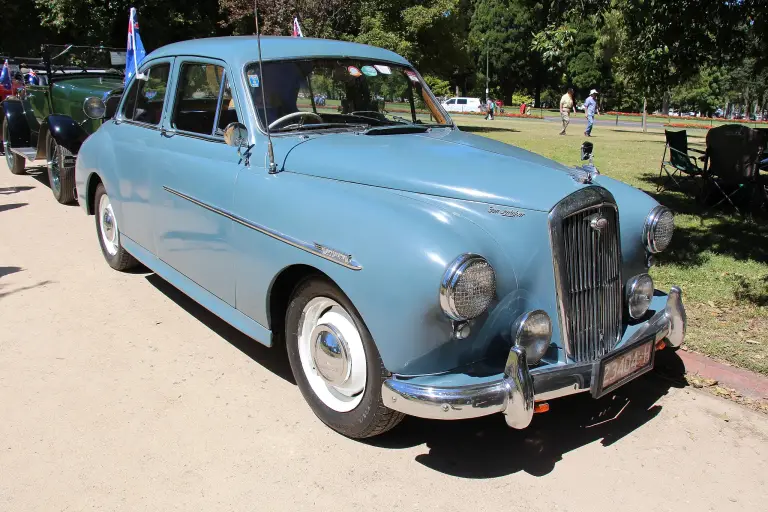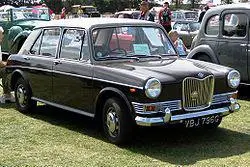
The Wolseley 15/60 was introduced in December 1958 as the first of a family of mid-size cars designed for BMC by Pinin Farina. With leather upholstery, polished wood and the marque’s illuminated grille badge, it was the upmarket, non-sporting version of the range; in 1961 it became the 16/60 with a larger engine, and that car remained in production until April 1971.
Wolseley 15/60 at a glance
| Maker | British Motor Corporation |
|---|---|
| Production | 1958–1961 (15/60); 1961–1971 (16/60) |
| Class | mid-size four-door saloon |
| Design | Pinin Farina |
| Engine | 1,489 cc B-Series four (15/60); 1,622 cc (16/60) |
| Power | 52 hp (15/60); 61 hp (16/60) |
| Carburettor | single SU |
| Transmission | four-speed manual; Borg-Warner 35 automatic optional from 1961 |
| Suspension | independent coil springs front; live axle and semi-elliptic springs rear |
| Brakes | Girling hydraulic drums, 9 in |
| Price, 1959 test | £991 including £331 tax |
| Performance, 1959 test | 76.6 mph; 0–60 mph in 25.6 s; 31.0 mpg |
The article relies on one English Wikipedia page, which covers both the 15/60 and the 16/60. Based on one source.
History of the Wolseley 15/60
The first BMC Farina
The 15/60 was the first of the mid-sized unitary-construction cars styled for BMC by Pinin Farina. Within months the same design appeared as the Riley 4/68, Austin A55 Cambridge Mark II, MG Magnette Mark III and Morris Oxford V. All five used the 1.5-litre B-Series engine, but the Wolseley, like the Austin and Morris, had a single SU carburettor and the lowest output of the group, 52 hp. The chassis was conventional: independent front suspension on coil springs, a live rear axle on semi-elliptic leaf springs, Girling hydraulic drum brakes and cam-and-peg steering. The car was positioned as the luxury non-sporting model of the family.
Equipment and interior
The interior set the Wolseley apart. Leather upholstery covered individual front seats set closely together so that a central passenger could be carried, allowing the car to be advertised as a six-seater despite its floor-mounted gear lever; the handbrake sat between the driver’s seat and the door, and the rear seat had a folding central armrest. Wood veneer was used on the fascia and door cappings, a Smiths heater was standard, and the paint could be single or two-tone. After dark the small illuminated badge on the grille identified the car at a glance, a feature shared with other Wolseleys of the period. The Motor tested one in 1959 and recorded 76.6 mph, 0–60 mph in 25.6 seconds and 31.0 mpg; the test car cost £991 including £331 in taxes.
The 16/60
The 15/60 was replaced by the 16/60 in October 1961. The engine grew from 1,489 cc to 1,622 cc and, with a single carburettor, produced 61 hp; buyers could for the first time order a Borg-Warner 35 automatic, though the four-speed manual still lacked synchromesh on first gear. The chassis was modified for better road holding, and the tail fins were reduced in height with redesigned tail lamps and less prominent bumper overriders. The 1,622 cc Farina models stayed in production until 1971: MG ended in 1968, Austin and Riley in 1969, while the Wolseley and Morris continued to the end. A diesel engine was offered in some markets. The design was also licensed in Argentina, where it was built as the Di Tella 1500, Traveller and Argenta.
Design and features
- Luxury trim: leather seats, wood veneer fascia and door cappings, and a standard Smiths heater.
- Illuminated grille badge: the small lit Wolseley emblem made the car recognisable after dark.
- Six-seat layout: closely set individual front seats allowed three abreast, with a folding rear armrest.
- Automatic option: the 16/60 could be ordered with a Borg-Warner 35 gearbox from 1961.
- Revised 16/60 body: lower tail fins, new tail lamps and cleaner bumpers.
Wolseley 15/60 versions
- 15/60 (1958–1961): the original 1.5-litre car.
- 16/60 (1961–1971): enlarged engine, optional automatic and revised rear styling.
- 16/60 diesel: offered in some export markets.
- Di Tella 1500, Traveller and Argenta: Argentine-built versions of the same design.
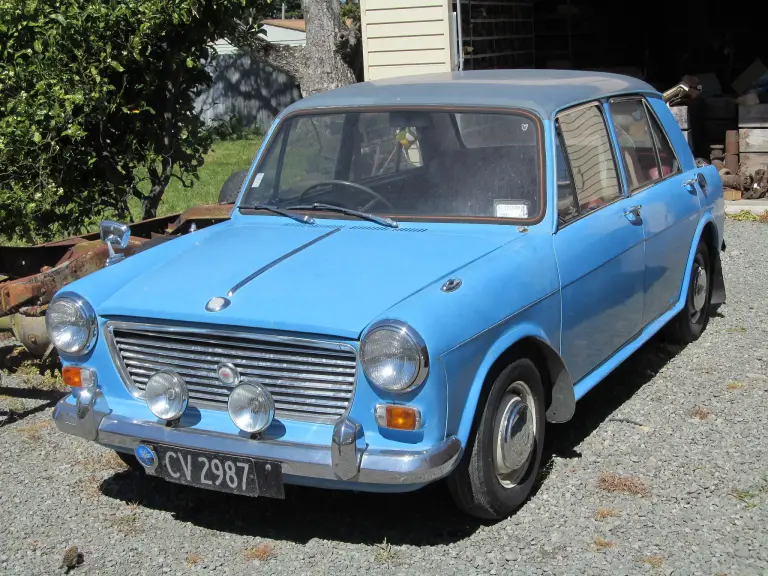
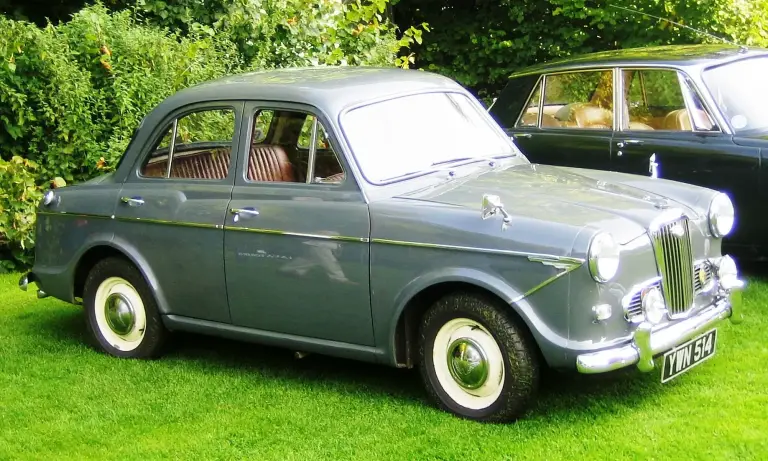
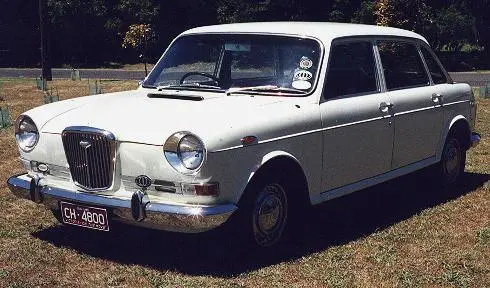
The smaller Wolseley 1500 used Morris Minor underpinnings and was sold alongside the 15/60, while the Wolseley 1100 later took over as the marque’s small family car. More cars are in the Wolseley collection.
Sources
- Wolseley 15/60, English Wikipedia: history, engineering, equipment, performance, 16/60 changes