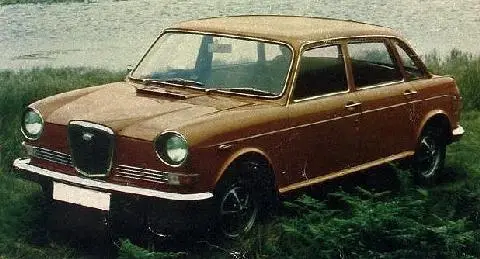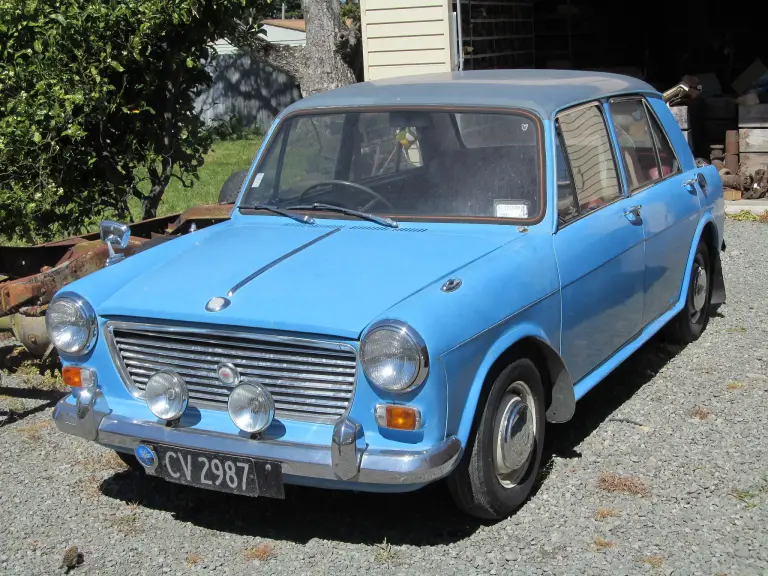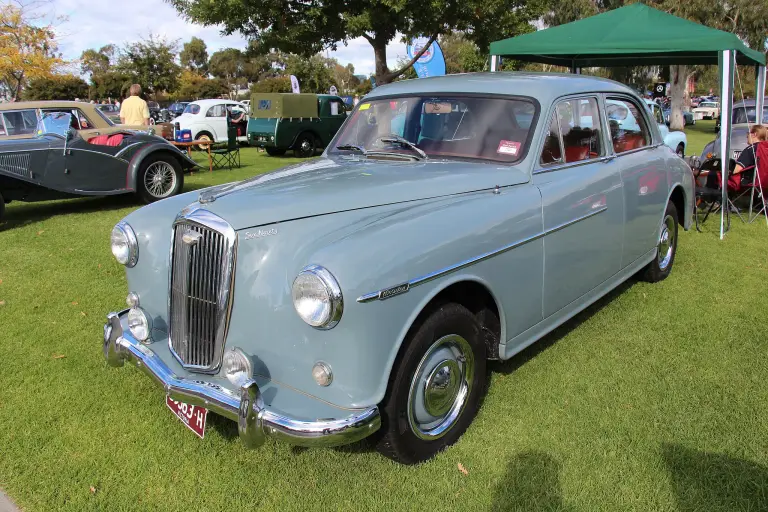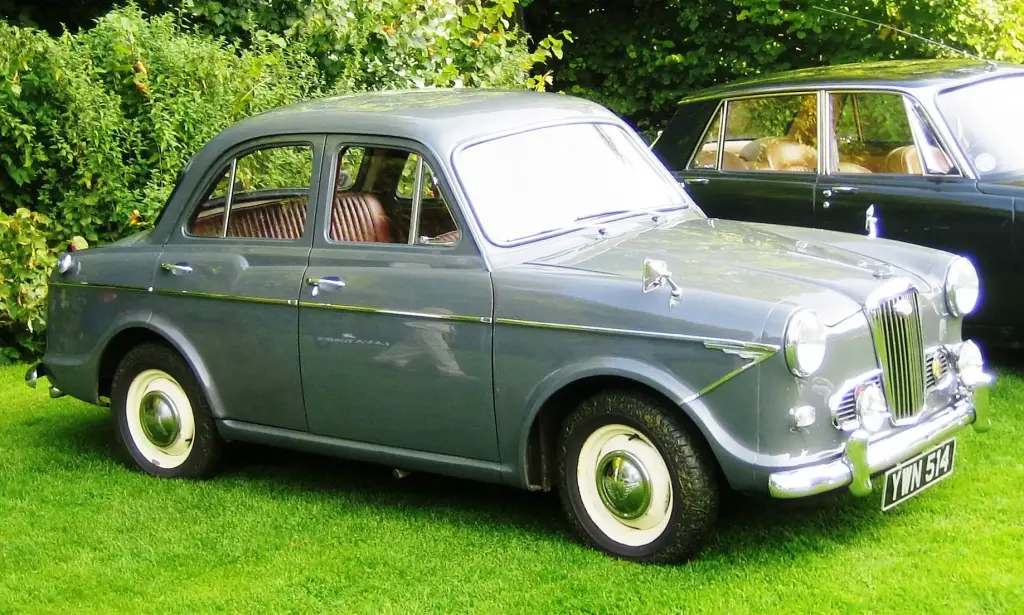
The Wolseley 1500 was introduced in April 1957 as a small sporting saloon built on Morris Minor underpinnings. It used the Minor’s floor pan, suspension and steering with the larger 1,489 cc B-Series engine and the MG Magnette gearbox, and it was sold alongside the closely related, more powerful Riley One-Point-Five.
Wolseley 1500 at a glance
| Maker | British Motor Corporation |
|---|---|
| Production | 1957–1965 |
| Bodies | four-door saloon |
| Engine | 1,489 cc B-Series four; 1,200 cc for the Irish market |
| Power | 50 bhp |
| Carburettor | single 1¼ in SU |
| Gearbox | MG Magnette four-speed |
| Chassis | Morris Minor floor pan, suspension and steering |
| Brakes | Lockheed |
| Price, 1957 test | £758 including £253 tax |
| Performance, 1957 test | 76.7 mph; 0–60 mph in 24.8 s; 36.6 mpg |
| Built | 103,394 Wolseleys, plus 19,568 Rileys |
The English Wikipedia page covers the Riley One-Point-Five and the Wolseley 1500 together; this article uses it for the Wolseley facts only. No free photographs of the Wolseley 1500 were available, so the old record cover is kept. Based on one source.
History of the Wolseley 1500
A Minor with a bigger engine
The Wolseley 1500 and the Riley One-Point-Five were produced from 1957 until 1965 from the same recipe: the Morris Minor’s floor pan, suspension and steering, the 1,489 cc B-Series engine and the MG Magnette gearbox. The two cars were differentiated by nearly 20 hp, the Riley’s twin SU carburettors giving it 68 hp against the Wolseley’s 50 bhp from a single carburettor. The Wolseley was released in April 1957; the Riley followed in November, directly after the London Motor Show. Series I cars were joined by the Series II in May 1960, which brought hidden boot and bonnet hinges and a full-width parcel shelf under the fascia, and by the Series III in October 1961 with a revised grille and new front and rear lights. In October 1962 the cars received the stronger crank, bearings and other details of the larger 1,622 cc unit, but kept their 1,489 cc engine size.
Wolseley versus Riley
The Wolseley was the less well-equipped of the pair. It had a single 1¼-inch SU carburettor against the Riley’s twin 1½-inch units, a different front panel and grille, and different side trim. Both cars had wooden dashboards, but the Riley had a full set of instruments in front of the driver while the Wolseley made do with a speedometer and a combined temperature, oil and fuel gauge in the centre of the dash. The Riley was fitted with leather seats where the Wolseley often used Rexine in its Fleet model, and the Riley’s larger Girling brakes were a popular upgrade for Morris Minor owners, while the Wolseley used a smaller Lockheed system. The Motor tested a 1500 in 1957 and recorded 76.7 mph, 0–60 mph in 24.8 seconds and 36.6 mpg; the car cost £758 including £253 in taxes.
Production and exports
BMC Australia built the Wolseley 1500 from 1958 alongside its own Morris Major and Austin Lancer, which were less luxurious versions of the same design; the Australian 1500 was discontinued in 1959 and the Major and Lancer were replaced by the Morris Major Elite in 1962. Production of the Wolseley 1500 ended in 1965, by which time 103,394 had been made, against 19,568 of the Riley One-Point-Five. A 1,200 cc engine was offered in the Irish market.
Design and features
- Morris Minor chassis: proven floor pan, suspension and steering kept development costs down.
- B-Series engine: 1,489 cc and 50 bhp from a single SU carburettor.
- Wolseley interior: wooden dashboard with the instruments grouped in the centre.
- Four-door body: more practical than the Minor it was based on.
- Riley sister car: the same body and chassis with twin carburettors and 68 hp.
Wolseley 1500 versions
- Series I (1957–1960): the original car with exposed boot and bonnet hinges.
- Series II (1960–1961): hidden hinges and a full-width parcel shelf.
- Series III (1961–1965): revised grille and lamps, and the strengthened engine internals from 1962.
- Fleet model: a cheaper trim level with Rexine upholstery.
- Australian-built 1500 (1958–1959): assembled by BMC Australia alongside the Morris Major and Austin Lancer.
The Wolseley 15/60 was the larger Farina saloon sold alongside the 1500, and the Wolseley Nine was an earlier small Wolseley. More cars are in the Wolseley collection.
Video: Wolseley 1500
Video on YouTube.
Sources
- Riley One-Point-Five, English Wikipedia: series, differences, performance, production volumes