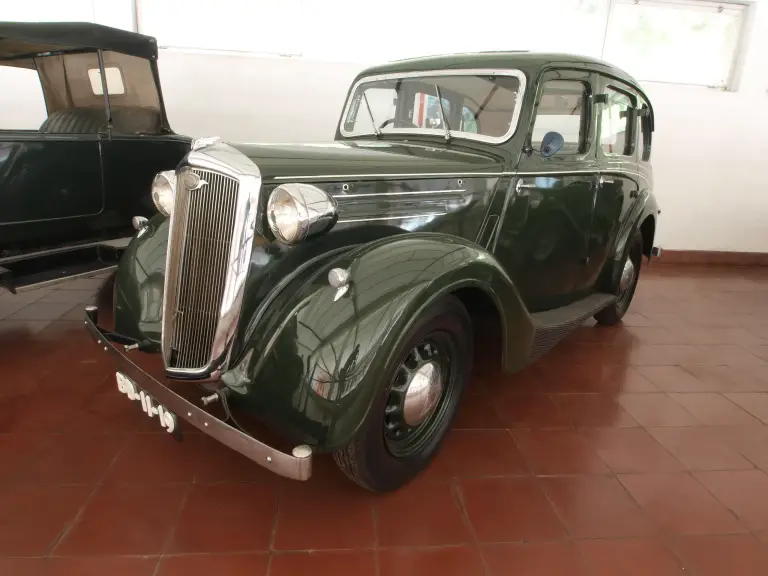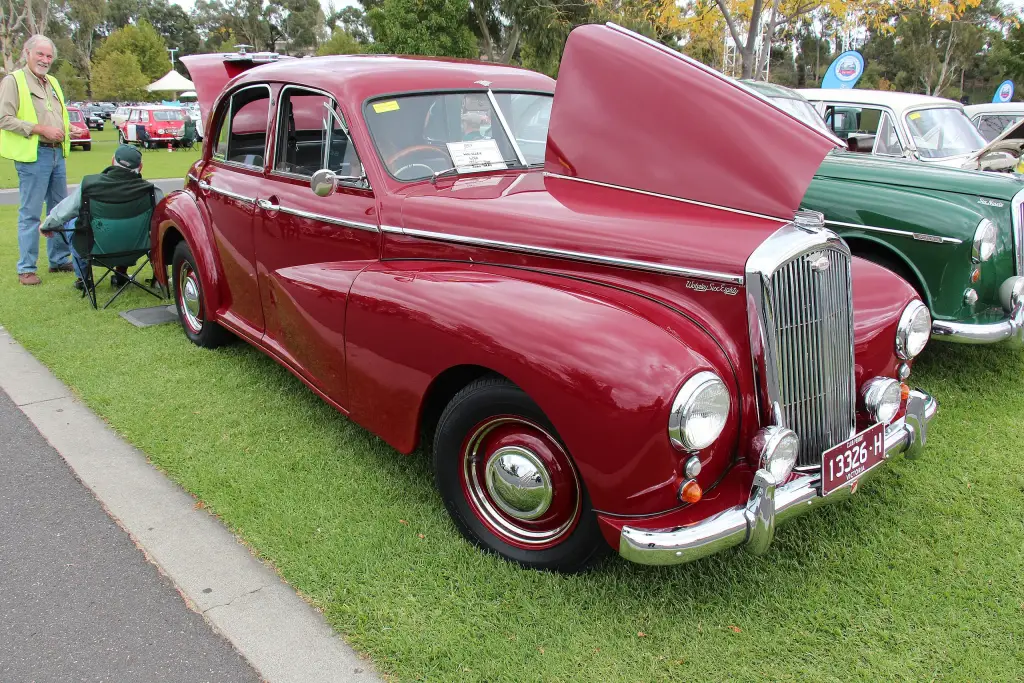
The Wolseley 6/80 was one of Wolseley’s first post-war cars, put into production in 1948. A six-cylinder flagship based on the Morris Six MS, it combined traditional bodywork with a modern monocoque chassis and torsion-bar suspension, and it became the best-known British police car of its day.
Wolseley 6/80 at a glance
| Maker | Wolseley Motors, Cowley |
|---|---|
| Production | 1948–1954 |
| Bodies | four-door saloon |
| Engine | 2,215 cc SOHC straight-six |
| Power | 72 hp |
| Transmission | four-speed manual, column change |
| Construction | monocoque |
| Suspension | torsion bars, twin telescopic dampers |
| Brakes | 10 in drums |
| Length | 7 in longer than the 4/50 |
| Built | 25,281 |
| Price, 1951 test | £767 including tax |
| Performance, 1951 test | 85.3 mph; 0–60 mph in 21.4 s; 21.8 mpg |
The English Wikipedia page covers the 4/50 and 6/80 together; this article uses the 6/80 sections. Based on one source.
History of the Wolseley 6/80
The first post-war Wolseleys
The Wolseley 4/50 and the similar 6/80 were Wolseley Motors’ first post-war automobiles, put into production in 1948. They were based on the Morris Oxford MO and Morris Six MS respectively, and were built at Morris’s Cowley factory alongside the Oxford. The four-cylinder 4/50 used a 1,476 cc, 50 hp version of the 6/80 engine; the 6/80 had a 2,215 cc straight-six with a single overhead camshaft and 72 hp. Both cars had a round Morris rear end and an upright Wolseley grille, and the 6/80 in particular was used extensively by the police.
Traditional body, modern chassis
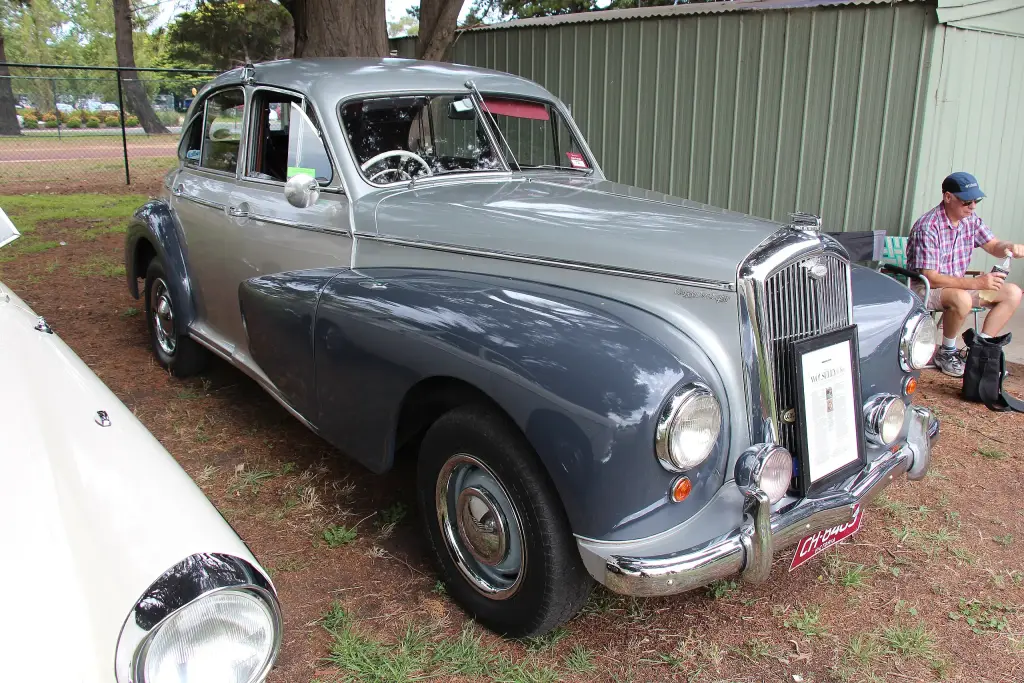
To take its larger engine the 6/80 was 7 inches longer than the 4/50, and it had larger 10-inch brake drums against the 4/50’s 9-inch ones. The body was deliberately old-fashioned: a pre-war style radiator, centre-hinged bonnet, split windscreen and small oval rear window, with traditional styling and a hint of running boards. Inside there were leather seats and the Wolseley hallmark of a polished wood dashboard, with the driver looking down a long, high bonnet to the flying W mascot. Underneath, however, the car was advanced for an immediate post-war saloon, with a monocoque chassis, springless torsion-bar suspension, twin telescopic shock absorbers and column gears. The engine was a feat of engineering for the period, a shaft-driven overhead-camshaft six developed from Wolseley’s experience with the Viper V8 aero engine of the First World War, and it looked vintage even when new.
The police car
The formula worked: the 6/80 made a great deal of money for Lord Nuffield’s corporation and was the longest-running favourite of British police forces, which kept the cars well into the 1960s for skid-pan and mechanical training. A second-hand review in 1960 noted that even the most junior member of the family would recognise the 6/80 as the “Cops’ Car”, both on television and in the street, and praised its power-to-weight ratio and robust steering and suspension. The Motor tested one in 1951 and recorded 85.3 mph, 0–60 mph in 21.4 seconds and 21.8 mpg; standard equipment included a heater, a rear window blind and twin roof lamps in the rear compartment. About 5,000 of the 25,281 examples built were exported to Australia, where the model was also assembled from knock-down kits. It was replaced in 1954 by the Wolseley 6/90.
Design and features
- Overhead-cam six: 2,215 cc and 72 hp, developed from Wolseley’s aero-engine experience.
- Monocoque chassis: unitary construction with torsion-bar suspension and telescopic dampers.
- Traditional bodywork: split windscreen, centre-hinged bonnet and pre-war style radiator.
- Luxury interior: leather seats and a polished wooden dashboard.
- Police favourite: the standard British patrol car of the early 1950s.
Wolseley 6/80 versions
- 6/80 (1948–1954): the six-cylinder flagship saloon.
- 4/50: the four-cylinder stablemate with a shorter body and smaller brakes.
- Australian assembly: cars built from CKD kits, with about 5,000 exported there.
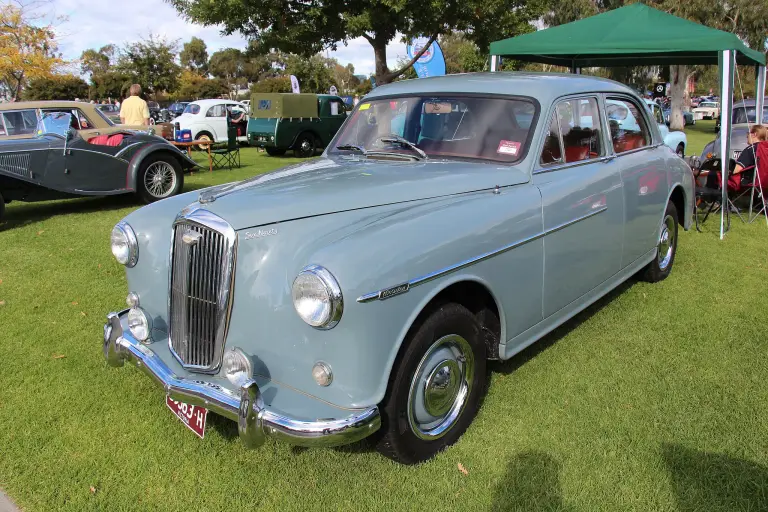
- Wolseley 6/90 (1954): the replacement model on Riley Pathfinder body panels.
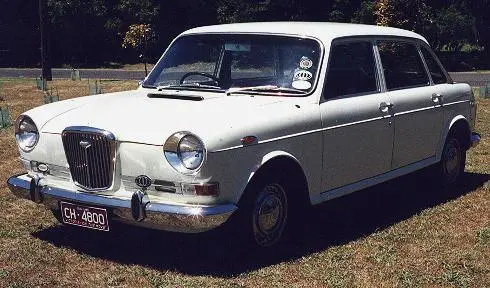
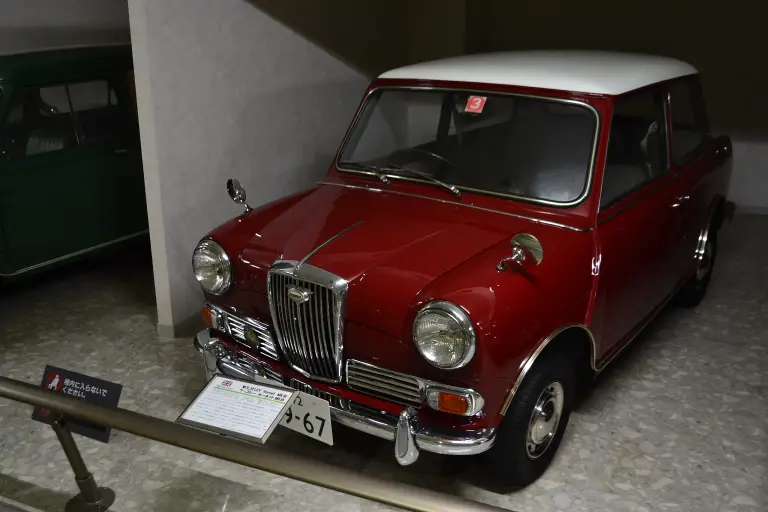
The Wolseley 4/44 replaced the four-cylinder 4/50 in 1953, and the Wolseley 6/90 took over from the 6/80 in 1954. More cars are in the Wolseley collection.
Sources
- Wolseley 4/50, English Wikipedia: 6/80 history, engineering, road tests, production