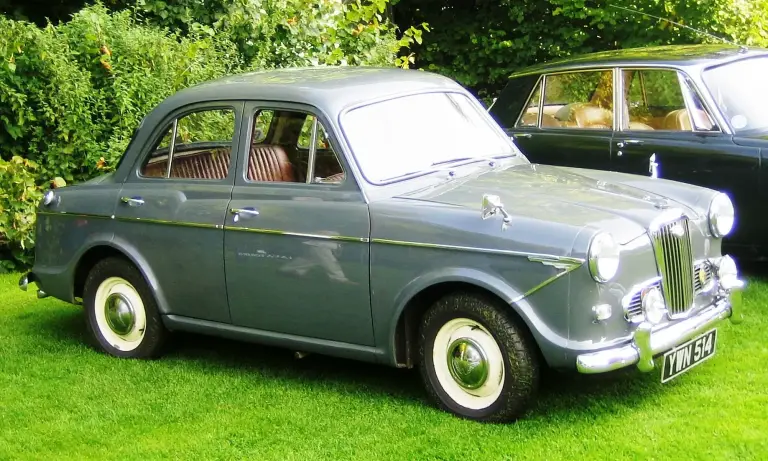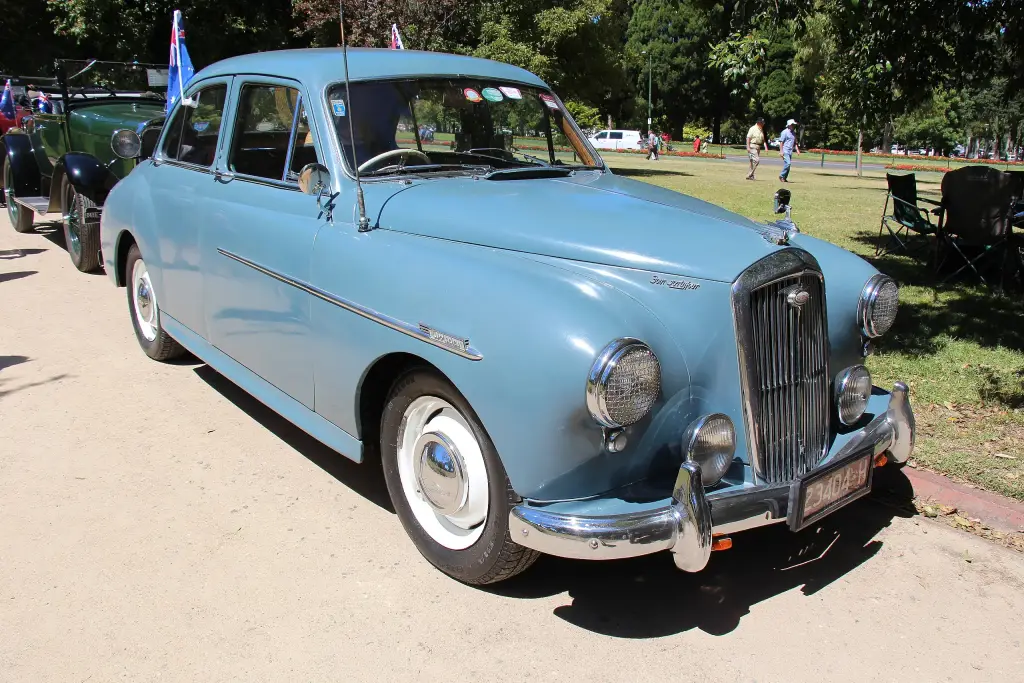
The Wolseley 4/44 was introduced by the British Motor Corporation in 1952 and manufactured from 1953 until 1956. Designed under the Nuffield Organization, it shared much of its body design with the MG Magnette ZA, but used a detuned 1,250 cc engine with a single carburettor, a wooden dashboard and leather seats.
Wolseley 4/44 at a glance
| Maker | British Motor Corporation, designed by Nuffield |
|---|---|
| Introduced | 1952 |
| Production | 1953–1956 |
| Engine | 1,250 cc XPAW four, single carburettor |
| Power | 46 bhp at 4,800 rpm |
| Transmission | four-speed manual, column change |
| Construction | monocoque |
| Suspension | independent front on coil springs; live rear axle |
| Trim | wooden dashboard, leather seats, illuminated grille badge |
| Price | £997 on the home market |
| Top speed, Motor test | 73 mph |
| Acceleration, Motor test | 0–60 mph in 29.9 s; 27.6 mpg |
| Replaced by | Wolseley 15/50, 1956 |
Based on one source, the English Wikipedia article.
History of the Wolseley 4/44
A Nuffield design for a BMC market
The 4/44 was designed while Wolseley was still part of the Nuffield Organization, but by the time it reached the market, in 1952, Nuffield had merged with Austin to form the British Motor Corporation. Much of the design was shared with the MG Magnette ZA, which was released later in the same year. The two cars looked alike but were engineered with different priorities: the MG was the sporting model, while the Wolseley took the more traditional luxury route.
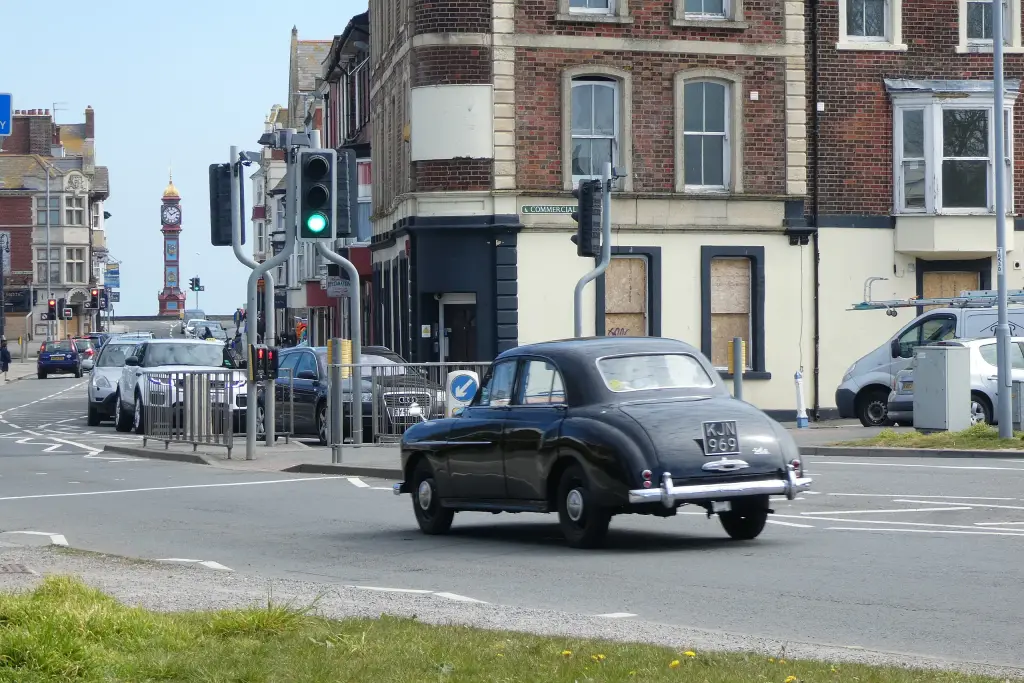
Engine and chassis
Where the MG used a twin-carburettor engine, the 4/44 had the 1,250 cc XPAW unit, a version of the XPAG engine previously seen in the later MG T-types, detuned by having only a single carburettor. It produced 46 bhp at 4,800 rpm and drove through a four-speed manual gearbox with a column change. The construction was monocoque, with independent front suspension on coil springs and a live rear axle. The car had upmarket trim, with a wooden dashboard, leather seats and the traditional Wolseley radiator grille with its illuminated badge, but at £997 on the home market it was expensive.
Road test and replacement
An example tested by The Motor magazine reached a top speed of 73 mph and accelerated from 0 to 60 mph in 29.9 seconds, with fuel consumption of 27.6 miles per imperial gallon. The 4/44 was replaced in 1956 by the similar Wolseley 15/50, which used the same basic concept with a larger 1.5-litre engine.
Design and features
- Shared body design: much of the styling and structure was common with the MG Magnette ZA.
- Detuned XPAW engine: a single carburettor brought 46 bhp from 1,250 cc.
- Traditional Wolseley trim: wooden dashboard, leather seats and an illuminated radiator badge.
- Monocoque construction: modern unitary bodywork with independent front suspension.
- Column gear change: a four-speed manual with the lever on the steering column.
Wolseley 4/44 versions
- 4/44 saloon (1953–1956): the only body style offered.
- MG Magnette ZA: the sporting sister car with a more powerful engine.
- Wolseley 15/50 (from 1956): the replacement model with a larger engine.
The Wolseley 6/80 was the six-cylinder flagship sold alongside the 4/44, and the Wolseley 6/90 followed it in 1954. More cars are in the Wolseley collection.
Video: Wolseley 4/44 – 3.5Ltr V8
Video on YouTube.
Sources
- Wolseley 4/44, English Wikipedia: history, engine, trim, road test, replacement