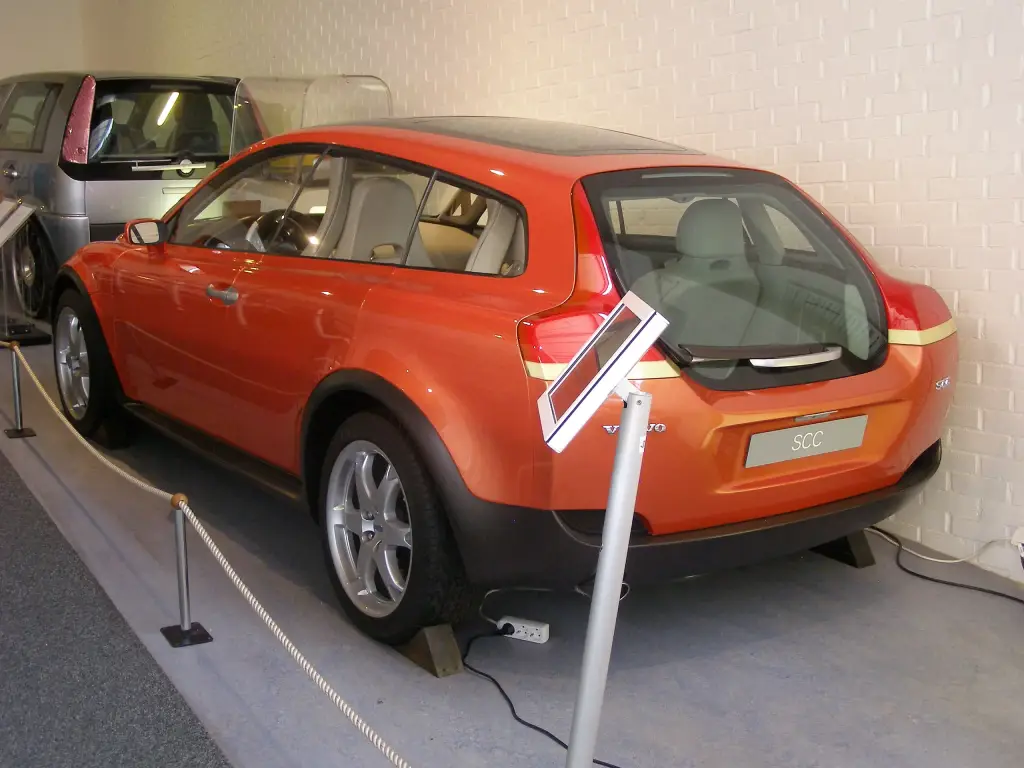
The Volvo SCC, or Safety Concept Car, was an experimental safety vehicle shown at the 2001 Detroit auto show and later that autumn at Seville airport in Spain. It packed a long list of driver assistance ideas, many of which reached production years later, and its shape led to the C30.
Volvo SCC at a glance
| Shown | Detroit Auto Show, 2001 |
|---|---|
| Type | experimental safety vehicle concept |
| Hatch design | taken from the P1800ES and the 480ES |
| Interior | shared largely with the S40 and V50 |
| Doors | conventional front doors and small rear sliding doors |
| Seatbelt | the first and so far only experimental criss-cross belt |
| Production result | the Volvo C30, on sale from the end of 2006 |
| Where it is now | Volvo Museum, Gothenburg |
History of the Volvo SCC
The SCC was built to show what a Volvo could do for safety. It carried over the rear hatch shape of the P1800ES and the glass hatch of the 480ES, and its interior came largely from the S40 and V50, sharing the instrument panel, the floating centre stack and the steering wheel. The doors opened like conventional front doors, with small sliding doors at the rear.
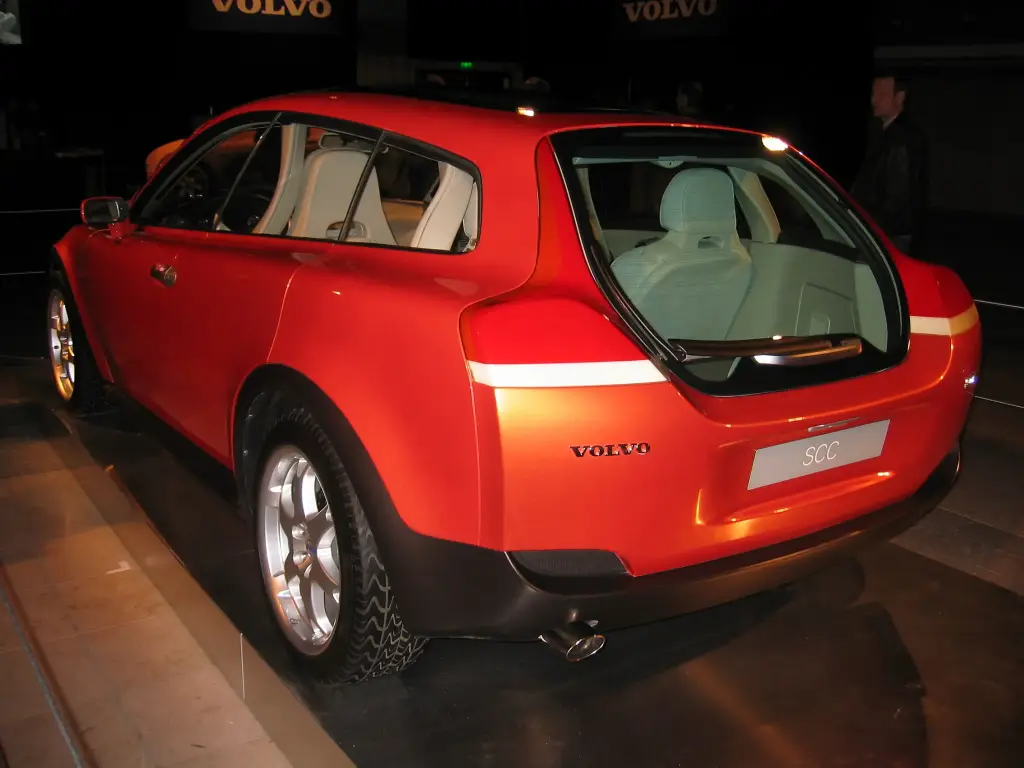
Its equipment list read like a catalogue of the following two decades of car technology: forward collision warning, information projected on the windscreen, blind spot monitoring with a driver alert, a lane departure warning, adaptive cruise control that held a set distance, flashing brake lights under hard braking, safety cameras, headlamps that followed the curvature of the road, a developed human-machine interface, see-through A-pillars, a height-adjustable rear seat, pedestrian protection, a steering wheel adjustable for height and reach, passive unlocking and engine starting, and communication with the car by mobile phone.
Legacy
Volvo planned a production model based on the SCC from 2002, and the design elements were used on the C30, which went on sale at the end of 2006. The concept is also remembered for its experimental criss-cross seatbelt, the first and so far only car to have one. Today an SCC is displayed at the Volvo Museum in Gothenburg.
Design and features
- Forward collision warning: with information projected onto the windscreen.
- Blind spot and lane warnings: systems that later became common on production cars.
- See-through A-pillars: improving the view out of the corners.
- Criss-cross seatbelt: a unique experimental restraint.
- Design link: its glass hatch and proportions led to the C30.
Volvo SCC versions
- SCC (2001): the single concept car, shown in Detroit and Seville.
The SCC led directly to the Volvo C30, and its hatch references come from the Volvo 480 and the P1800ES. More cars are in the Volvo collection.
Sources
- Volvo SCC, English Wikipedia: debut, design, safety features, legacy