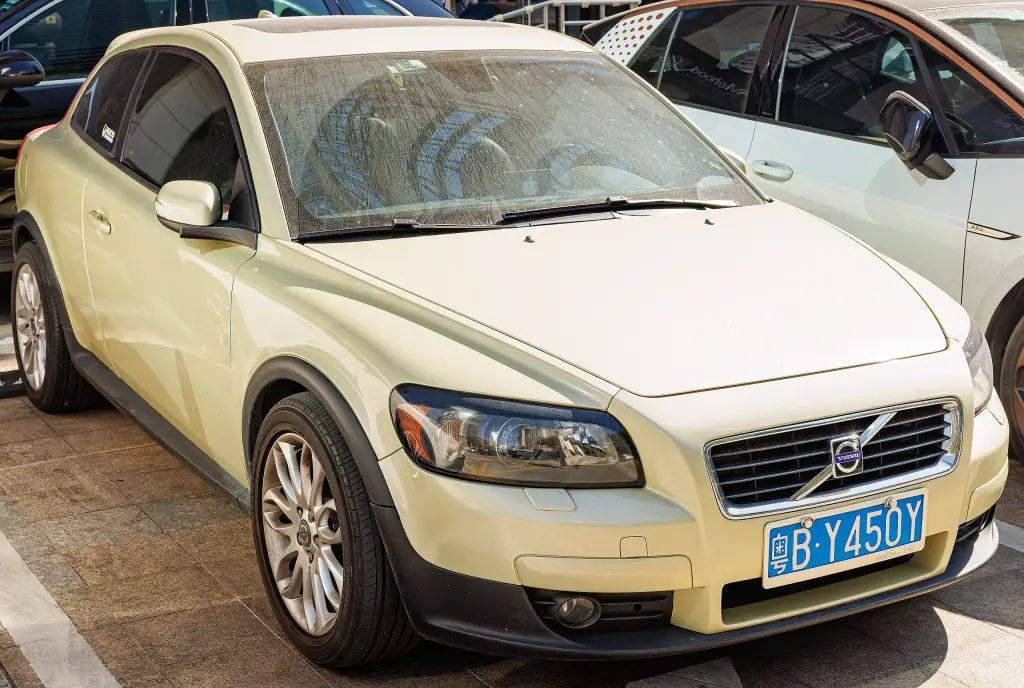
The Volvo C30 was a three-door, front-wheel-drive premium compact hatchback built from 2006 to 2013 in a single generation. It shared the Ford C1/Volvo P1 platform with the S40, V50 and C70, and its glass tailgate deliberately echoed the P1800 ES and the 480.
Volvo C30 at a glance
| Production | 2006–2013 |
|---|---|
| Body | three-door premium hatchback, four seats |
| Platform | Ford C1 / Volvo P1, shared with S40, V50 and C70 |
| Engines | 1.6, 1.8, 2.0 and 2.4 petrol, 2.5 T5 turbo, 1.6 and 2.0 diesels, D5 |
| Power | T5 227 hp, Polestar upgrade to 250 hp |
| Gearboxes | five- and six-speed manual, Geartronic, PowerShift dual-clutch from 2009 |
| Design cue | frameless glass rear hatch |
| Origin | Volvo SCC concept of 2001 |
| Markets | Europe from late 2006, Canada 2007, United States 2008 |
History of the Volvo C30
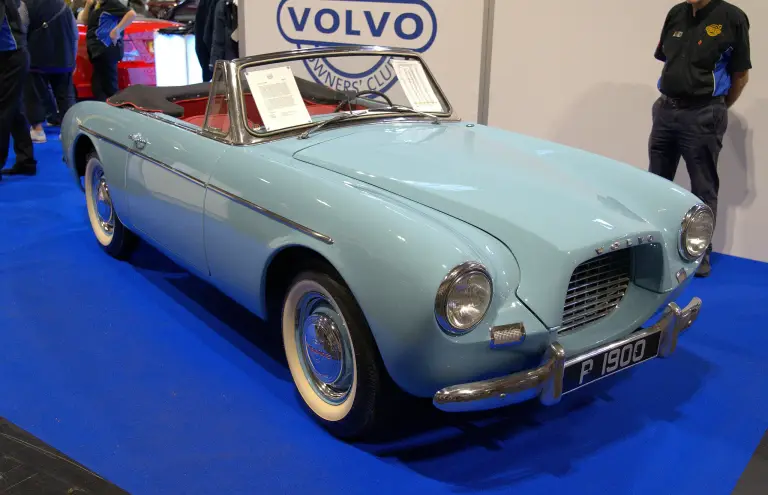
The C30 began with the Volvo SCC, the Safety Concept Car shown at the 2001 Detroit auto show and later that year in Seville. It carried over the rear hatch idea of the P1800 ES and the glass hatch of the 480 ES and packed in forward collision warning, blind spot monitoring, lane departure warning, adaptive cruise control, flashing brake lights under hard braking, headlamps that followed the road and a head-up display, many of which became ordinary equipment years later. Research to put its safety systems into production began in 2002 and led to development of the C30 from 2003.
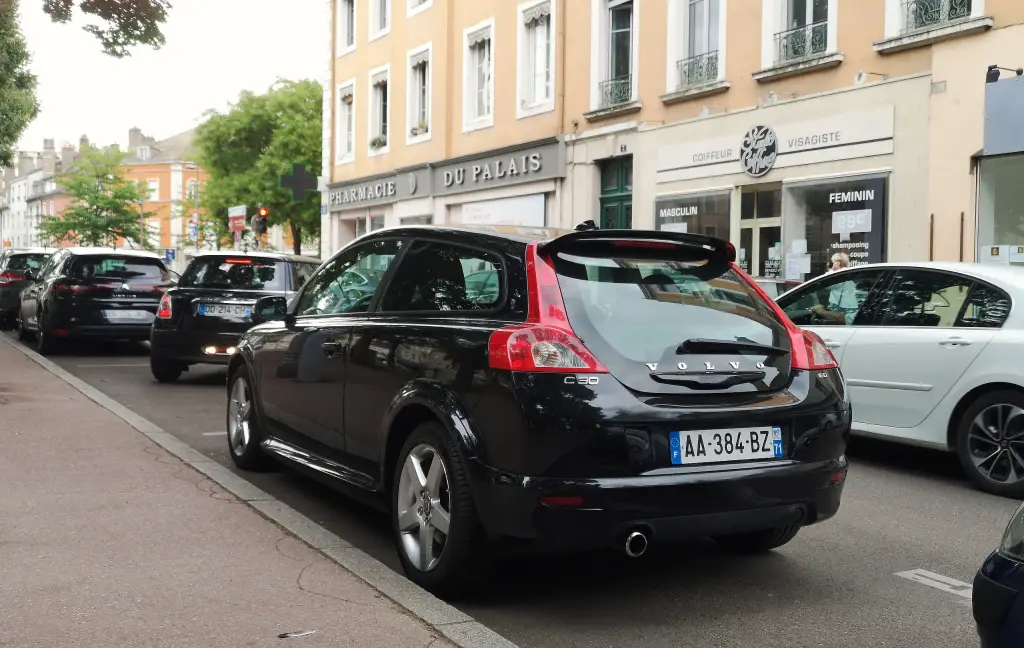
The production C30 T5 was unveiled at the 2006 Paris Motor Show and launched in Europe late that year. Engines ranged from a 1.6-litre four to the 2.5-litre five-cylinder turbo, with 2.4 and 2.0 diesels; the interior was shared with the S40 and V50, including the floating centre stack. Trim lines were SE and SE Lux in Britain and Kinetic, Momentum and Summum elsewhere, with the R-Design package adding aluminium inlays, badges, a rear spoiler and a body kit.
Market detail
Canada took the C30 from March 2007 as a 2007 model and the United States from October 2007 as a 2008 car, where only the T5 was offered, initially in Version 1.0 and 2.0 trims. The Polestar software upgrade, available from 2011 for 2008–2013 T5 models, raised output from 227 to 250 hp without hurting official fuel economy. For 2009 Volvo added a six-speed PowerShift dual-clutch gearbox with the 2.0 petrol and diesel, an E85 flex-fuel 1.8 and the efficient 1.6 DRIVe diesel with optional start-stop.
Volvo also showed a series of C30 concepts: the Evolve car with a twin-turbo engine and all-wheel drive at SEMA 2006, the supercharged IPD car with gull-wing doors, the Heico HS3 THOR and HS3 D5, and the ReCharge plug-in hybrid of 2007 with a 1.6-litre flex-fuel engine, electric motors at each wheel, about 100 km of battery range and a 160 km/h top speed.
Design and features
- Glass hatch: a frameless tailgate that recalls the P1800 ES and 480.
- Shared platform: the same underpinnings as the S40, V50 and C70.
- Engine spread: from an economical 1.6 diesel to the 227 hp T5.
- Polestar option: a factory-approved upgrade to 250 hp.
- Safety heritage: descended from the SCC concept’s warning systems.
Volvo C30 versions
- C30 1.6 to 2.4: petrol models from launch.
- C30 T5: 2.5-litre turbo five, the performance model.
- C30 DRIVe: 1.6 diesel with start-stop.
- R-Design: sports trim with body kit and interior details.
- Polestar (2011): 250 hp software upgrade for T5 cars.
The C30 shares its platform with the Volvo S40 and its glass hatch idea with the Volvo 480. More cars are in the Volvo collection.
Sources
- Volvo C30, English Wikipedia: origins, engines, markets, equipment, concepts