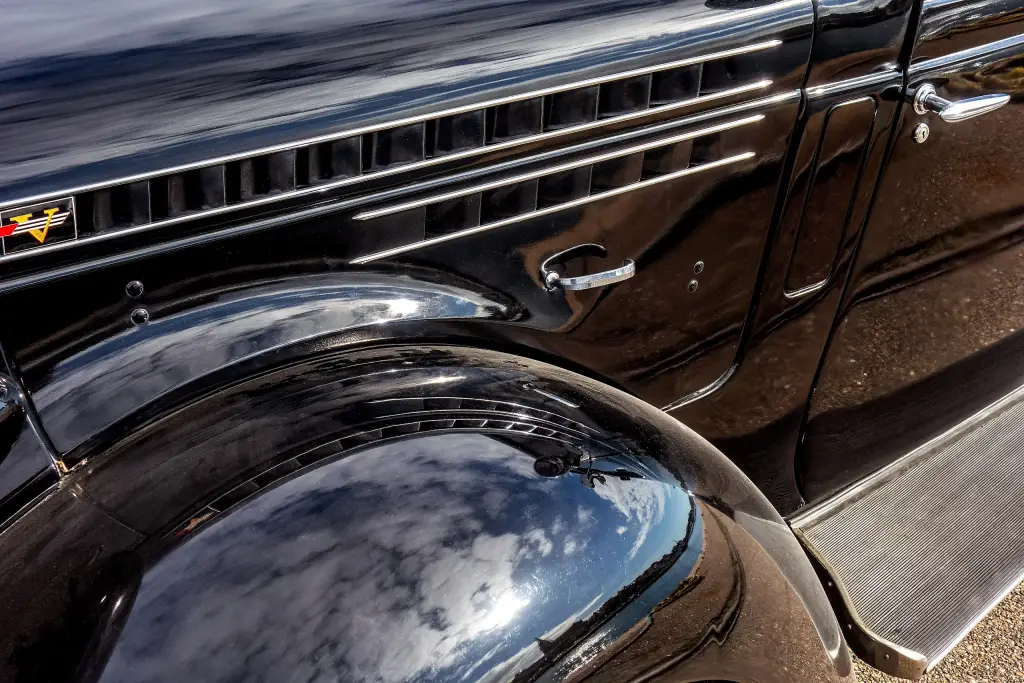
The Volvo PV51 was introduced in December 1936 as a smaller, less expensive car than Volvo’s existing models. It was replaced by the mildly restyled PV53 in 1938, and the line stayed in production until the end of the Second World War.
Volvo PV51 at a glance
| Introduced | December 1936 |
|---|---|
| Models | PV51, PV52 de luxe, PV51 Special, PV53 to PV57 |
| Front suspension | live axle on the PV51 |
| PV51 built | 1,754 (1936–1938) |
| PV52 built | 1,046 (1937–1938) |
| PV51 chassis | 205 commercial chassis |
| PV53 to PV57 | 1938–1945, from 275 to 1,321 cars each |
| Wartime fuel | wood gas generator on a trailer, about 50 PS |
History of the Volvo PV51
Volvo cars were expensive next to their imported competitors, and the PV51 was the company’s answer to dealers asking for a smaller, cheaper model. The rear of the body was similar to the Carioca but the front was new and the interior was simplified to cut the price. The PV51 made do with a live front axle.
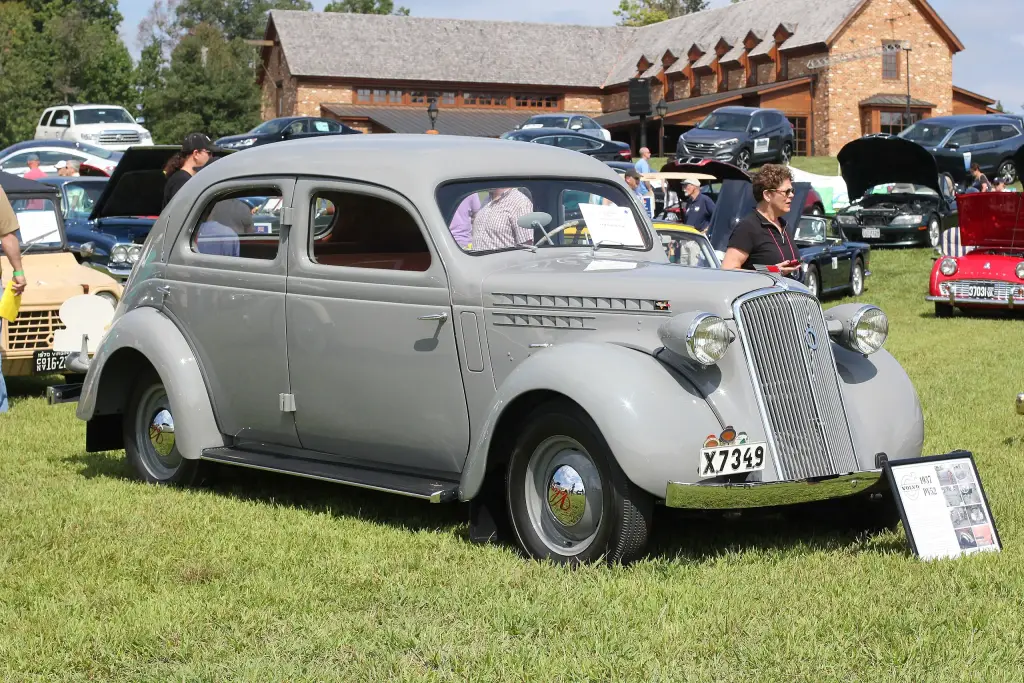
In early 1937 the de luxe PV52 arrived, with twin sun visors, twin windscreen wipers, a clock, a heater and armrests on all four doors. In March 1938 Volvo added the PV51 Special and PV52 Special, which moved the spare wheel from the boot lid to the boot floor and enlarged the boot for more luggage space.
PV53 to PV57
In the autumn of 1938 the PV51 and PV52 were replaced by the PV53 to PV56. These had a new front with a wedge-shaped grille, modified suspension and steering and an upgraded interior and dashboard. The 53 and 55 had a cover with a spare-wheel pressing rather than the full boot and floor-mounted spare of the 54 and 56. A commercial chassis, the PV57, was also built.
After the outbreak of the Second World War production continued, mainly to supply the Swedish Armed Forces and official users. Most wartime cars carried a wood gas generator on a trailer because the engine had been converted to run on domestically produced fuel, which cut output to around 50 PS.
Design and features
- Lower price: a simplified interior and a live front axle kept costs down.
- PV52 de luxe: twin visors, twin wipers, a clock, a heater and armrests.
- Special versions: spare wheel moved to the boot floor and a bigger boot.
- PV53-56 (1938): wedge grille, revised suspension and steering.
- Wartime service: wood gas conversions kept cars running on domestic fuel.
Volvo PV51 versions
- PV51 (1936–1938): base model, 1,754 built.
- PV52 (1937–1938): de luxe model, 1,046 built.
- PV51 Special and PV52 Special (1938): larger boot and floor-mounted spare.
- PV53 to PV56 (1938–1945): restyled range with the wedge grille.
- PV57: commercial chassis, 275 built.
The PV51 followed the Volvo PV36 Carioca and was eventually succeeded by the Volvo PV60. More cars are in the Volvo collection.
Sources
- Volvo PV51, English Wikipedia: models, equipment, production figures, wartime use