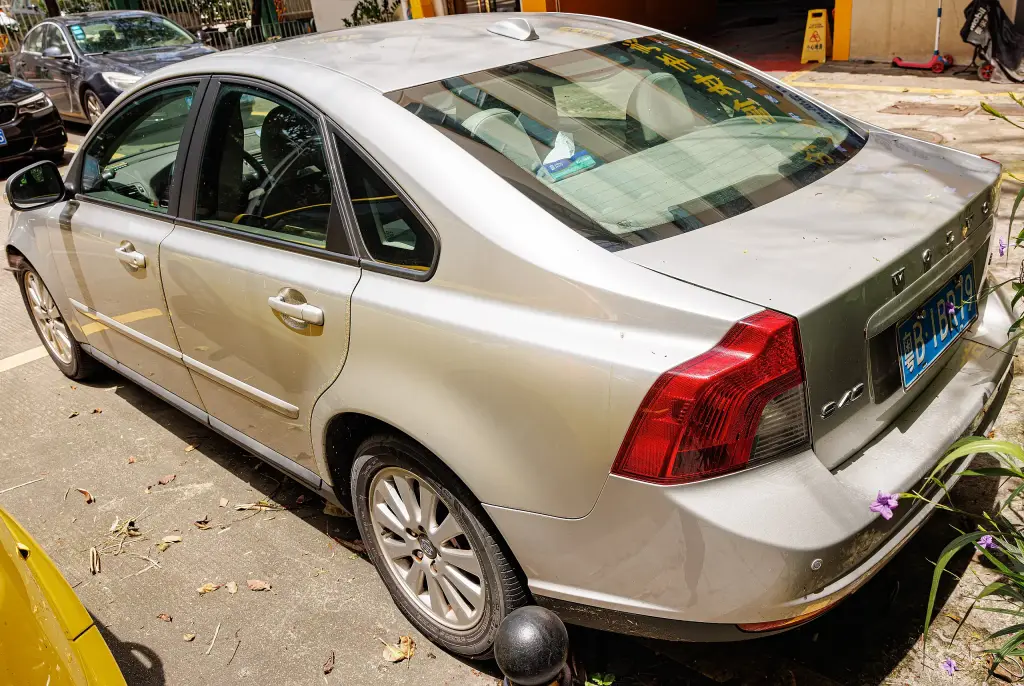
The Volvo S40 was a compact executive car made from 1995 to 2012 in two generations. The first arrived with an estate sister, the V40, and was built at the Nedcar plant in Born in the Netherlands on a platform shared with the Mitsubishi Carisma.
Volvo S40 at a glance
| First generation | 1995–2004 |
|---|---|
| Second generation | 2003–2012 |
| Bodies | S40 saloon, V40 estate |
| Built at | Born, Netherlands, in a Volvo and Mitsubishi joint venture |
| Platform | shared with the Mitsubishi Carisma |
| Engines | 1.6, 1.8, 2.0, 2.0T, 1.9 T4, Renault 1.9 turbodiesel, Mitsubishi 1.8 GDI |
| Production | 576,543 S40 and 423,491 V40 |
| Safety | first car with a four-star Euro NCAP rating |
| Replaced by | Volvo V40 hatchback in 2012 |
History of the Volvo S40
Volvo released the new range in August 1995, intending to call it the S4 and F4, but Audi had already reserved the S4 name, so the cars became the S40 saloon and the V40 estate. They were built at the Nedcar factory in Born, a pre-Ford joint venture between Volvo and Mitsubishi, on a platform shared with the Mitsubishi Carisma and later used by the Proton Waja. They were the last Volvos built at Born, ending a line that began with the DAF collaboration behind the Volvo 66 and 300 Series.
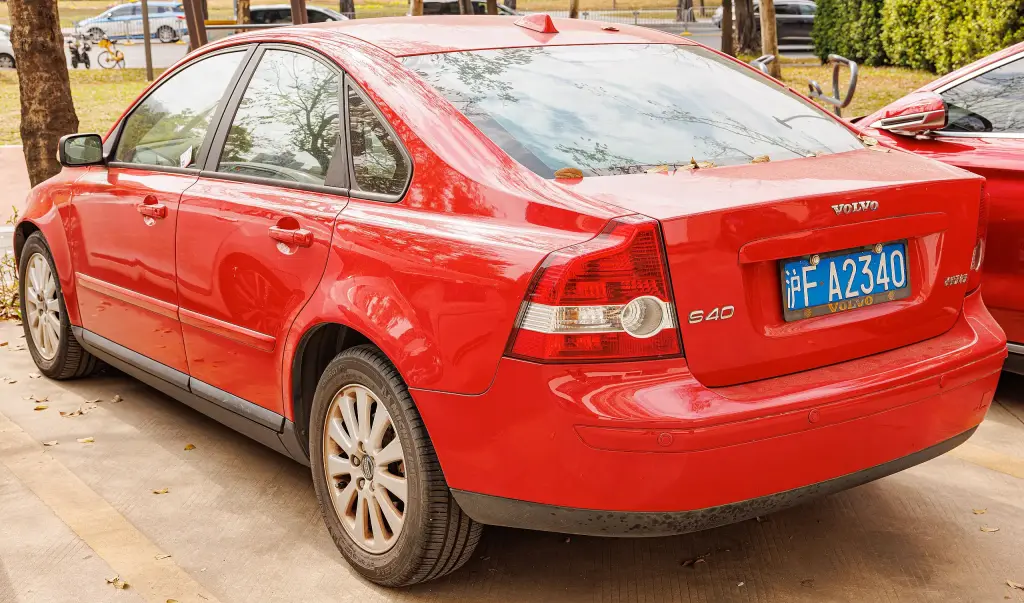
In Britain the S40 cost about 50% more than the Carisma, but it changed perceptions of Volvo: the RAC said the S40 and V40 range was the car that finally persuaded buyers Volvo could build a credible compact executive car. The V40, with a drag coefficient of 0.32, was the first whole model introduced under design director Peter Horbury and was named Most Beautiful Estate Car in the World at an Italian award ceremony. It premiered at the Bologna Motor Show in December 1995, after the S40 appeared at Frankfurt in September.
Engines and updates
The range used four-cylinder engines: Volvo’s own modular petrol units of 1.6, 1.8, 2.0, 2.0T and 1.9 T4 litres, a Renault-sourced 1.9 turbodiesel and a Mitsubishi 1.8 direct-injection petrol. The low-pressure 2.0T and high-pressure 1.9 T4 topped the range, and North America received only the 1.9 turbo with a five-speed automatic from the 2000 model year. In July 2000 Volvo introduced the Phase II update with improved engine management, diesel direct injection, extra safety features, larger brakes, new front suspension and steering, a revised rear suspension and a wider track. A minor facelift and a late-2002 update brought an egg-crate grille, colour-keyed trim, a three-spoke wheel and curtain airbags.
The S40 was the first car to earn a four-star Euro NCAP safety rating. Its second generation arrived in 2003, when the estate was renamed V50, and the range was replaced by the five-door V40 hatchback in 2012.
Design and features
- Dutch build: made at Born, the former DAF factory.
- Shared platform: developed with Mitsubishi and the Carisma.
- Four-star safety: the first car to reach that Euro NCAP rating.
- Petrol and diesel choice: Volvo, Renault and Mitsubishi engines.
- Horbury design: the V40 was his first complete model at Volvo.
Volvo S40 versions
- S40 saloon (1995): the four-door version.
- V40 estate (1995): five-door, drag coefficient 0.32.
- 2.0T and 1.9 T4: turbocharged performance models.
- Phase II (2000): revised chassis, brakes and engines.
- Second generation (2003): new platform, with the estate renamed V50.
The S40 replaced the Volvo 440 and 460 and was joined by the Volvo V50 in its second generation. More cars are in the Volvo collection.
Sources
- Volvo S40, English Wikipedia: generations, Born production, engines, updates, production figures