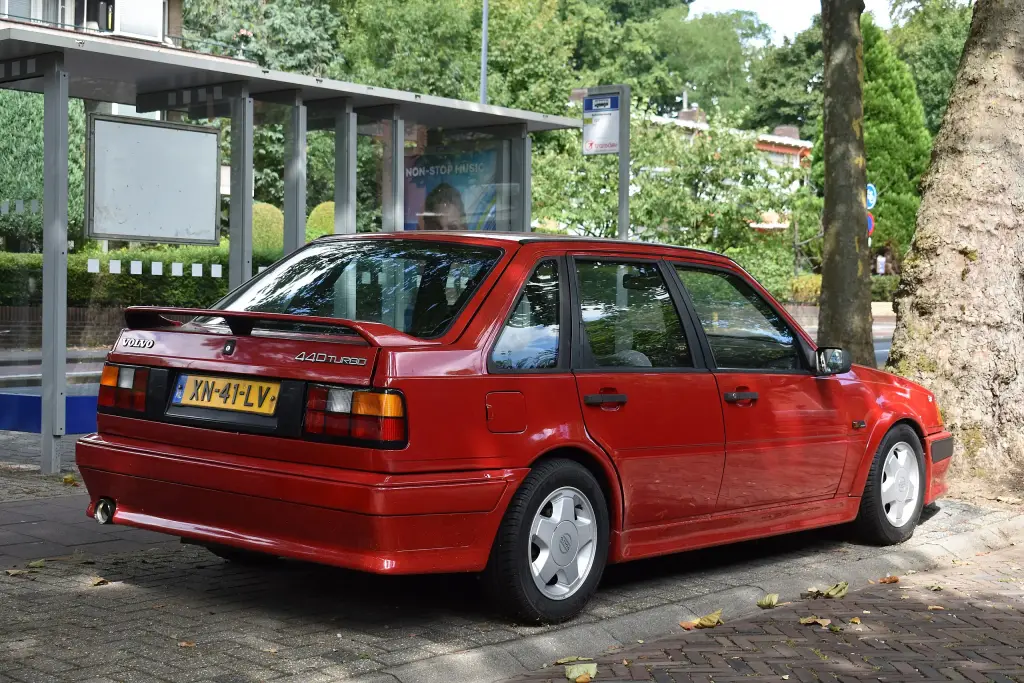
The Volvo 440 and 460 were the hatchback and saloon versions of Volvo’s small family car, built at the NedCar factory in Born in the Netherlands between 1988 and 1996. They replaced the 340 and 360, were front-wheel drive only and shared their floor pan, suspension, engines and brakes with the 480 coupé.
Volvo 440/460 at a glance
| Production | 1988–1996 |
|---|---|
| Body styles | 440 five-door hatchback, 460 four-door saloon from 1989 |
| Built in | Born, Netherlands (NedCar) |
| Drive | front-wheel drive only |
| Platform shared with | Volvo 480 |
| Engines | Renault four-cylinder petrol and diesel |
| Gearboxes | four-speed ZF automatic, five-speed manual, Transmatic CVT |
| Safety | SIPS side impact protection from 1993 |
| Interior design | Peter Horbury |
| Replaced | Volvo 340/360 |
History of the Volvo 440/460
Development of the 440, 460 and 480 began in 1978 as the Galaxy Project, which was meant to produce two lines of front-wheel-drive cars to replace the 300 and 200 Series. The smaller line, G1, split into three branches: G13 became the 480, G14 the 460 and G15 the 440. In 1982 the project passed to Volvo Car B.V. in the Netherlands, and the troubled launch of the 480 delayed the hatchback.
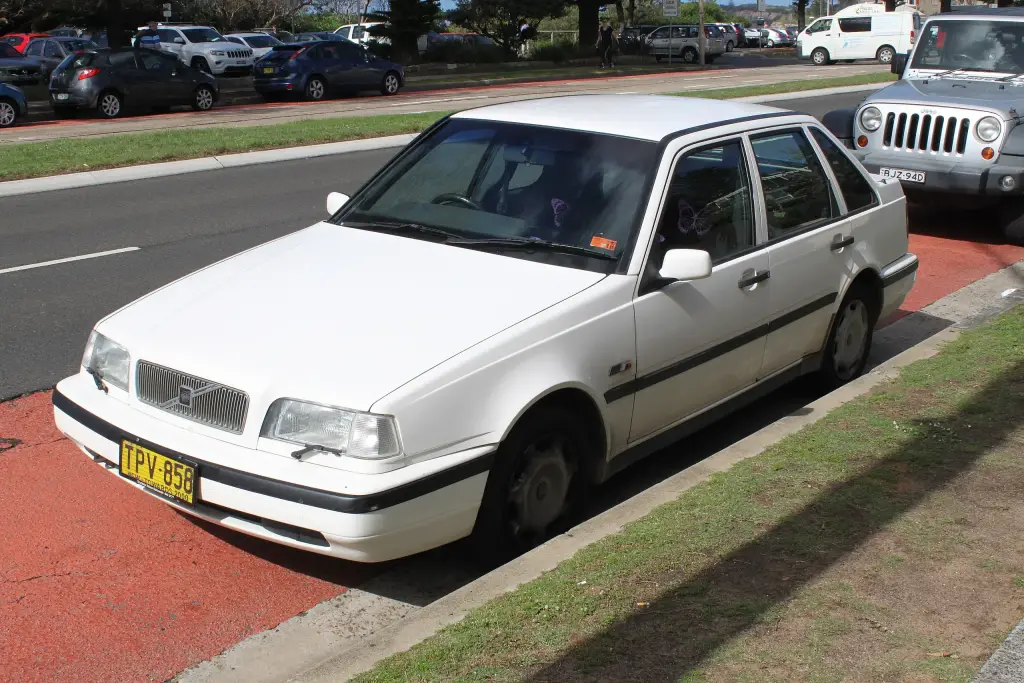
The design is credited to Peter van Kuilenburg, with many provisions laid down by Gothenburg because the 440 was to be a volume model; the final car looked very close to Jan Wilsgaard’s 1980 proposal. Part of the engineering work was subcontracted to two British companies after the Dutch office ran short of staff. By the time the 440 appeared in 1988 its shape looked rather dated, and no estate was offered so as not to compete with the 240 and 740 estates.
Safety and equipment
The 400 Series carried over the crumple zones of the 300 Series and added optional seatbelt pre-tensioners and driver and passenger airbags in early 1991. A high-level brake light, bulb failure warning, door-open warning and seatbelt reminder were standard throughout the range, and from 1993 the cars had the Side Impact Protection System. British cars came with daytime running lights that a dealer could disable on request; the original advertising featured a family of crash-test dummies.
Transmissions
At launch Volvo offered a conventional four-speed ZF automatic and spent several years reworking the DAF-derived CVT for the more powerful engines. The result, called Transmatic and marketed as HTA, used steel belts running in oil in a sealed gearbox mounted transversely at the front, unlike the exposed rubber-belt Variomatic of the 300 Series. Most automatic 440s and 460s, however, had the ZF unit.
Design and features
- Front-wheel drive: Volvo’s small car finally followed the layout of its rivals.
- Shared platform: the same floor pan and running gear as the 480 coupé.
- Renault engines: a range of four-cylinders, including a diesel.
- SIPS from 1993: side impact protection became standard late in the run.
- Two bodies: the practical five-door hatchback and the more formal saloon.
Volvo 440/460 versions
- 440 (1988): five-door hatchback, the volume model.
- 460 (1989): four-door saloon with a separate boot.
- Turbo: boosted petrol version of the hatchback.
- HTA/Transmatic: late cars with the steel-belt CVT.
- 1993–1996 cars: SIPS and updated trim.
The 440 and 460 shared their engineering with the Volvo 480 and replaced the Volvo 300 Series. More cars are in the Volvo collection.
Sources
- Volvo 440/460, English Wikipedia: development, safety, transmissions, production