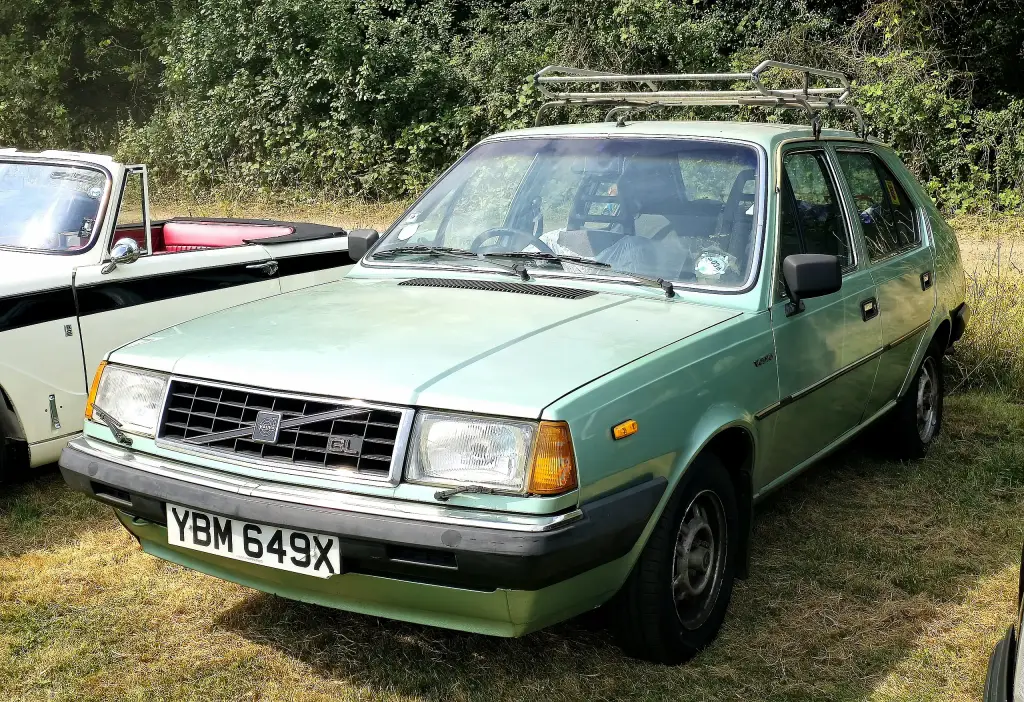
The Volvo 300 Series was a small rear-wheel-drive family car sold from 1976 to 1991 as a hatchback and, from 1984, as a four-door saloon. It began as DAF’s P900 project and was launched as the Volvo 343 in February 1976, shortly after Volvo took over DAF’s car division.
Volvo 300 Series at a glance
| Production | 1976–1991 |
|---|---|
| Built in | Born, Netherlands (DAF, later Volvo Car BV) |
| Models | 343, 345, 340, 360 |
| Layout | front engine, rear-wheel drive, transaxle gearbox on the rear axle |
| First model | 343, launched 19 February 1976 |
| First engine | 1.4-litre Renault Cléon-Fonte, 70 PS |
| Transmission | DAF Variomatic CVT, manual from 1979 |
| 360 engines | 2.0-litre B19A 95 PS, B19E 115 PS |
| Bodies | three- and five-door hatchback, saloon from 1984 |
History of the Volvo 300 Series
DAF began work on a new, larger car in 1970 as project P900, meant as a replacement for the DAF 66 under the name DAF 77. Four designs were shown anonymously to DAF staff in 1971, and the one by DAF’s John de Vries was chosen. Volvo bought a third of DAF in 1973 and three quarters in 1975, the car division became Volvo Car BV, and the design was adapted to Volvo standards.
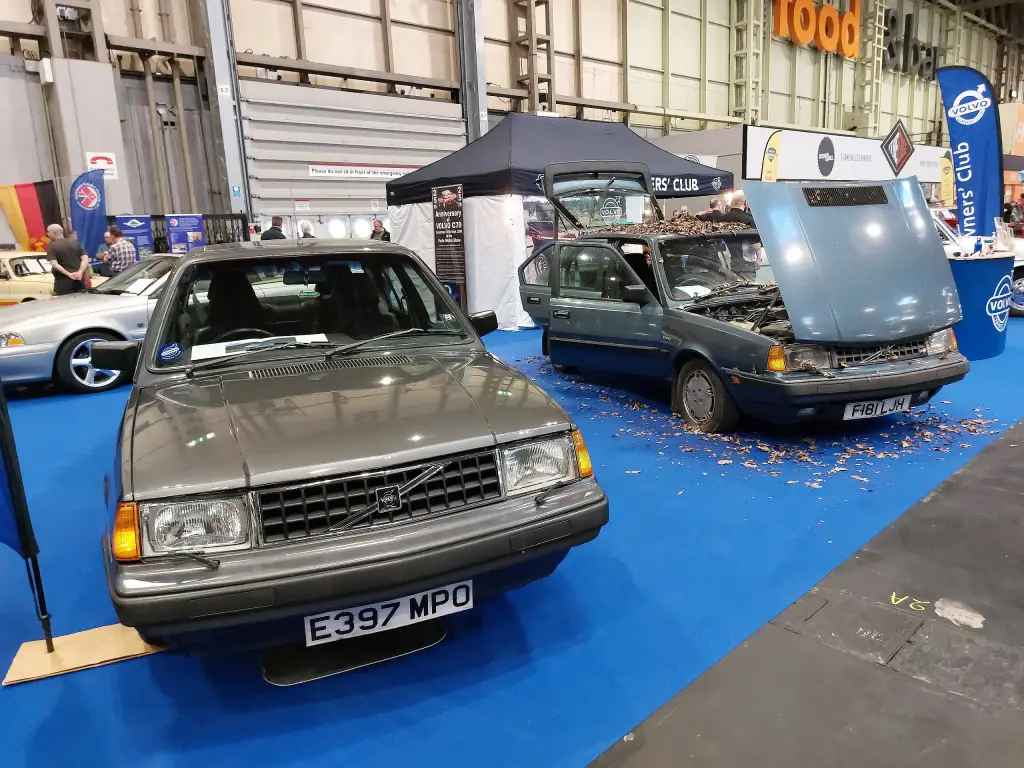
The 343 went on sale in February 1976 with a 70 PS 1.4-litre Renault engine and DAF’s Variomatic continuously variable transmission mounted at the rear. From 1979 Volvo offered a manual gearbox adapted from the 200 Series alongside the CVT and reworked the interior with a better dashboard and seats. A five-door 345 joined the range in August 1979 for the 1980 model year.
Facelifts and the 360
A facelift in the summer of 1981 brought a revised bonnet, grille, lamps and bumpers and a new dashboard. From the 1983 model year the third digit, which had shown the number of doors, was dropped, and the 360 arrived with two 2.0-litre engines: the 95 PS B19A in the 360 GLS and the 115 PS fuel-injected B19E. The 360 GLT had a five-speed manual, breakerless ignition, velour trim, a front spoiler with extra lights and a rear spoiler, and sat 15 mm lower.
A further facelift in 1985 brought wraparound bumpers with integrated indicators, redesigned tail lamps, VDO instruments instead of Smiths, and the low-friction B200 engine in place of the older redblock units in the 360.
How it drove
The 300 was unusual in mounting its gearbox on the De Dion rear axle as a transaxle, with the driveshaft in a torque tube on the two-litre cars. That helped weight distribution and traction but produced a large transmission tunnel. The series was considered heavy and often underpowered, yet reliable and safe for its day, and the 360 GLT was well regarded by enthusiastic drivers.
Design and features
- Rear transaxle: gearbox on the rear axle for better balance and traction.
- Variomatic: DAF’s belt-driven CVT, later joined by a conventional manual.
- Dutch production: built at Born, the former DAF factory.
- Safety: steel side-impact bars and Volvo seats in the 1975-derived design.
- 360 GLT: the sporting version with a 2.0-litre engine and five-speed gearbox.
Volvo 300 Series versions
- 343 (1976): three-door hatchback with the 1.4 Renault engine and CVT.
- 345 (1979): five-door hatchback, 30 kg heavier.
- 340: the renamed range after 1983, with 1.4 and 1.7-litre engines.
- 360 GLS and GLT (1983): 2.0-litre cars, the GLT with 115 PS.
- 360 saloon (1984): four-door notchback body.
The 300 Series was replaced by the Volvo 440 and 460, and it shared its Dutch factory with the Volvo 66. More cars are in the Volvo collection.
Sources
- Volvo 300 Series, English Wikipedia: DAF background, chronology, engines, engineering