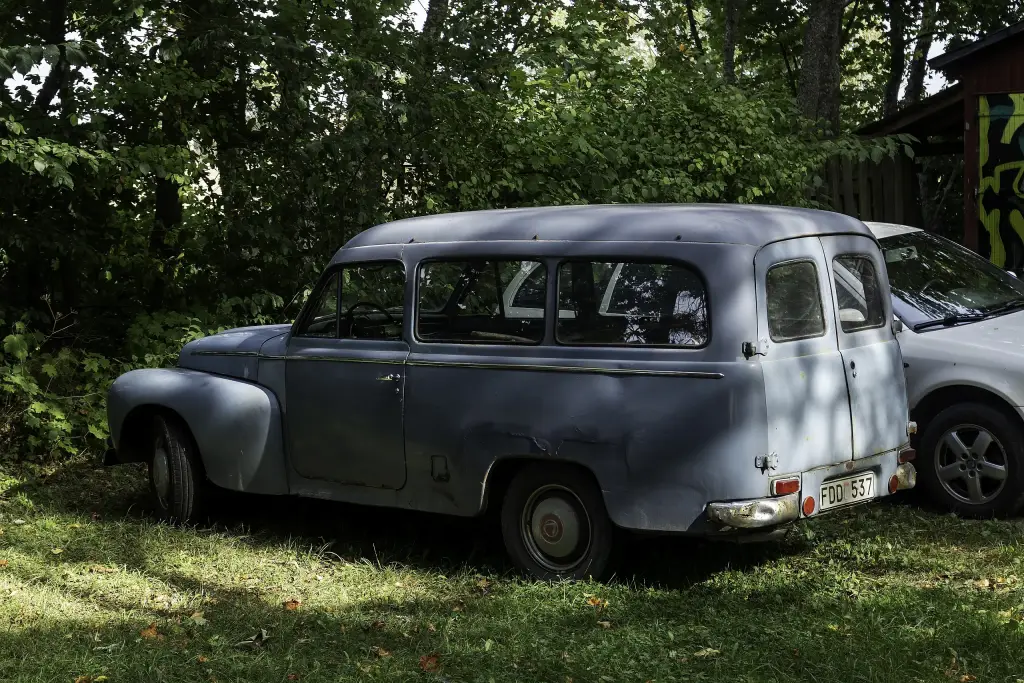
The Volvo Duett was built from 1953 to 1969. Its name was meant to say that the same car could serve as a delivery van during the week and as a comfortable family saloon at weekends, and it came as an estate, a panel van and a bare chassis.
Volvo Duett at a glance
| Production | 1953–1969 |
|---|---|
| Bodies | estate, panel van, bare chassis |
| Models | PV445, P210 from autumn 1960 |
| Construction | ladder frame with leaf springs at the rear |
| Based on | Volvo PV444 saloon, sharing engine and front suspension |
| Windscreen | two-piece flat glass on the PV445, one-piece curved on the P210 |
| Built by coachbuilders | Grip, Valbo and Nordbergs made pickups and convertibles |
| Replaced by | Volvo 145 Express |
| Last built | 1969, four years after the PV544 ended |
History of the Volvo Duett
The Duett was based on the Volvo PV saloon and shared its engine and front suspension, but where the PV had unitary construction and coil springs at the rear, the Duett used a separate ladder frame with leaf springs. Critics have called that a step backwards, since the PV was Volvo’s first unitary car, but the frame gave Volvo an easy way to build a commercial vehicle: bodies could be varied, and the bare chassis let Swedish coachbuilders such as Grip, Valbo and Nordbergs build pickups, convertibles and specialised vans on the same mechanicals.
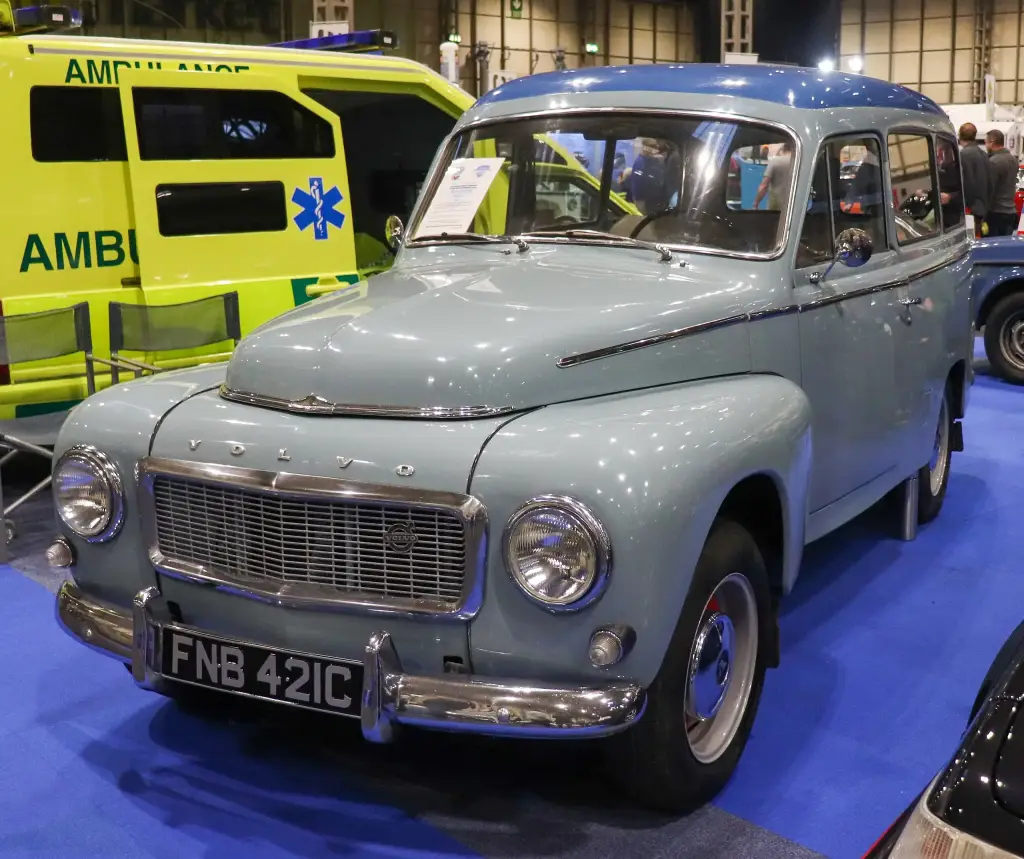
The first version was the PV445, whose bodywork came from the PV444 saloon and kept its two-piece flat windscreen. In the autumn of 1960 the P210 replaced it, most easily recognised by the single-piece curved windscreen shared with the PV544. The ladder frame also made the Duett a favourite base for hot rods and for Swedish A-tractor conversions.
The last P210 left the line in 1969, four years after production of the PV544 on which it was based had ended. It was replaced by the Volvo 145 Express, a modern high-roof estate by Jan Wilsgaard built on the Amazon platform and unrelated to the Duett mechanically. The Duett was the only car Volvo marketed in the United States with a separate frame; all its other models were unitary.
Design and features
- Dual purpose: van during the week, family car at weekends.
- Ladder frame: easy to body in different ways and to convert.
- Bare chassis: sold to coachbuilders for pickups and specialist vehicles.
- PV mechanicals: the same engine and front suspension as the saloon.
- Long life: sixteen years in production, outlasting the PV544.
Volvo Duett versions
- PV445 (1953): estate and van with the two-piece windscreen.
- P210 (1960): single-piece curved windscreen, shared with the PV544.
- Panel van: windowless commercial body.
- Bare chassis: for coachbuilt pickups, convertibles and specials.
- Coachbuilt specials: Grip, Valbo and Nordbergs conversions.
The Duett was based on the Volvo PV444/544 and was replaced by the 140 Series Express estate. More cars are in the Volvo collection.
Sources
- Volvo Duett, English Wikipedia: production, frame design, models, replacement