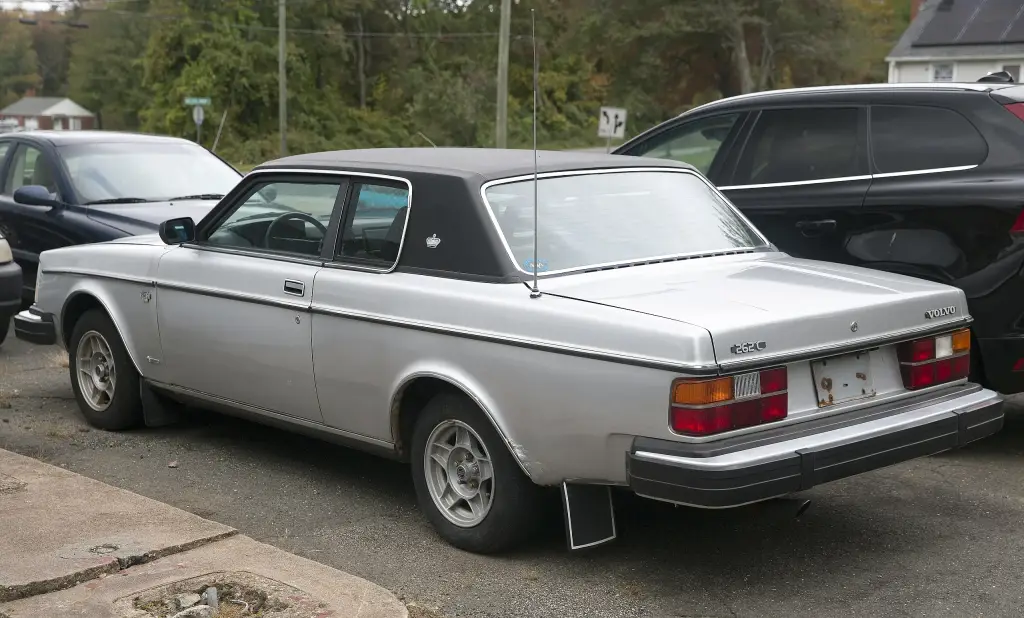
The Volvo 262C was a luxury two-door coupé built from 1977 as a 1978 model until 1981. It took the floor pan, drivetrain and much of the body of the 264 saloon, had its roof lowered by about 100 mm and was assembled by Bertone in Turin.
Volvo 262C at a glance
| Production | 1977–1981 (as a 1978 model) |
|---|---|
| Builder | Bertone, Turin, Italy |
| Based on | Volvo 264 saloon |
| Design | Jan Wilsgaard, Volvo in-house |
| Roof | about 100 mm lower than the 260 saloon |
| Engine | PRV V6, 2,664 cc, 2,849 cc from 1980 |
| Built | 6,622 (1978–1980) |
| Main market | United States, about half of production |
| Launch price | about $15,000 in the US |
| Convertible | 262C Solaire, five cars |
Based on one source, the English Wikipedia article on the 262C.
History of the Volvo 262C
The 262C was conceived as a halo car for Volvo. The company commissioned Bertone, the Italian design and coachbuilding firm, and planned to assemble 1,200 cars a year, of which 1,000 were intended for the United States. The drivetrain, suspension, floor pan and many body panels came straight from the 260 four-door; Bertone built the roof pillars, roof panel, windscreen surround, cowl and the upper parts of the doors.
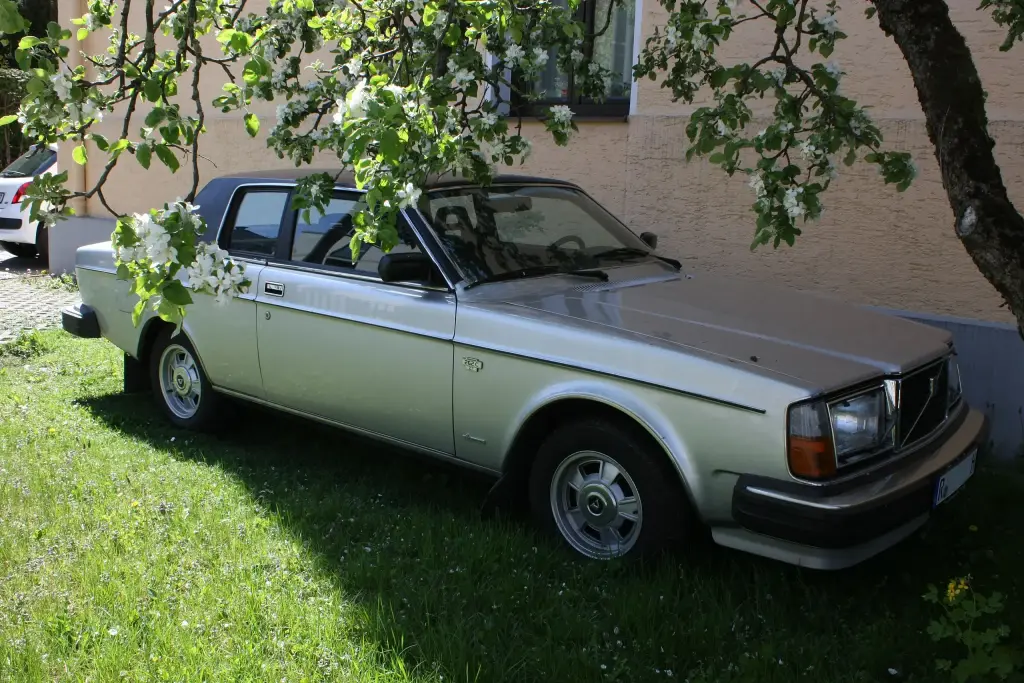
The chopped roof made the cabin tight and the wide C-pillars left small rear side windows. Under the bonnet sat the PRV V6 developed jointly by Peugeot, Renault and Volvo, and the 262C was the first production car with a V engine to use a Lambda Sond oxygen sensor.
Equipment and reception
The car was lavishly equipped for a Volvo: power windows and mirrors, central locking, cruise control, air conditioning, heated front seats, leather trim, alloy wheels and an electric radio antenna were all standard. The only extras were a limited-slip differential, a choice of stereos and a no-cost three-speed automatic in place of the four-speed manual with overdrive.
Aimed mainly at the United States, the 262C competed with the Cadillac Eldorado and the Mercedes-Benz 280 CE and 300 CD. Road & Track found buyers enthusiastic, though it noted the lack of headroom and that the 200 Series chassis could not match the ride of a Mercedes. One journalist called it a “strangely proportioned two-door” that looked like a chopped diesel locomotive.
Year by year
The first cars came in one colour scheme only, silver with a black vinyl roof. For 1979 the rear end was restyled with a deeper boot lid and wraparound lamps. In 1980 the V6 grew from 2,664 to 2,849 cc with a revised block and a higher compression ratio, and the front air dam from the 242GT was added. The vinyl roof was dropped for the final 1981 cars. For Volvo’s 25th anniversary in America, five 262C Solaire convertibles were converted by Newport Conversions; headquarters vetoed the idea on safety grounds.
Design and features
- Bertone body: Italian coachbuilding on a Swedish floor pan.
- Lower roof: about 100 mm less height and a coupé profile unlike any other Volvo.
- Lambda sensor: the first production V engine with an oxygen sensor.
- Full equipment: leather, air conditioning, cruise control and heated seats as standard.
- Rarity: 6,622 cars in three model years.
Volvo 262C versions
- 1978: silver paint with a black vinyl roof only.
- 1979: deeper boot lid and wraparound tail lamps.
- 1980: 2.8-litre V6, seven main bearings, 242GT front air dam.
- 1981: final model year without the vinyl roof.
- 262C Solaire: five factory-approved convertibles by Newport Conversions.
The 262C was the coupé of the Volvo 200 Series range. More cars are in the Volvo collection.
Sources
- Volvo 262C, English Wikipedia: design, equipment, production, annual changes