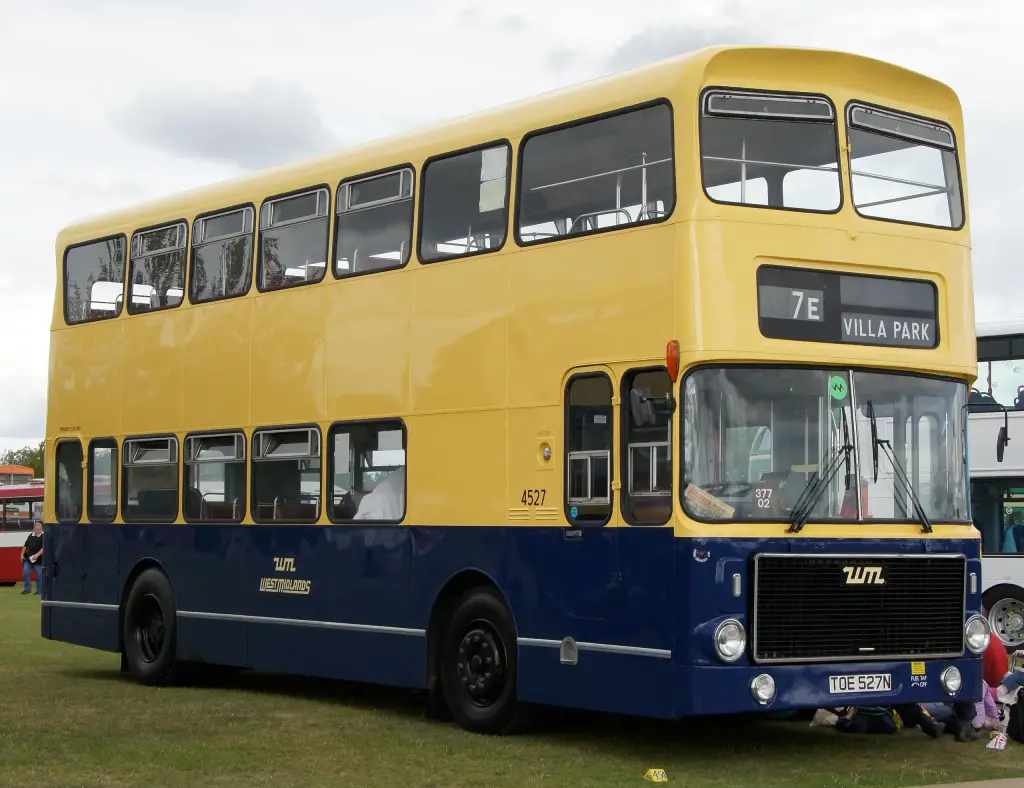
The Volvo Ailsa B55 was a front-engined double-decker bus chassis built by Ailsa, Volvo’s British subsidiary, in Irvine, North Ayrshire, from 1974 to 1985. Its front-mounted engine still allowed a front entrance suitable for one-person operation.
Volvo Ailsa B55 at a glance
| Production | 1974–1985 |
|---|---|
| Built in | Irvine, Ayrshire, Scotland |
| Type | front-engined double-decker chassis |
| Engine | Volvo TD70, 6.7-litre turbocharged |
| Gearbox | Self-Changing Gears five-speed semi-automatic, Voith D851 from 1977 |
| Suspension | beam axles and leaf springs; air suspension optional on Mark III |
| Marks | B55, Mark II (1977), Mark III (1980) |
| Bodies | mostly Walter Alexander; also Van Hool McArdle, Northern Counties, East Lancs, Marshall |
| Built | just over 1,000, of which 890 Alexander |
| Last in service | Cardiff Bus, withdrawn 15 December 2007 |
History of the Volvo Ailsa B55
In June 1972 Volvo bought a 75% share in Ailsa Trucks Ltd, an Irvine-based truck importer, turning it into a Volvo subsidiary. Ailsa Bus Ltd followed in August to market imported Volvo buses in Britain, and development of a front-engined double-decker with bodywork by Walter Alexander of Falkirk began in 1973. The Ailsa B55 was built at Irvine and first appeared at the 1973 Scottish Motor Show.
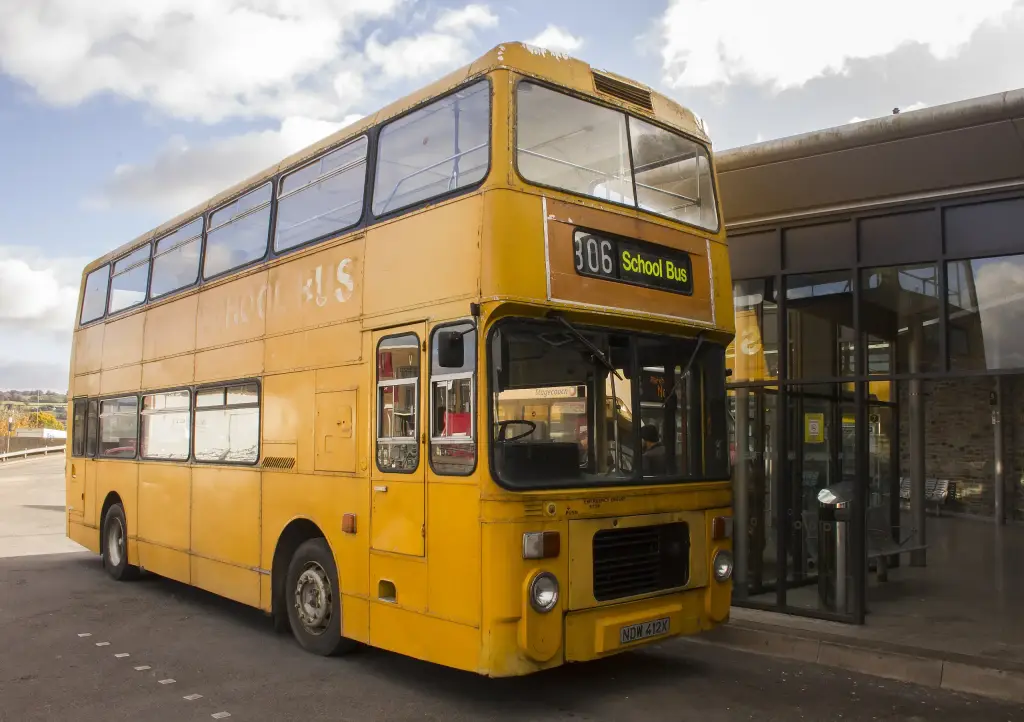
The layout was unusual: the engine sat at the front yet still allowed a front entrance for one-person operation, in the manner of the earlier Guy Wulfrunian. Power came from the compact 6.7-litre Volvo TD70 turbocharged engine, with beam axles and leaf springs and a Self-Changing Gears five-speed semi-automatic gearbox. Tri-axle and single-deck versions were offered for export, though no single-deckers were built; a low-height prototype, the B55-20, went to Derby Borough Transport in 1975.
Marks
A Mark II arrived in 1977 with a Voith D851 transmission and retarder alongside the original gearbox. The Mark III of 1980 dropped Ailsa badging for Volvo, kept the TD70H engine and adopted the rear axle of the Volvo F10 truck with an offset differential, with air suspension available as an option. Production ended in 1985, and the mid-engined Volvo B10M Citybus effectively replaced it.
Operators
The Scottish Bus Group took 192 buses between 1975 and 1984, Fife Scottish buying 74 and Eastern Scottish 40 new. Tayside Regional Council was the most enthusiastic buyer, with 161 for Dundee between 1976 and 1984 in four different body styles. West Midlands and South Yorkshire took significant fleets, Cardiff Bus bought 36 with Northern Counties bodies, and London Transport evaluated three Mark IIIs in 1984 without ordering more. Just over 1,000 B55s were built, 890 of them bodied by Alexander and 64 by Van Hool McArdle in Dublin. Overseas, the Indonesian Ministry of Transport took 385 for Jakarta between 1981 and 1985. The last large fleet, 18 buses at Cardiff Bus, was withdrawn on 15 December 2007.
Design and features
- Front engine, front door: one-person operation from a double-decker layout.
- TD70 turbo: a compact 6.7-litre six under the front.
- Semi-automatic gearbox: Self-Changing Gears, later Voith with retarder.
- Alexander bodies: the great majority of the 1,000-plus built.
- Long life: survivors ran in Cardiff until 2007.
Volvo Ailsa B55 versions
- B55 (1974): the original Mark I with Self-Changing Gears transmission.
- Mark II (1977): Voith D851 option with retarder.
- Mark III (1980): Volvo badging, F10 rear axle, optional air suspension.
- B55-20: low-height prototype for Derby.
- Tri-axle and export versions: including 385 knock-down kits for Jakarta.
The Ailsa was replaced by the mid-engined Volvo B10M Citybus. More buses are in the Volvo collection.
Sources
- Volvo Ailsa B55, English Wikipedia: design, marks, operators, production