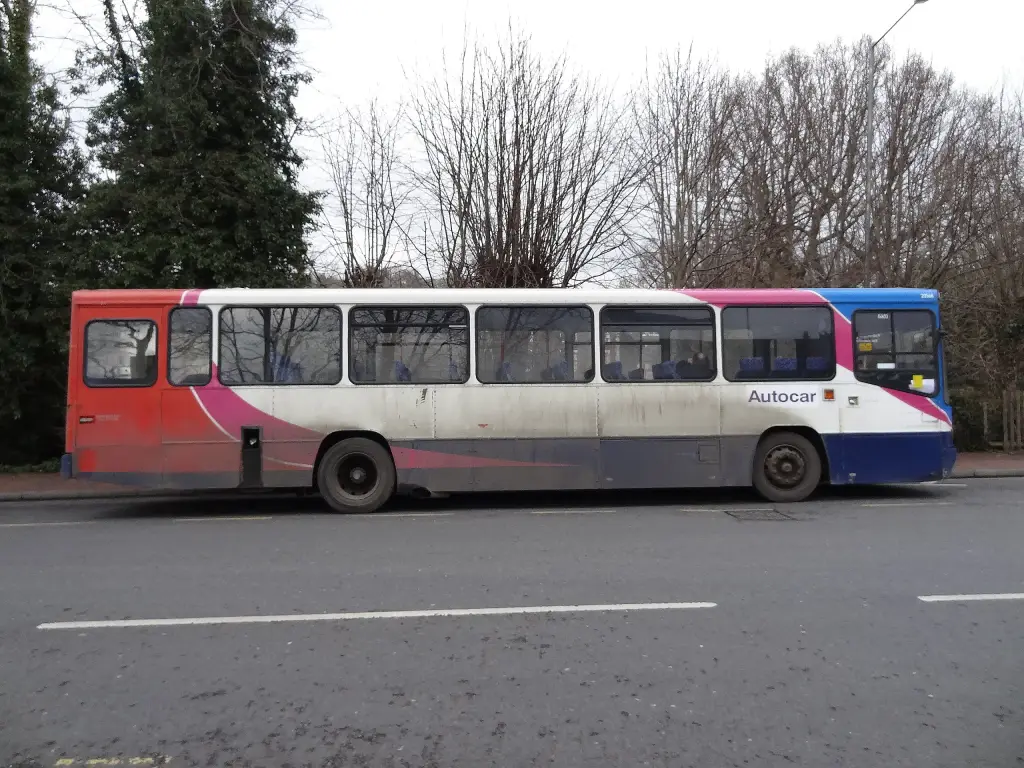
The Volvo B10M was a mid-engine city bus and coach chassis built from 1978 to 2003. It succeeded the B58 and used the same 9.6-litre Volvo diesel, mounted horizontally under the floor behind the front axle. An articulated B10MA and a double-deck Citybus joined the range.
Volvo B10M at a glance
| Production | 1978–2003 |
|---|---|
| Type | mid-engine bus and coach chassis |
| Engine | 9.6-litre horizontally mounted diesel |
| Wheelbases | B10M-46 to B10M-70, in decimetres; tri-axle B versions from 1981 |
| Articulated | B10MA |
| Double-decker | B10MD/D10M Citybus, 1982–1997 |
| Semi-integral | C10M and B10M-C, engine in the middle of the chassis |
| Budget version | B9M, from 1982 |
| UK status | one of the best-selling chassis of the 1980s and 1990s |
| Citybus built | 586 for 32 UK operators |
History of the Volvo B10M
The B10M was designed as the successor to the B58, and much of its production stayed in Sweden, though some chassis were built in Britain and Brazil. It was offered as B10M-46, -50, -55, -60, -62, -65 and -70, the number giving the wheelbase in decimetres, and bodybuilders often shortened or stretched it to suit. A tri-axle chassis, the B10M-50B through -70B, appeared by 1981 and could be extended to a 7.25-metre wheelbase.
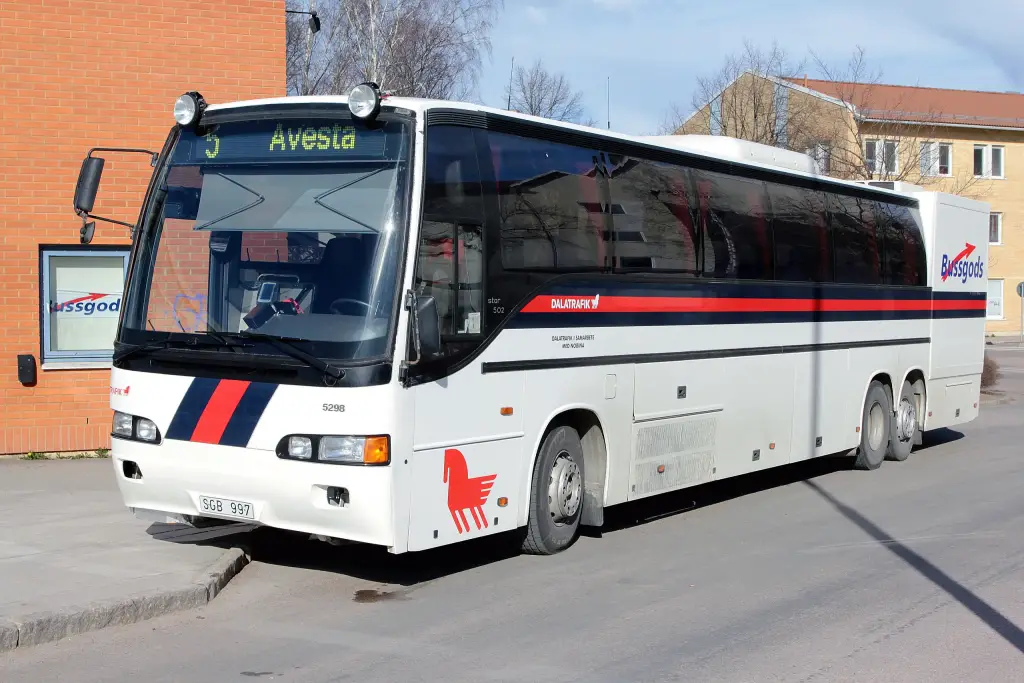
Originally a coach chassis, the B10M also became a very popular city bus, and it was one of the best-selling chassis in Britain through the 1980s and 1990s. Coach operators such as National Express, Park’s of Hamilton, Shearings and Wallace Arnold bought large fleets, while Stagecoach standardised on the bus version with Alexander PS bodies.
Citybus double-decker
A double-deck version was developed for Strathclyde PTE in 1981 and launched early in 1982 as the successor to the front-engined Ailsa B55, with a downrated engine and the name Citybus, unofficially B10MD or D10M. It was 9,514 mm long, used a 9.6-litre THD100 six and Voith or ZF automatic gearboxes, and was mostly bodied by Alexander with a modified R-type body. 586 were built for 32 British operators, the biggest customers being Strathclyde PTE with 101, London & Country with 74 and Nottingham City Transport with 46; the last went to Nottingham in 1997.
Other versions
The B9M of 1982 was a lighter, stripped-down budget model with the same engine at lower outputs, sold well in the Nordic countries. A right-hand-drive B10M-55B was sold as the B10MT and later B10T from 1984. In 1984 the Swiss bodybuilder Ramseier & Jenzer worked with Volvo on the semi-integral C10M with the engine in the middle; production ended in 1987 but the engine position survived as an option called B10M-C. In Singapore, SBS bought 977 B10Ms, one of the largest fleets of the type.
Design and features
- Mid-mounted engine: under the floor behind the front axle, freeing the rear for luggage.
- Many wheelbases: seven standard lengths plus tri-axle versions.
- Citybus: a British double-decker built on the same mechanicals.
- Coach favourite: the backbone of several major UK coach fleets.
- Long production: 25 years, with derivatives from B9M to C10M.
Volvo B10M versions
- B10M coach: two-axle from 4.6 to 7.0 m wheelbase.
- B10M-B tri-axle: from 1981 for long coaches and buses.
- B10MA: articulated city bus.
- B10MD Citybus: British double-decker, 586 built.
- B9M and C10M: budget and semi-integral derivatives.
The B10M succeeded the Volvo B58 and replaced the Volvo Ailsa B55 as Volvo’s British double-decker. More buses are in the Volvo collection.
Sources
- Volvo B10M, English Wikipedia: history, wheelbases, Citybus, derivatives, operators