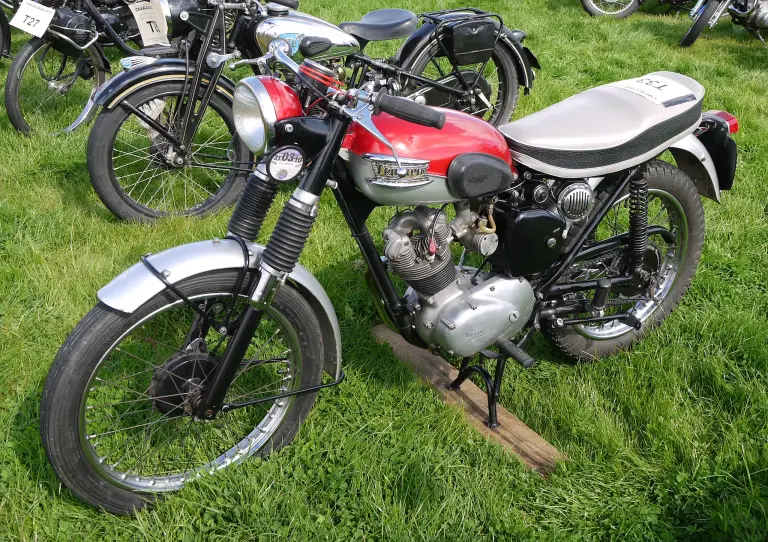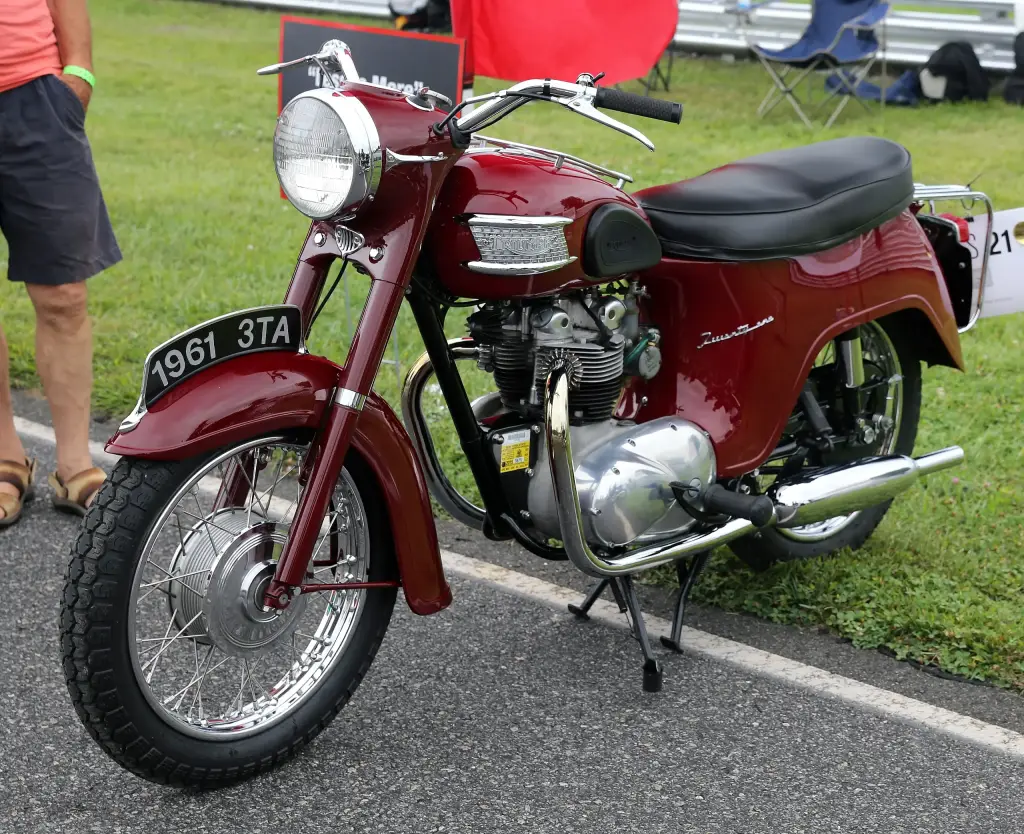
The Triumph Twenty One, also known as the 3TA, was a 349 cc standard motorcycle built by Triumph Engineering in Coventry. Launched in 1957, it was the first of the Triumph unit-construction twins and stayed in production, under the 3TA name from 1959, until 1966.
Triumph Twenty One at a glance
| Maker | Triumph Engineering Co Ltd, Coventry |
|---|---|
| Launched | 1957 |
| Engine | 349 cc unit-construction twin |
| Designer | Edward Turner |
| Crankshaft | 360 degrees |
| Camshafts | twin, gear driven |
| Oil pump | twin plunger, dry sump lubrication |
| Carburettor | single Amal Monobloc |
| Gearbox | four-speed, right-foot gear lever |
| Renamed | Triumph 3TA in 1959 |
| Production ended | 1966 |
Based on the English Wikipedia article on the Twenty One / 3TA.
History of the Triumph Twenty One
1957: the first unit twin
The Model Twenty One was launched in 1957 as the first of Triumph’s unit-construction twin-cylinder motorcycles from the Meriden factory, with the engine and gearbox in one casting rather than separate units. Its 349 cc engine was a classic Edward Turner design with a 360-degree crankshaft, twin gear-driven camshafts and a twin plunger oil pump. The cylinder block was cast iron with an alloy head and separate rocker boxes, lubrication was dry sump, and a single Amal Monobloc carburettor fed the engine. Drive went through a conventional four-speed gearbox with a right-foot gear lever.
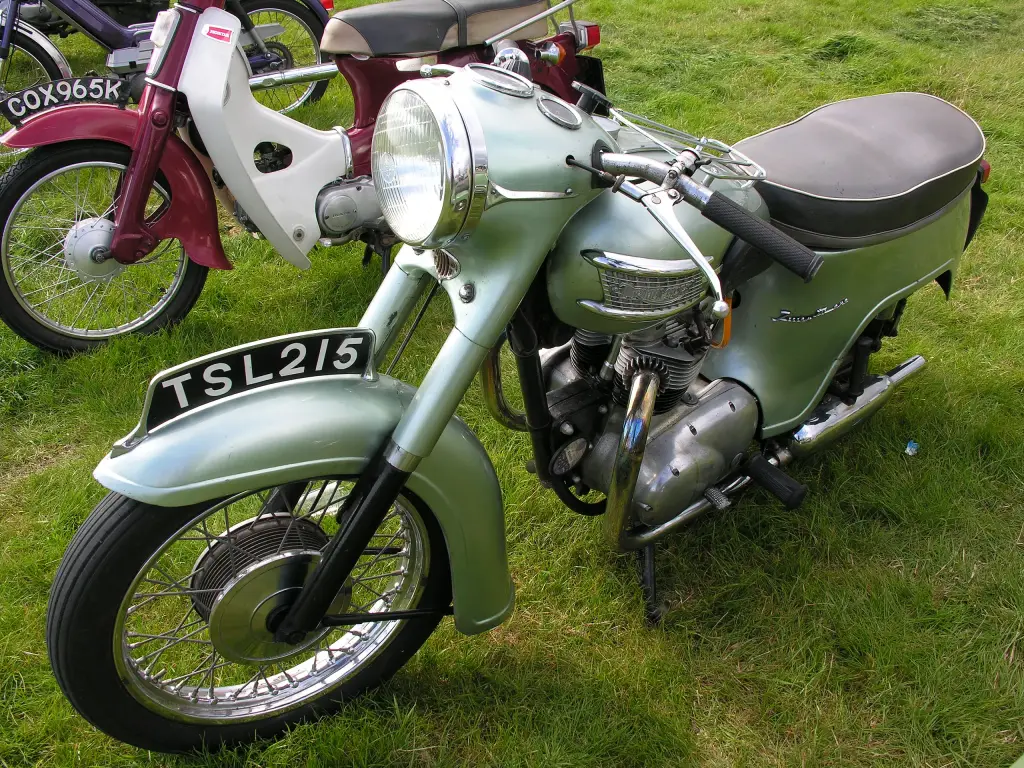
The name
The name was spelt out in full on the side panels, and there are two explanations for it. The first is that it celebrated the twenty-first anniversary of Triumph Engineering Co Ltd. The second is that the important American export market measured engine size in cubic inches, and 21 cubic inches is about 350 cc.
1959: the 3TA and 5TA
In 1959 the Twenty One was rebranded the Triumph 3TA and a 500 cc version, the 5TA, was added; the 5TA was also called the new Speed Twin. The A in both names marked the fact that they had an alternator as standard, where the earlier pre-unit models used a dynamo. The first versions of both had the fully enclosed rear end fashionable in the late 1950s, which American customers disliked and nicknamed the bathtub; they also found the extra sheet metal made servicing harder. Only the final 3TA of 1966 dropped the rear fairing entirely.
The end
The 3TA and 5TA stayed in production until 1966, when they were succeeded by their sportier versions, the T90 and the T100.
Design and features
- First unit twin — engine and gearbox in one unit, a first for Triumph.
- Turner engine — 349 cc with a 360-degree crank and gear-driven camshafts.
- Alternator — the A in 3TA and 5TA marked the change from a dynamo.
- Bathtub rear end — fashionable in Britain, unpopular in America.
Triumph Twenty One versions
- Twenty One (1957–1959): the original 349 cc model.
- 3TA (1959–1966): renamed, with an alternator.
- 5TA (1959–1966): the 500 cc version, also called the new Speed Twin.
- 1966 3TA: the only version without the rear enclosure.
The Twenty One was the small brother of the Thunderbird twins, and the Tiger name was used on its sports descendants. More in the Triumph collection.
Sources
- Triumph Twenty One, English Wikipedia: engine, name, 3TA and 5TA, bathtub, end of production