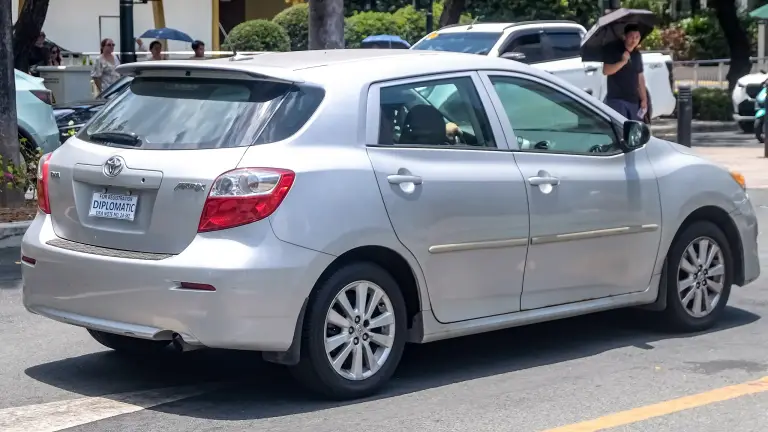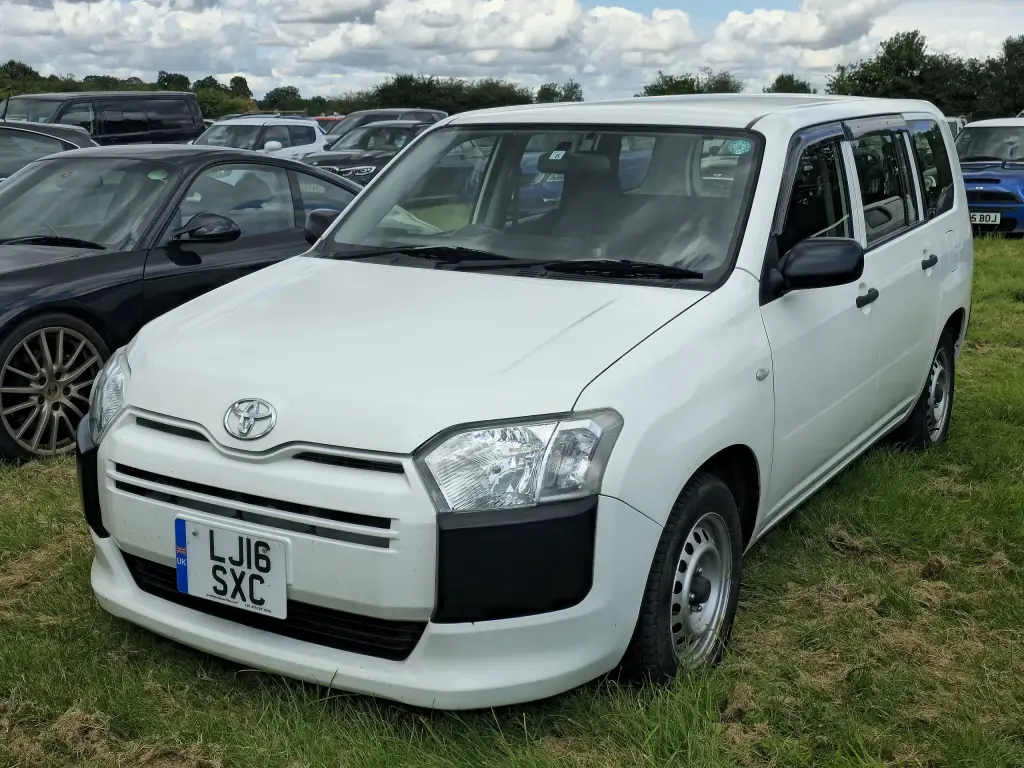
The Toyota Probox is a five-door passenger car and light commercial van produced since July 2002 and sold mainly in Japan. It replaced the Corolla and Sprinter van, served as a slightly shorter version of the Succeed, and its design has barely changed because conservative commercial buyers preferred it that way.
Toyota Probox at a glance
| Maker | Toyota, built by Daihatsu |
|---|---|
| Production | Since July 2002 |
| Class | Light commercial van and wagon |
| First generation | XP50 |
| Second generation | XP160, from 2014 |
| Platform | Vitz/Yaris NBC, then the B platform |
| Engines | 1.3 and 1.5-litre petrol, 1.4-litre turbodiesel |
| Gearbox | Automatic, Super CVT-i from 2014 |
| Twin model | Toyota Succeed, also the Mazda Familia Van |
| Wagon version | Passenger version, discontinued in October 2013 |
Based on one source: the English Wikipedia article on the Toyota Probox.
History of the Toyota Probox
Why the Probox existed
Toyota’s Corolla and Sprinter vans, derived from passenger cars, were losing market share to Nissan’s more cargo-focused AD Van, so the Probox was designed to beat it in every respect. The related Succeed also had to replace the larger Caldina Van as Toyota simplified its range. Simplicity, ease of use and lower costs were the other goals: the Probox used the smaller Vitz/Yaris NBC platform with a bespoke rear half that maximised space and stability whatever the load, with rear shock absorbers mounted beneath the floor and tilted backwards. Daihatsu took part in development, and the Probox and Succeed are built at Daihatsu’s Kyoto plant.
Van and wagon
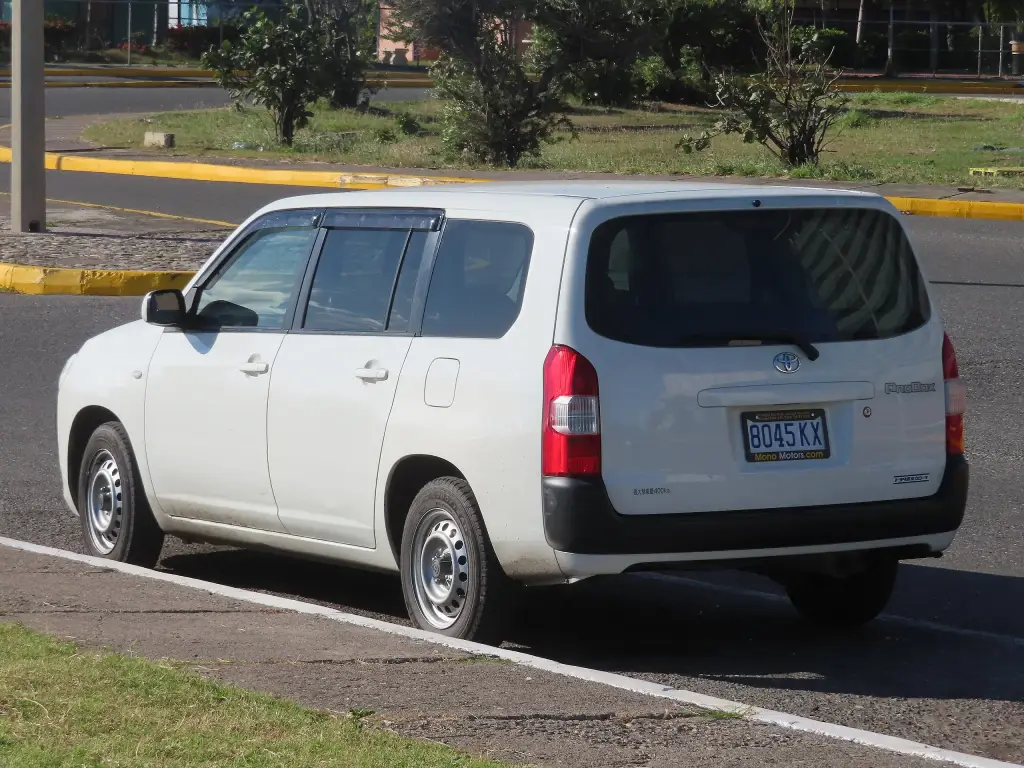
Most Proboxes are vans, but a more comfortable Probox Wagon was offered with the larger petrol engine until October 2013, with a bigger rear seat and headrests. Vans were usually white, silver, navy or black, while the Wagon could also be ordered in Champagne and the F Extra Package Limited in aqua, green or maroon. Engines were 1.3- and 1.5-litre petrol units from the NZ family plus a 1.4-litre 1ND-TV turbodiesel, and from April 2003 the 1.5 could be ordered with CNG, producing 92 PS and 125 N·m. The diesel, the last sub-two-litre diesel model then built in Japan, was dropped in September 2007 as diesels fell out of favour. Until 2008 the Probox and Succeed sold 70,000 to 90,000 cars a year, and since then about 50,000.
The 2014 redesign
A complete redesign was announced on 6 August 2014 with sales from 1 September, alongside a new Succeed. While Toyota presented it as a facelift, the Japanese type-approval system treats it as a second generation with a new model code. The 1.3-litre engine was replaced by the more efficient 1NR-FE, and the front half moved from the NBC platform to the new B platform, which had to be narrowed by 60 mm to fit the existing body; behind the A-pillar the structure was unchanged. The new engine and CVT were needed to meet stricter emissions and fuel consumption rules, and the second generation has only ever been sold with the Super CVT-i. From 2018 Mazda has sold a rebadged version as the Familia Van. The Succeed ended in May 2020, but the Probox sold 48,000 cars in 2021 and gained minor updates in August 2020.
Design and features
- Commercial focus: designed to beat Nissan’s AD Van for cargo space and ease of use.
- Vitz platform: a small-car base with a bespoke rear half for load carrying.
- CNG option: available on the 1.5-litre engine from 2003.
- Long production run: an unchanged body for nearly twenty years by buyer demand.
Toyota Probox versions
- XP50 (2002): first-generation van and wagon.
- Wagon: passenger version, discontinued in October 2013.
- CNG (2003): 1.5-litre engine running on compressed natural gas.
- XP160 (2014): second generation with the 1NR-FE engine and CVT.
- Mazda Familia Van (2018): rebadged version for Mazda.
The Probox was the twin of the Toyota Succeed and replaced the Corolla and Sprinter vans, whose passenger cars are covered with the Corolla. More cars are in the Toyota collection.
Sources
- Toyota Probox, English Wikipedia: generations, engines, popularity