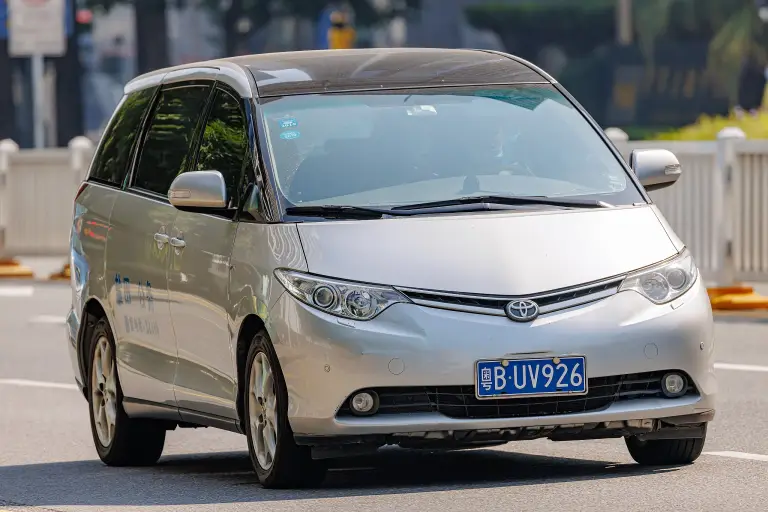
The Toyota Prius is a car produced since 1997 over five generations, using a hybrid drivetrain called Hybrid Synergy Drive that combines a petrol engine and an electric motor. It was the first mass-produced hybrid vehicle, going on sale in Japan on 10 December 1997 and reaching the world in 2000.
Toyota Prius at a glance
| Maker | Toyota |
|---|---|
| Production | Since 10 December 1997 |
| Generations | Five |
| Class | Compact car, five-door liftback since 2003 |
| Drivetrain | Hybrid Synergy Drive |
| First model | NHW10, Japan only |
| First generation output | 37,425 NHW10 cars |
| Second generation | XW20 with a drag coefficient of 0.26 |
| Family | Prius v/+, Prius c/Aqua, plug-in hybrid |
| Name | Latin for “first” or “to go before” |
Based on one source: the English Wikipedia article on the Toyota Prius.
History of the Toyota Prius
First generation (XW10; 1997)
Toyota showed a hybrid concept at the Tokyo Motor Show in 1995 and began testing a year later. The first Prius, the NHW10, went on sale on 10 December 1997 in Japan only, and became the world’s first mass-produced petrol-electric hybrid car. It won Car of the Year Japan in 1997 and the Automotive Researchers’ and Journalists’ Conference award in 1998. Production ran at the Takaoka plant from December 1997 to February 2000, with 37,425 cars built; the styling came from Toyota’s California designers. The NHW11 from May 2000 was the first Prius sold outside Japan, in Asia, America, Europe and Australia, priced at US$19,995 in the United States and marketed between the Corolla and Camry; it had electric power steering and was the second mass-produced hybrid on the American market after the Honda Insight. 33,411 NHW11 cars were built until June 2003, and Toyota sold about 123,000 first-generation Priuses in total.
Second generation (XW20; 2003)
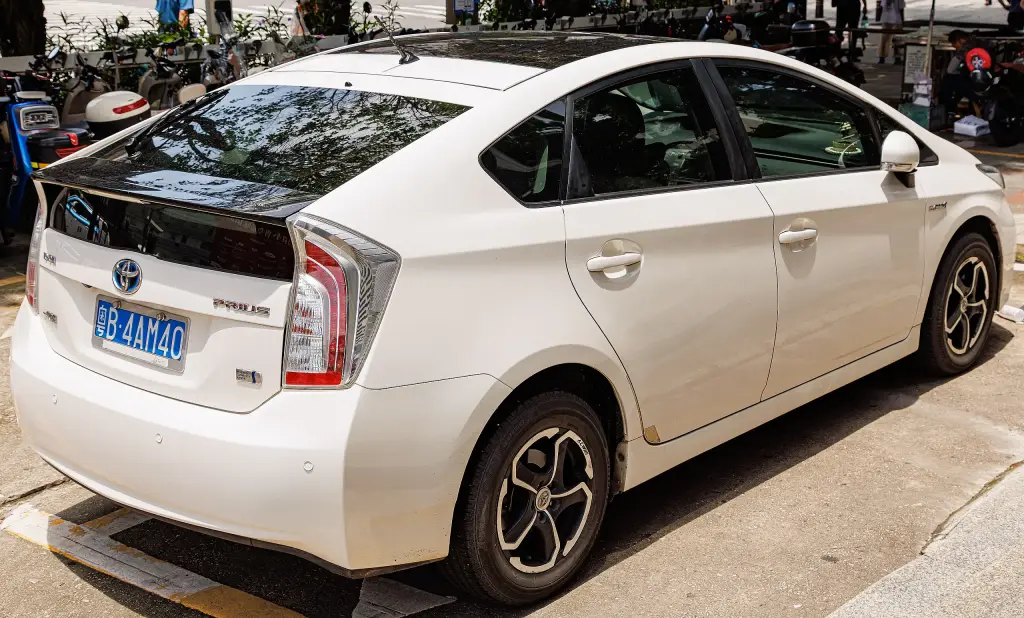
The NHW20 was presented at the New York International Auto Show in April 2003 for the 2004 model year and was a complete redesign, becoming a compact five-door liftback sized between the Corolla and Camry. Redistributed mechanical and interior space greatly increased rear legroom and luggage room, and the aerodynamic Kammback body gave a drag coefficient of 0.26. The development, led by chief engineer Shigeyuki Hori, produced 530 patents, and the car used an all-electric air conditioning compressor, an industry first. Production began at Tsutsumi in August 2003 and was supplemented by Fujimatsu in October 2004.
The Prius family
In 2011 Toyota expanded the range with the Prius v, also called the Prius α and Prius+, an MPV, and the Prius c, known as the Aqua, a subcompact hatchback. A production plug-in hybrid followed in 2012, and the second-generation plug-in, the Prius Prime, arrived in the United States in November 2016. The family reached 6.1 million sales by January 2017, 61 per cent of the 10 million hybrids Toyota had sold since 1997, and the Prius is offered in more than 90 markets, with Japan and the United States the largest. The name is Latin for “first” or “to go before”; in 2011 Toyota USA held a vote on the plural and chose “Prii”.
Design and features
- Hybrid Synergy Drive: a petrol engine and electric motor working together.
- First mass-produced hybrid: on sale in Japan in December 1997.
- Aerodynamic liftback: a drag coefficient of 0.26 in the second generation.
- Industry firsts: an all-electric air conditioning compressor in the 2003 car.
Toyota Prius versions
- NHW10 (1997): Japan-only first generation.
- NHW11 (2000): first Prius exported worldwide.
- XW20 (2003): second generation liftback.
- Prius v / α / + (2011): MPV version.
- Prius c / Aqua (2011): subcompact hatchback.
- Prius Prime (2016): second-generation plug-in hybrid.
The Prius shares its hybrid technology with the fuel cell FCHV and with the hybrid versions of the Yaris. More cars are in the Toyota collection.
Sources
- Toyota Prius, English Wikipedia: generations, hybrid system, family