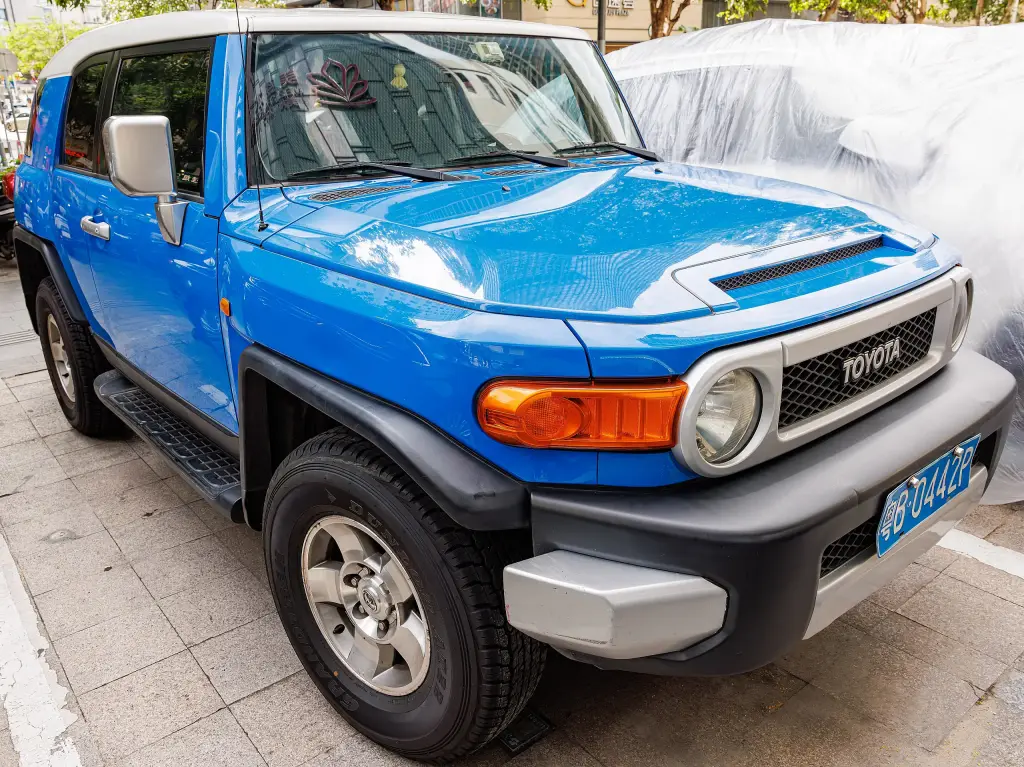
The Toyota FJ Cruiser is a retro-styled mid-size SUV produced between 2006 and 2022 and built by Toyota’s subsidiary Hino Motors in Hamura, Japan. It was shown as a concept at the 2003 Detroit auto show, approved for production after a positive reception, and shares much of its structure with the Land Cruiser Prado.
Toyota FJ Cruiser at a glance
| Maker | Toyota, built by Hino Motors |
|---|---|
| Production | 2006–2022 |
| Class | Mid-size SUV |
| Concept | January 2003, North American International Auto Show |
| Production debut | February 2005, Chicago Auto Show |
| Structure | Shared with the Land Cruiser Prado |
| Ground clearance | 9.6 inches (24 cm) |
| Angles | 34° approach, 30° departure |
| Body | Two rear-opening access doors |
| Japanese launch | 4 December 2010 |
| Last market | Middle East, until December 2022 |
Based on one source: the English Wikipedia article on the Toyota FJ Cruiser.
History of the Toyota FJ Cruiser
How the project started
By the time FJ40 production ended in 1984, the Land Cruiser had grown larger and more luxurious. In the mid-1990s product planner Dave Danzer and sales chief Yoshi Inaba began to press for a new FJ with the old car’s ruggedness. Danzer worked secretly with Akio Toyoda to set up a shop at the NUMMI plant and test the idea by combining Tacoma underpinnings with the bodies of Toyota Bandeirantes, the FJ40-based model still built in Brazil until 2001. Toyota’s Calty studio then produced a fresh interpretation of the FJ40, and a design by 24-year-old Jin Won Kim was chosen for the exterior, with William Chergosky responsible for the interior. The concept, known internally as Rugged Youth Utility, appeared in Voodoo Blue in Detroit in 2003.
Development
In mid-2004 Toyota tested development mules on some of North America’s hardest trails, including Moab, the Angeles National Forest, the Mojave Desert and the Rubicon Trail. Each one-off mule cost hundreds of thousands of dollars, but the testing shaped the A-TRAC traction control and the suspension tuning. The production car kept the concept’s exterior almost unchanged, although chief engineer Akio Nishimura simplified some interior ideas to keep the price reasonable: the shovel-handle gear lever, removable interior lights that doubled as torches and flat-folding front seats were dropped, while the three-gauge compass, temperature and inclinometer cluster and the 120-volt rear socket survived as options.
Design and markets
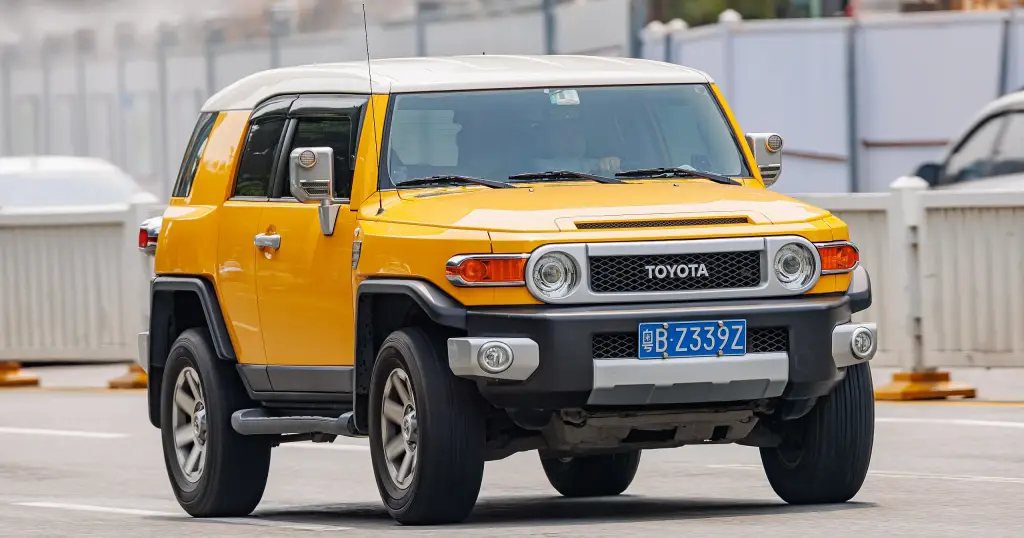
The FJ Cruiser has a short wheelbase, a nearly vertical windscreen with three wipers, and the word “Toyota” across the grille instead of the corporate emblem. Its rear-opening access doors give it a distinctive look, and high-strength steel provides side impact protection without a door pillar. The interior uses washable rubber surfaces and oversized controls for gloved hands. It entered the Japanese market on 4 December 2010, and the 2014 Trail Teams Ultimate Edition was the last version sold in the United States. Exports to Australia ended in August 2016, but the car remained on sale in Chile, the Middle East, the Philippines and southern Africa, and was finally discontinued in the Middle East in December 2022 with a final edition.
Design and features
- FJ40 cues: a short wheelbase, vertical windscreen and three wipers.
- Grille lettering: “Toyota” spelled out instead of the oval badge.
- Off-road hardware: 9.6 inches of clearance and A-TRAC traction control.
- Practical interior: washable rubber surfaces and oversized controls.
Toyota FJ Cruiser versions
- Concept (2003): Voodoo Blue show car from the Detroit auto show.
- Production FJ Cruiser (2006): the standard SUV.
- Trail Teams editions: off-road focused special versions.
- Ultimate Edition (2014): the last version sold in the United States.
- Final edition (2022): Middle East farewell model.
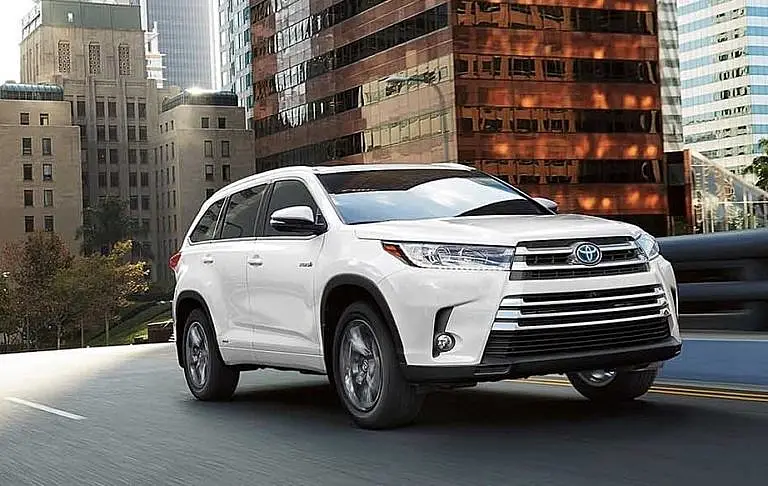
The FJ Cruiser shares its structure with the Land Cruiser Prado and revives the spirit of the Land Cruiser (J40). It sat between the RAV4 and Highlander in North America; more cars are in the Toyota collection.
Sources
- Toyota FJ Cruiser, English Wikipedia: design, development, markets