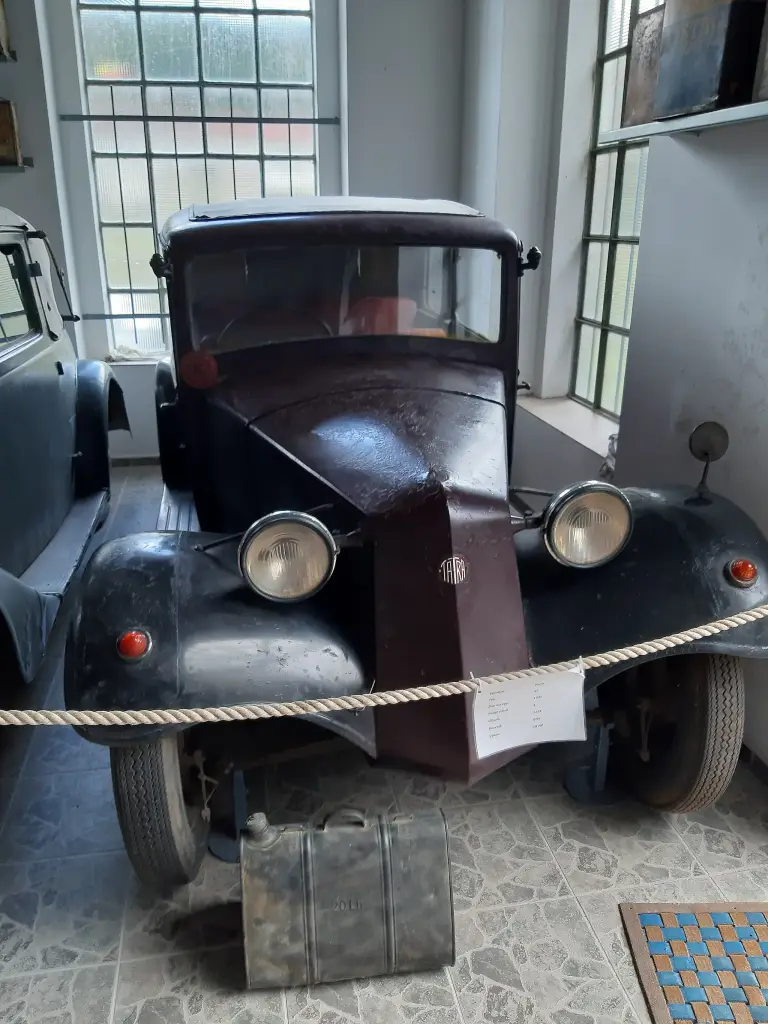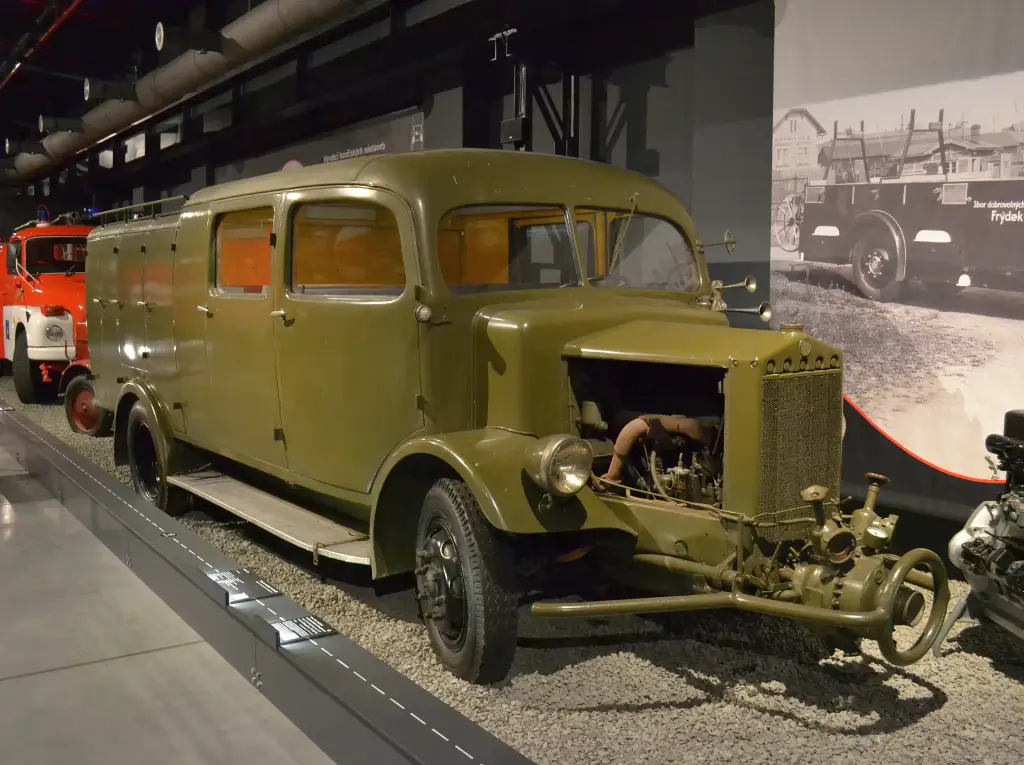
The Tatra 27 was a three-tonne 4×2 lorry built by Tatra at Kopřivnice between 1930 and 1946. It was the first Tatra truck with hydraulic brakes and became one of the most successful pre-war lorries of the marque, used in large numbers by both the Czechoslovak army and the Wehrmacht.
Tatra 27 at a glance
| Maker | Tatra, Kopřivnice, Czechoslovakia |
|---|---|
| Production | 1930–1946 |
| Layout | 4×2, backbone frame |
| Payload | 2.5 tonnes, 3 tonnes in army form |
| Engine | 4.25-litre water-cooled petrol four, 52 hp |
| Later engine | 4.7 litres, 63 hp (T27a) |
| Diesel version | T64, 4.8 litres, 60 hp (T27/64) |
| Wood gas | 5.2 litres, 51 hp (T27bH) |
| Brakes | hydraulic, a first for a Tatra truck |
| Built | 7,208 in all versions |
There is no English Wikipedia article on the Tatra 27; the page is based on the Czech article.
History of the Tatra 27
The first Tatra truck with hydraulic brakes
The Tatra 27, a medium lorry of 2.5 tonnes, reached the market in 1930. It was a two-axle vehicle of classic Tatra conception, with a backbone frame, a driven rear axle with swing half-axles and simple assembly. It became the marque’s first truck fitted with hydraulic brakes. A characteristic feature was the large intermediate section between the cab and the engine bonnet that housed the fuel tank; it survived on all later versions, including the postwar Tatra 114 and 115. A four-stroke water-cooled four-cylinder petrol engine of 4.25 litres and 52 hp provided the power.
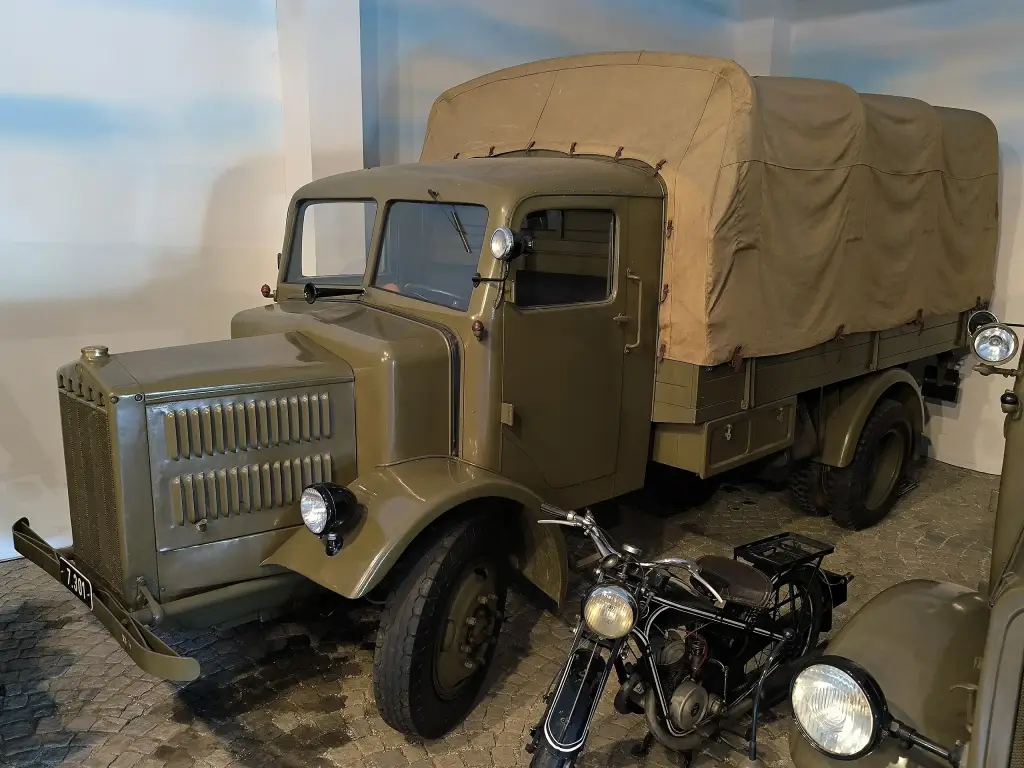
T27a and army orders
This modification entered production in 1936 with a rounder cab and a new 4.7-litre engine of 63 hp. Army vehicles received new rear-axle suspension with a transverse semi-elliptic spring, while some civilian versions kept the original two inclined quarter-elliptic springs. In total 2,079 vehicles of the T27 and T27a versions were built. In 1936 the Czechoslovak Ministry of National Defence ordered 1,512 vehicles as a special fast lorry: the backbone frame was strengthened to raise the payload to 3 tonnes, the rear overhang was shortened and 9.75×20 tactical tyres with a coarse tread were fitted. Deliveries ran from February 1937 to February 1938, with further orders for 116 and 33 vehicles; more than 1,600 Tatra 27a lorries made it the most numerous Tatra type in the Czechoslovak army.
Diesel and wood gas
In 1937 the Tatra 27/64a appeared with a water-cooled four-cylinder T64 diesel of 4.8 litres and 60 hp, built under MAN licence; between 1936 and 1940, 165 were made, and in 1937 seventeen buses with a bonnetless body were built on the T27/64a chassis as the Tatra 27/91. The T27b introduced twin rear wheels and a transverse semi-elliptic rear spring; 3,171 were built between 1940 and 1943, mostly for the German armed forces, with 250 taken by the Slovak army in 1942 and about 50 exported to Finland. Wartime petrol shortages produced the T27bH with an Imbert wood-gas generator and a 5.2-litre engine of 51 hp, 41 hp continuous; 1,582 were built in 1941–1943. A further series of 194 vehicles appeared in 1946, and the Tatra 114, essentially a modified T27b with a new air-cooled engine, succeeded the line.
Design and features
- Hydraulic brakes: the first Tatra truck to use them.
- Backbone frame: the classic Tatra chassis with swing rear half-axles.
- Fuel tank between cab and bonnet: a distinguishing feature kept on later models.
- Many powerplants: petrol, MAN-licensed diesel and wood gas.
Tatra 27 versions
- T27: original 1930 version with a 4.25-litre 52 hp engine.
- T27a: 1936 version with a rounder cab and a 4.7-litre 63 hp engine.
- T27/64a: diesel version with a 4.8-litre T64 engine.
- T27b: twin rear wheels and a transverse rear spring.
- T27bH: wood-gas version with an Imbert generator.
- Tatra 28: three-axle derivative built in a few examples.
The T27 line led to the postwar Tatra 111, and its three-tonne class sat below the heavy Tatra 85. More trucks are in the Tatra collection.
Video: Tatra 27 na štarte v Bratislave 1.máj 2012
Video by halali805 on YouTube.
Sources
- Tatra 27, Czech Wikipedia: history, versions, production