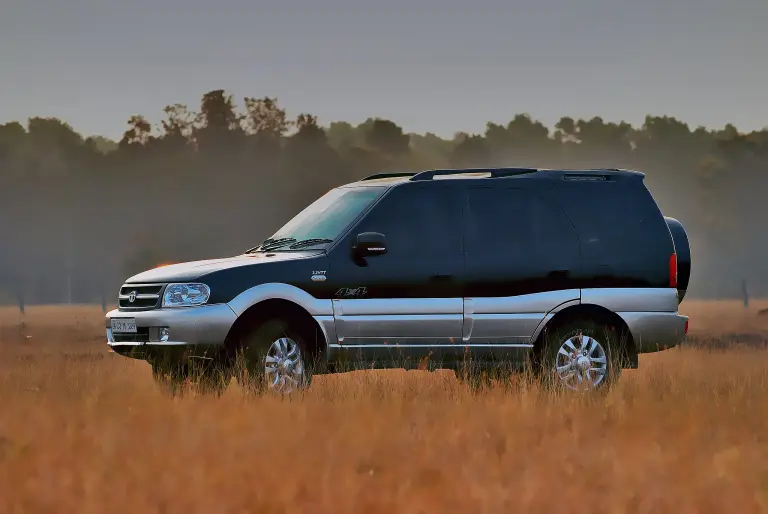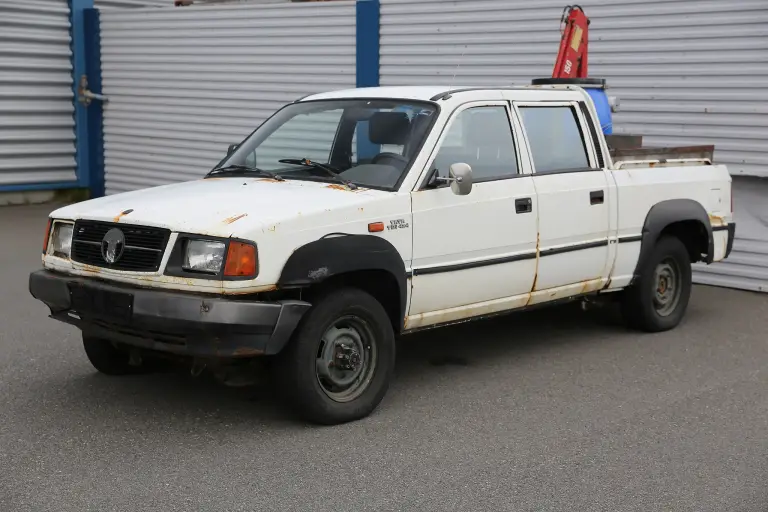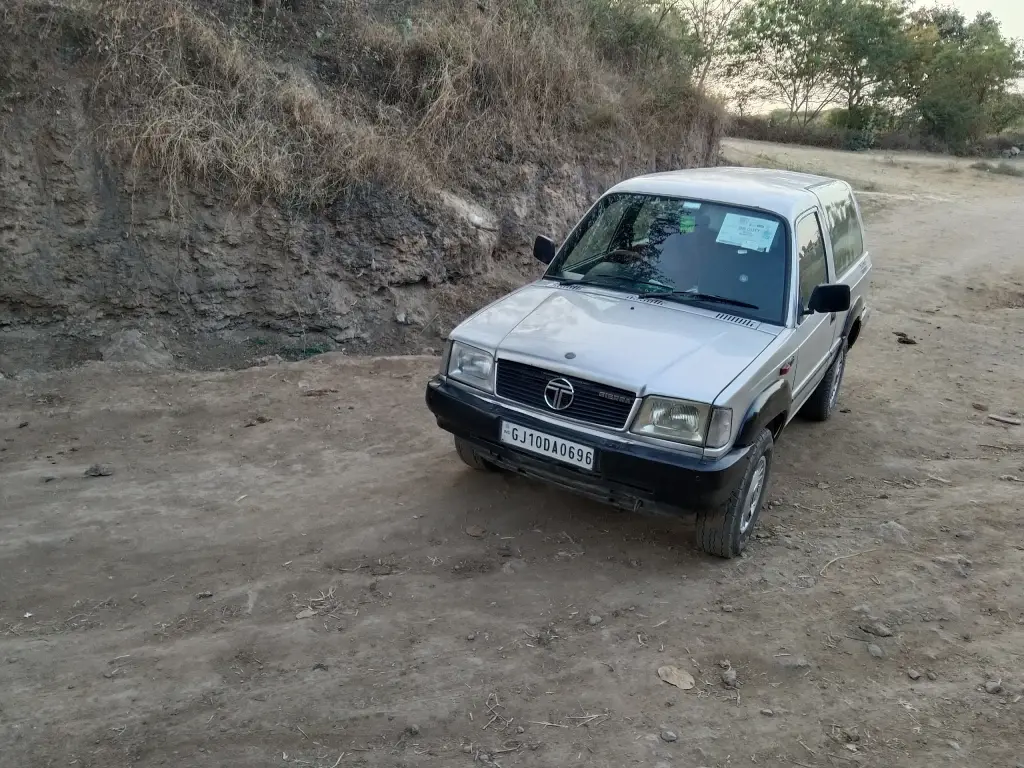
The Tata Sierra was Tata Motors’ first SUV. Introduced in 1991 on the ladder frame of the Telcoline pick-up, it was a three-door estate with four seats, a fixed panoramic rear window and the same 2.0-litre Peugeot-derived diesel. In Europe it was sold as the Tata Sport or Tata Telcosport. It was replaced by the larger, five-door Safari.
Tata Sierra at a glance
| Maker | Tata Motors (Telco), India |
|---|---|
| Introduced | 1991 |
| Produced until | 2000–2003, depending on the source |
| Class | three-door SUV |
| Based on | Tata Telcoline, X2 platform |
| Wheelbase | 2.40 m |
| Length | 4.41 m |
| Engine | 2.0-litre Peugeot XD88 diesel, 63 PS; turbo 483DLTC, 87–90 PS |
| Gearbox | G76 five-speed manual |
| Drive | rear-wheel drive or part-time four-wheel drive |
| Seats | four |
| Replaced by | Tata Safari |
History of the Tata Sierra
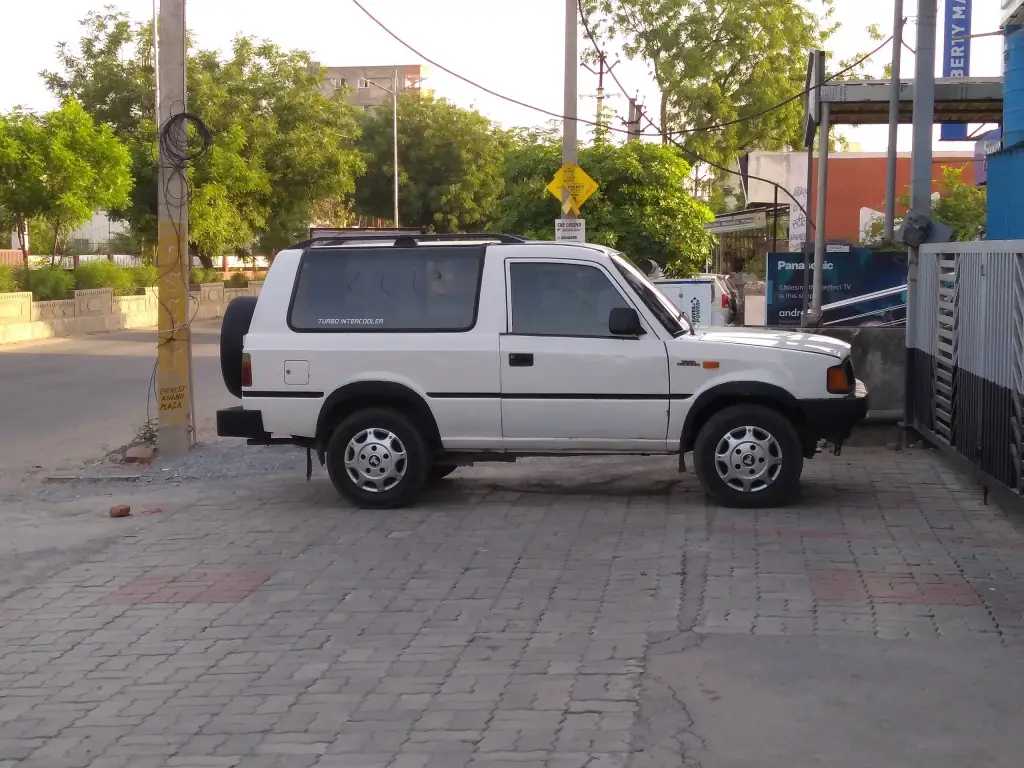
The Sierra appeared in 1991 as the closed version of the Telcoline pick-up launched in 1988, from which it took the mechanical parts, the front end and the dashboard. The wheelbase was shortened to 2.40 metres, the rear was new and the body, 4.41 metres long, had three doors, large fixed alpine windows and a spare wheel on the rear door under a fabric cover. Entry to the back seats was through the front passenger seat, which folded forward. The Sierra was a little more soundproofed than the pick-up, which made the cabin more comfortable.
Mechanicals
The car sat on the Tata X2 platform, a body-on-frame design on two longitudinal members and cross members, with double wishbones and a torsion bar in front and a rigid rear axle on five trailing arms and coil springs behind. Four-wheel drive was part-time, with an electric selector working up to 60 km/h, a low range, a self-locking rear differential and, at first, manually locking front hubs. The engine was the 2.0-litre Peugeot XD88 that Tata built under licence in India: 1,948 cc, two valves per cylinder, indirect injection with a pre-chamber, 63 PS with the G76 five-speed gearbox. The turbocharged 483DLTC of 1997 gave 87 to 90 PS, and later the same engine was used in the Sumo, Safari and Winger. The Sierra also offered equipment that was new to Indian cars: electric windows, air conditioning, an adjustable steering wheel and a tachometer.
Facelift and exports
In July–August 1997 Tata added the turbocharger to answer stricter emissions rules and the demand for more power. The facelift brought a new bonnet extended further down over a simpler grille with only the round badge, larger headlamps without black bezels, a two-tone tail-lamp cluster, a wrap-around metal rear bumper, wider wheel arches, a four-spoke steering wheel and heated windscreens. Abroad the Sierra was sold in 1994 as the Tata Sport or Tata Telcosport in a single version with the 2.0-litre diesel to Euro 2 and rear-wheel drive; the 4×4 with the turbodiesel was added in April 1998, after which the car was called Tata Grand Telcosport in markets such as Spain. In Italy, from October 1997, it was the Tata Sport in base and Orciari form, the latter with two-tone paint, roof bars and its own interior. The Sierra was not a commercial success at home or abroad and gave way to the Safari.
Design and features
- First Tata SUV: the closed body that turned the Telcoline pick-up into a passenger car.
- Three doors, four seats: a folding front passenger seat was the way into the back.
- Fixed alpine windows: the glass panels in the rear quarters became the Sierra’s signature.
- Indian firsts: electric windows, air conditioning, an adjustable steering wheel and a tachometer.
- Part-time four-wheel drive: electric selection up to 60 km/h, low range and a locking rear differential.
Tata Sierra versions
- Sierra 2.0 (1991): naturally aspirated 63 PS diesel, rear-wheel drive.
- Sierra Turbo (1997): 483DLTC engine with 87–90 PS and the facelifted body.
- Tata Sport: the European name, sold in Italy in base and Orciari trim.
- Tata Telcosport and Grand Telcosport: export names, in rear-wheel drive and later four-wheel drive.
- Tata Gurkha and Tata Loadbeta: further export names used in some markets.
The Sierra shared its platform and engine with the Telcoline pick-up, and its engine went on into the Sumo and Safari. More Tata cars are in the Tata collection.
Sources
- Tata Sierra, English Wikipedia: body, engines, 1997 facelift, export names
- Tata Sierra, Italian Wikipedia: platform, dimensions, Italian market
- Tata Sierra, German Wikipedia: equipment, engine data, production years
- Tata Sierra, Russian Wikipedia: chassis, engine lineage, end of production