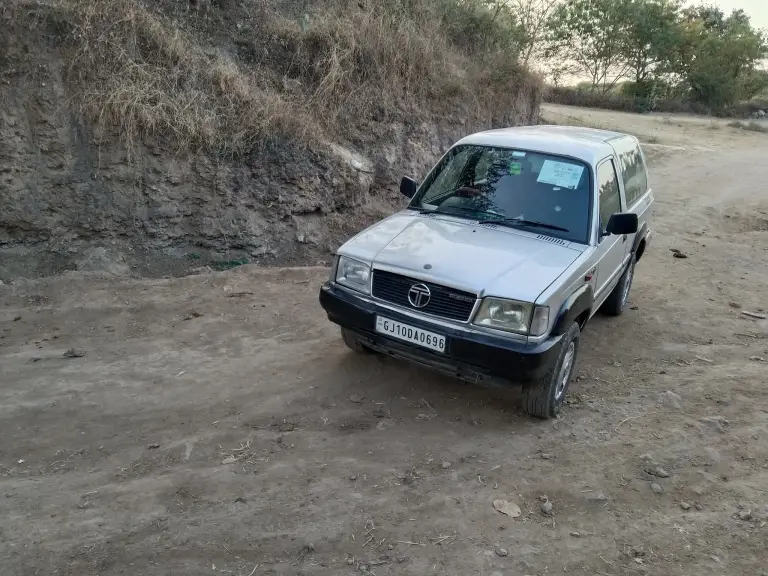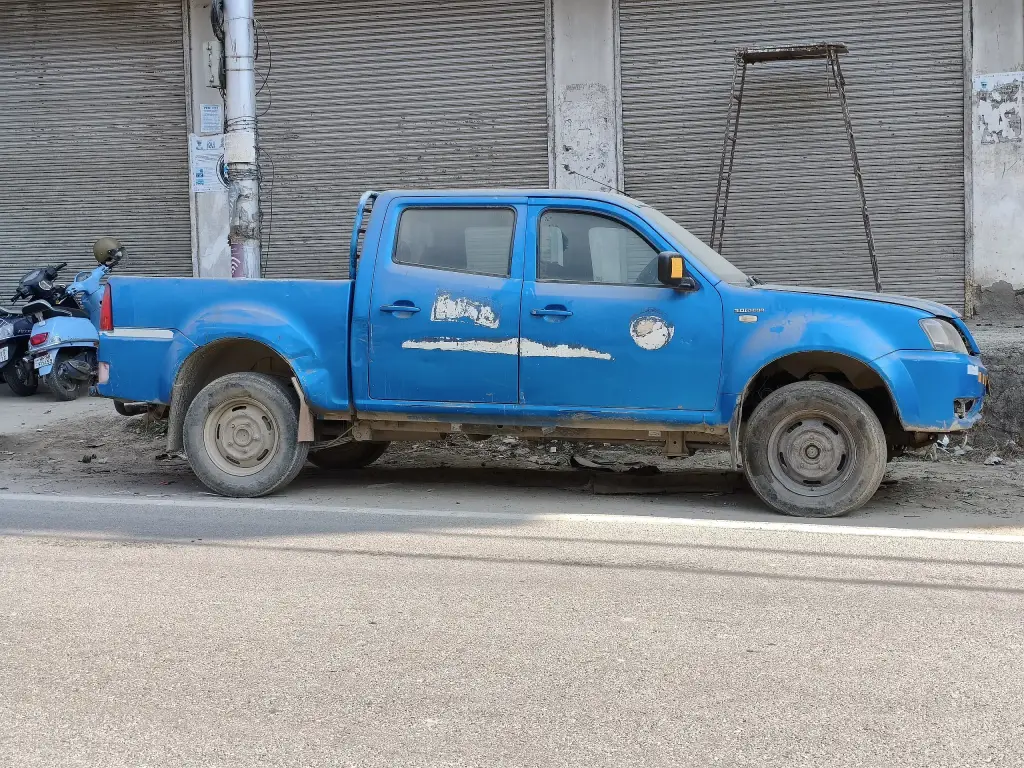
The Tata Xenon is a pick-up that Tata Motors presented at the Bologna Motor Show in December 2006 and put into production at Pune in May 2007. It is the second generation of the Tata pick-up family that began with the Telcoline, designed mainly for export, with a 2.2-litre common-rail turbodiesel of 140 hp, an aluminium load bed and a choice of single or double cab.
Tata Xenon at a glance
| Maker | Tata Motors, India |
|---|---|
| Shown | Bologna Motor Show, December 2006 |
| Production from | May 2007, Pune |
| Class | mid-size pick-up |
| Chassis | body on frame, ladder frame |
| Engine | 2.2-litre Dicor common-rail turbodiesel, 16 valves |
| Power | 140 hp (103 kW) at 4000 rpm |
| Torque | 320 Nm at 1700–2700 rpm |
| Gearbox | five-speed manual; five extra low ratios with 4×4 |
| Drive | rear-wheel drive or part-time four-wheel drive |
| Single cab | 4.80 m, bed 1.88 × 1.41 m, two seats |
| Double cab | 5.13 m, bed 1.43 × 1.41 m, five seats |
History of the Tata Xenon
The Xenon was developed as the successor to the Telcoline, which Tata had sold abroad since 1990. The project was called TL Sprint because of the time allowed: instead of the 36 to 50 months usual for a new line, the team worked round the clock, split the work between nine countries and delivered in 17 months, from the first sketches in December 2005 to production in May 2007. A definitive prototype was shown at the Bologna Motor Show in December 2006 and again at Geneva in March 2007; the name Xenon was chosen to avoid confusion with the Telcoline, which stayed on sale.
Engineering
The new car used an evolved version of the Telcoline’s X2 body-on-frame platform, with revised suspension geometry and more high-strength steel in the body. The 2.2-litre Dicor turbodiesel, a 16-valve common-rail unit developed by the Austrian firm AVL and built by Tata under licence, gives 140 hp and 320 Nm between 1700 and 2700 rpm; in the combined cycle it emits 224 grams of carbon dioxide per kilometre and returns a claimed 11.8 km per litre. Buyers could choose rear-wheel drive with a five-speed manual gearbox or part-time four-wheel drive with five extra low ratios. The load bed is made of aluminium. The range came with dual front airbags, ABS, traction control and downhill speed control, and export versions later added electronic stability control.
Bodies and markets
There were two bodies: the single cab, 4.80 metres long with a 1.88 by 1.41 metre bed and two seats, and the double cab, 5.13 metres long with a 1.43 by 1.41 metre bed and five seats. In Italy the Xenon replaced the Tata Pick Up and was sold in a single trim level with a limited-slip differential, a height-adjustable steering wheel and electric windows as standard, and alloy wheels, manual air conditioning and metallic paint as options. Production was set up in India, Thailand, where Thonburi built it under a joint venture, and Argentina, where Fiat made it; Fiat’s first ladder-frame pick-up, the Fiat Terra, shares the Xenon’s design. In 2009 Tata added the Xenon XT, a four-door, five-seat lifestyle version. In India the same revised platform produced the Tata Sumo Grande, and in 2012 the 2.2 Dicor was updated for Euro 5 with a variable-geometry turbocharger and a particulate filter.
Design and features
- Export-first design: built for Southeast Asia, EMEA and Mercosur as much as for India.
- 2.2-litre Dicor turbodiesel: 140 hp and 320 Nm, developed with AVL.
- Aluminium load bed: with single or double cab bodies.
- Safety equipment: dual front airbags, ABS, traction control, downhill speed control and, for export, stability control.
- Seventeen-month development: the TL Sprint programme compressed a normally three-year job.
Tata Xenon versions
- Xenon single cab: 4.80 m long, two seats, 1.88 by 1.41 m bed.
- Xenon double cab: 5.13 m long, five seats, 1.43 by 1.41 m bed.
- Xenon 4×2: rear-wheel drive with a five-speed gearbox.
- Xenon 4×4: part-time four-wheel drive with five low ratios.
- Xenon XT (2009): four-door lifestyle version.
- Fiat Terra: Fiat’s version of the same pick-up, built in Argentina.
The Xenon replaced the Telcoline pick-up, and its platform also produced the Sumo Grande. More Tata vehicles are in the Tata collection.
Sources
- Tata Xenon, Italian Wikipedia: engines, dimensions, Italian equipment
- Tata Xenon, Russian Wikipedia: engines, production countries, suspension and brakes
- Tata TL, German Wikipedia: development time, Thai and Argentine production, Fiat Terra
- Tata Telcoline, English Wikipedia: second generation, safety equipment, Bologna presentation