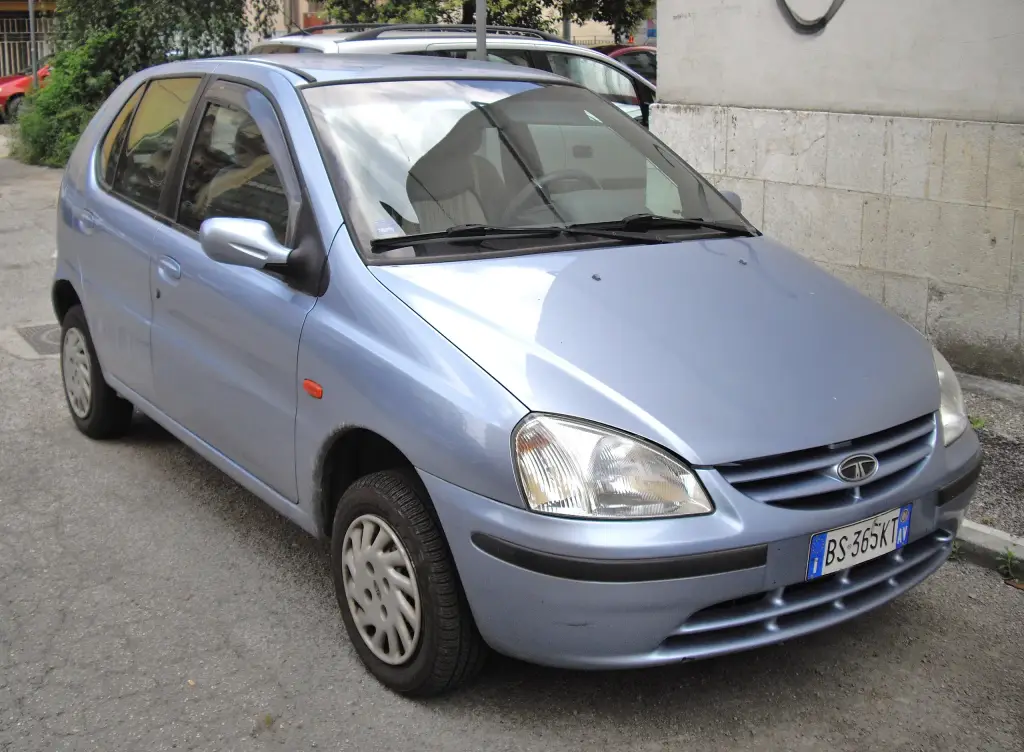
The Tata Indica is a small hatchback launched by Tata Motors on 30 December 1998. Its name came from “Indian Car”, and it was both the first passenger hatchback from Tata and the first Indian hatchback with a diesel engine. More than 910,000 had been built by August 2008, the platform had spawned close to 1.2 million vehicles, and in Britain the car was sold as the Rover CityRover.
Tata Indica at a glance
| Maker | Tata Motors, India |
|---|---|
| Launched | 30 December 1998 |
| Class | B-segment five-door hatchback |
| Engines | 1.4-litre petrol and diesel, later 1.2-litre petrol, 1.4 Dicor and CR4 diesels |
| Gearbox | five-speed manual |
| Drive | front-wheel drive |
| Boot | 220 litres, 610 with the rear seat folded |
| Styling | I.DE.A Institute, Italy |
| Built by August 2008 | more than 910,000 |
| Best year | 144,690 sold in 2006–07 |
| Sold in Britain as | Rover CityRover, 2003–2005 |
| Production ended | April 2018 |
History of the Tata Indica
Tata Motors, then still called Telco, presented the Indica on 30 December 1998 as the most modern car an Indian company had designed. The advertising promised “more car per car”, and the emphasis was on room and price: air conditioning and electric windows, until then found mostly in imported cars, were on the options list. Within a week of its unveiling the company had 115,000 orders, and within two years the Indica was the best-selling car in its class.
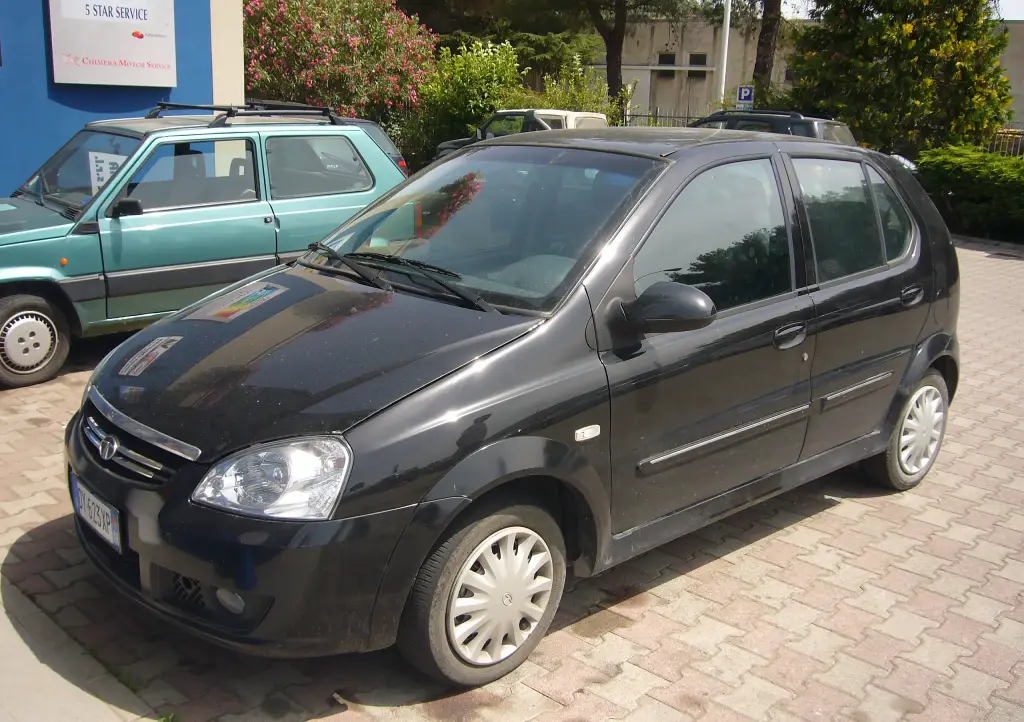
First generation, 1998
The body was styled by the Italian house I.DE.A Institute with Tata’s own designers, but the engine was Indian: a 1.4-litre four known internally as the 475DL, derived from the unit used in Tata’s pick-ups and SUVs with a shorter stroke. Early buyers complained that the car did not deliver the promised power and economy, so Tata re-engineered it as the Indica V2, which solved most of the complaints. The V2 was followed by the “Refreshingly New Indica V2”, then by the Indica V2 Xeta petrol with 70 PS, and there were styling updates in 2004, 2007 and 2012. A turbocharged diesel arrived in October 2005, a 1.2-litre petrol in November 2006 and a common-rail Dicor diesel in January 2008 with 16 valves, twin camshafts, a variable-geometry turbocharger and an intercooler.
Indicab and the 1.4
The 1.4-litre engine was the backbone of the range: the Indica V2 came with a naturally aspirated 1.4 diesel in the DLE and DLS trim levels, a turbocharged and intercooled version in DLG and DLX, and the Dicor in DLS and DLG. The Indicab was the low-price version of the same car, with the 1.4-litre naturally aspirated diesel, the same body but fewer features, aimed at taxi and contract-transport fleets; it became popular with transport operators. Petrol buyers could choose the 1.4 MPFI with a Hitachi ECU, the 1.2- and 1.4-litre Xeta engines with Bosch electronics, or a 1.2-litre LPG version.
Second generation and the CityRover
A second generation, the Indica Vista, appeared in 2008 on a new platform and was sold alongside the older car. It came with a 1.2-litre Safire petrol and a 1.3-litre Multijet diesel developed with Fiat, while the old 1.4 TDi stayed in production for a time; the Vista was built in Pune from 23 August 2008. In Europe the first-generation car was imported from 2004, and from 2003 MG Rover sold a badge-engineered version in Britain as the CityRover until the company’s bankruptcy in 2005. Tata also built electric and sporting studies: the Indica EV concept of 2008 with a 200 km range and 120 km/h top speed, the Indica Silhouette of 2006 with a 330 hp 3.5-litre V6, and a rally version with a 117 hp 1.5. The last Indica left the line in April 2018.
Design and features
- Room for the money: the advertising promise was “more car per car”, with equipment that had been rare in Indian cars.
- First Indian diesel hatchback: the 1.4-litre diesel came in naturally aspirated, turbo and common-rail forms.
- Italian styling, Indian engine: the body was drawn by I.DE.A Institute, the engine was developed at home.
- Long life: the first generation stayed in production from 1998 to 2018, with the Vista alongside it from 2008.
Tata Indica versions
- Indica V1 (1998): the original 1.4-litre petrol and diesel car.
- Indica V2: the re-engineered version that answered the first customers’ complaints.
- Indica Xeta: 1.2- and 1.4-litre petrol engines with Bosch electronics.
- Indicab: a stripped 1.4 diesel for taxi and fleet work.
- Indica eV2 (2011): CR4 engine with a claimed 25 km per litre.
- Indica Vista (2008): second generation on a new platform, with Fiat-based engines.
- CityRover: the MG Rover version sold in Britain from 2003 to 2005.
The Indica’s saloon sister was the Indigo, and in Britain the same car was sold as the Rover CityRover. More Tata cars are in the Tata collection.
Sources
- Tata Indica, English Wikipedia: launch, engines, versions, production figures, CityRover
- Tata Indica, Italian Wikipedia: V1 and V2 details, concepts, second generation
- Tata Indica, German Wikipedia: CityRover imports, Italian market engines, Vista
- Tata Indica, Russian Wikipedia: place of the model in Tata’s history