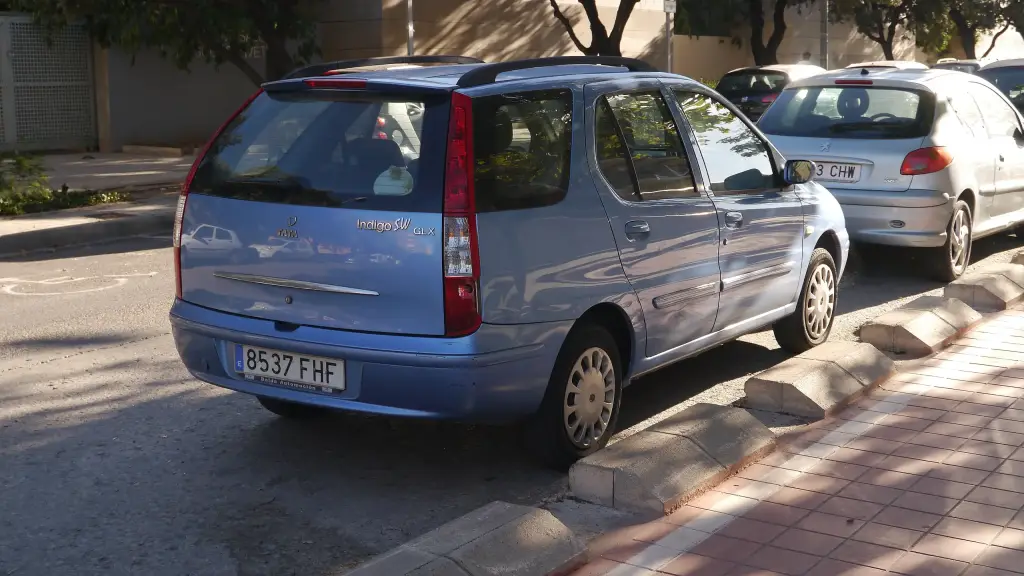
The Tata Indigo is a compact saloon that Tata Motors built from 2002 to 2016. It was the four-door version of the Indica hatchback, with a longer wheelbase, a 450-litre boot and a choice of turbo-diesel and petrol engines. Over the years the name covered the Indigo Marina estate, the long-wheelbase Indigo XL and the short Indigo CS, which was the shortest sedan in the world when it appeared.
Tata Indigo at a glance
| Maker | Tata Motors, India |
|---|---|
| Produced | 2002–2016 |
| Class | compact saloon |
| Based on | Tata Indica |
| Boot | 450 litres |
| Wheelbase | 2.45 m (XL: 2.65 m) |
| Engines | 1.4 diesel and turbo-diesel, 1.2 and 1.4 petrol, 1.4 Dicor and CR4 diesel |
| Gearbox | five-speed manual |
| Drive | front-wheel drive |
| Variants | Indigo, Marina estate, XL, CS and eCS |
| Second generation | Indigo Manza, 2009 |
| Shortest sedan at launch | Indigo CS, 3,998 mm |
History of the Tata Indigo
The first-generation Indigo went on sale in 2002 as the saloon version of the Indica, sharing most of its parts. It had a longer wheelbase than the hatchback to make room for the steeper C-pillar and the boot, fog-lamp housings in the front bumper and, inside, air conditioning and cloth upholstery on every version. Where the Indica used a naturally aspirated 1.4-litre diesel with 55 hp, the Indigo had the turbocharged version with 68 hp, and there was also a 1.2-litre four-cylinder petrol engine of 68 hp. A minor update in 2004 brought a new 1.4-litre turbo-diesel.

The 2006 car and its three children
The first major update came in 2006 with new body panels, a grille with double-barrelled headlamps, triangular fog lamps, a new tail-lamp cluster, a three-spoke steering wheel, two-tone fabric and a CD player. Under the bonnet was a 1.4-litre Dicor common-rail turbo-diesel of 70 hp to Bharat Stage III. That car became the base for three others: the Indigo Marina estate with a large boot and a ski rack, the Indigo XL with a longer wheelbase, and the Indigo CS compact saloon.
Marina, XL and CS
The Marina estate was shown at the Delhi show in 2004 and sold in some export markets as the Indigo SW; its 450-litre boot grew to 1,370 litres with the rear seat folded, and it was imported into Italy from 2004. The Indigo XL arrived in 2007 with the wheelbase stretched by 200 mm to 2.65 metres, more legroom in the back, rear air-conditioning vents, an armrest with cup holders and a 16-valve 101 hp petrol engine. From 2009, when the Manza took over, the XL was sold only to fleets as a taxi. The Indigo CS of 2008 was 3,998 mm long, short enough to qualify for India’s excise concession for cars under four metres; it used the 1.4 TDI diesel and the 1.2-litre petrol. In 2010 the CR4 common-rail diesel arrived and the car was renamed Indigo eCS, which stayed in production until 2016 and gained ABS in 2013.
Second generation
In 2009 Tata added a second generation called the Indigo Manza, built on the new X1 platform shared with the Indica Vista and developed with Fiat, whose Grande Punto and Linea were assembled in the same Pune plants. The Manza was 4.41 metres long, a four-door three-box saloon with MacPherson struts in front and a torsion beam behind, and it was not exported to Europe. In Italy the first-generation Indigo had been sold from 2004 with a 1.4 TDi of 72 hp, joined in 2006 by a 1.4-litre 16-valve petrol of 86 hp that could run on LPG or methane; the 2007 restyling brought the 1.4 Dicor with 71 hp.
Design and features
- Saloon body on Indica bones: a longer wheelbase, a 450-litre boot and more equipment than the hatchback.
- Turbo-diesel from the start: 68 hp from the 1.4-litre engine, against 55 hp in the Indica.
- One name, four shapes: saloon, Marina estate, long XL and short CS.
- Tax-friendly CS: at 3,998 mm it was the shortest sedan in the world at launch.
Tata Indigo versions
- Indigo (2002–2009): the standard saloon.
- Indigo Marina (2004–2009): estate with a 450-litre boot, sold as the Indigo SW in export markets.
- Indigo SX (2005): luxury version with leather and screens in the front head restraints.
- Indigo XL (2007–2009): 200 mm longer wheelbase and a 101 hp 16-valve petrol engine.
- Indigo CS and eCS (2008–2016): the 3,998 mm compact saloon.
- Indigo Manza (2009): second generation on the X1 platform.
The Indigo was the saloon sister of the Indica, and its Manza generation shared the X1 platform with the Indica Vista. More Tata cars are in the Tata collection.
Sources
- Tata Indigo, English Wikipedia: launch, engines, Marina, XL, CS
- Tata Indigo, Italian Wikipedia: wheelbase, Italian engines, Manza
- Tata Indigo, German Wikipedia: SX, Advent, model years
- Tata Indigo, Russian Wikipedia: I.DE.A styling, Indica platform