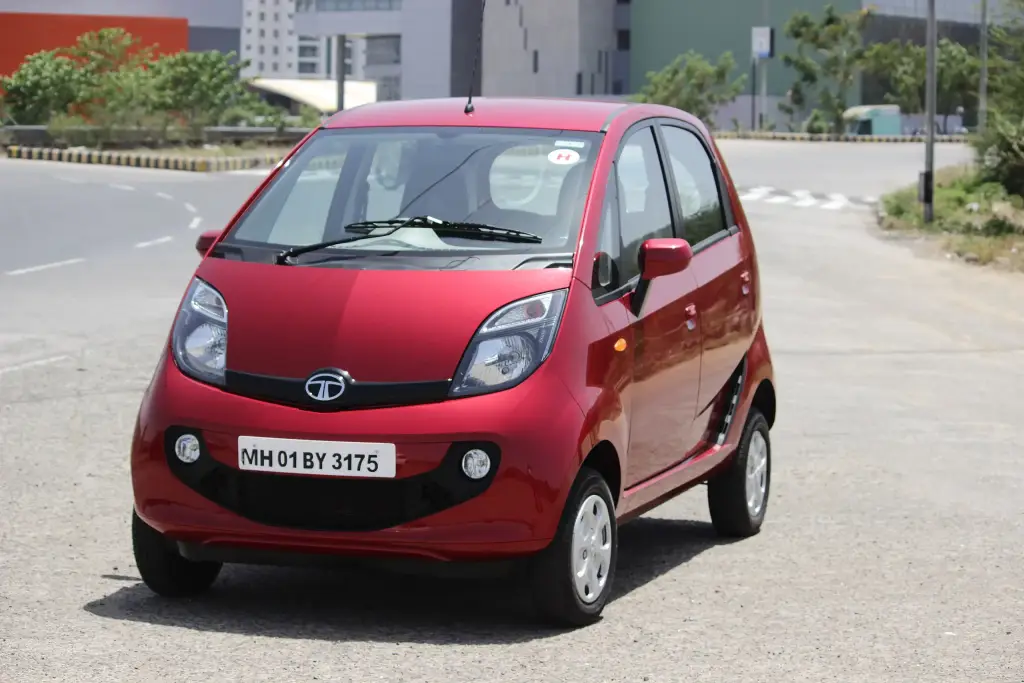
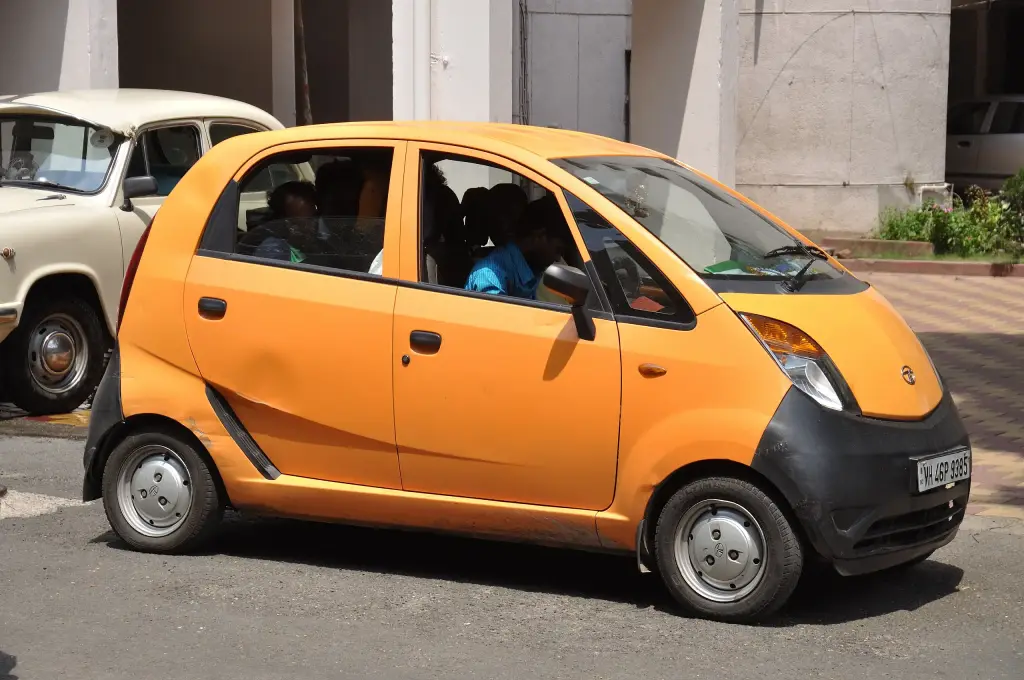
The Tata Nano was a city car presented at the Delhi Auto Expo on 10 January 2008 and sold from 2009 at a price of 100,000 rupees, about 2,500 dollars, which made it the cheapest production car in the world. Its engine sat behind the rear seats, the tailgate was welded shut and the specification was cut to the bone. Tata hoped to sell 250,000 a year; production ended in 2018 after fewer than 8,000 sales in the last full year.
Tata Nano at a glance
| Maker | Tata Motors, India |
|---|---|
| Presented | 10 January 2008, Auto Expo, New Delhi |
| On sale | 17 July 2009 |
| Class | city car |
| Price at launch | 100,000 rupees (about 2,500 dollars) |
| Layout | rear engine, rear-wheel drive |
| Engine | 624 cc two-cylinder petrol, 38 PS |
| Gearbox | four-speed manual; five-speed automated manual from 2015 |
| Top speed | about 105 km/h |
| 0–100 km/h | 27.5 seconds |
| Length | 3,164 mm for the GenX Nano |
| Production ended | 2018 |
History of the Tata Nano
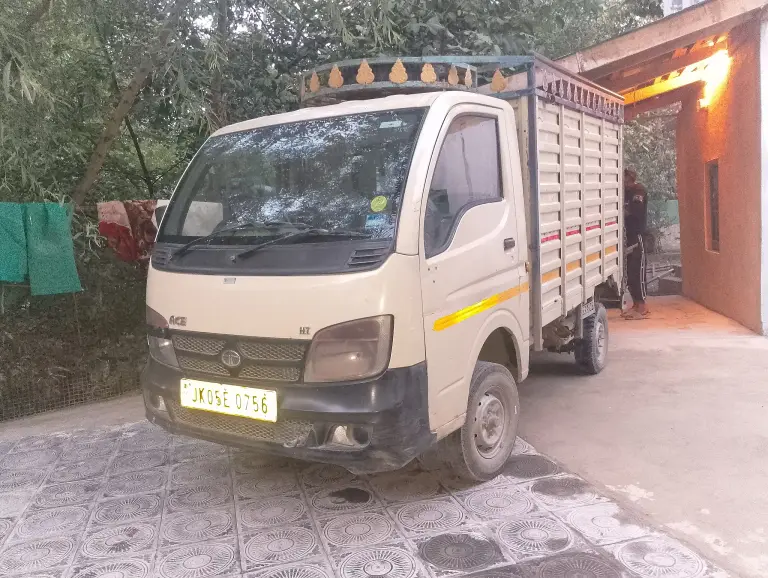
After the success of the Ace mini truck in 2005, Tata Motors began work on an affordable car for the many Indians who rode motorcycles and scooters. The price was brought down by dropping most non-essential features, using less steel and relying on low-cost Indian labour. The car had one wing mirror on the driver’s side, a single wiper, three wheel nuts per wheel and a fuel tank without a filler cap; the rear hatch was welded shut, so luggage went in from inside. Tata said this was the first time a two-cylinder petrol engine with a single balancer shaft had been used in a car. The design was drawn by the Italian house I.DE.A Institute, and the project produced 31 design and 37 technology patents.
Singur, Sanand and the price
Tata announced in 2006 that the Nano would be built at Singur in West Bengal, but farmers protested against the land acquisition, the launch was delayed and the factory moved to Sanand in Gujarat. The promised price of one lakh rupees held only for the first 100,000 cars and then almost doubled; by 2017 the basic Nano started at about 215,000 rupees. The company had planned 250,000 cars a year but sold about 70,000 in the first year, and the best year, 2012, brought 76,747 sales in India. In 2016–17 sales fell to 7,591, monthly production in 2017 varied between 100 and 1,000 cars, and October 2017 was the low point with 57. Earlier fires in 2009 and a poor result in a 2013 crash test damaged the car’s reputation. Production stopped in May 2018, and the Sanand plant moved on to the Tiago and Tigor.
GenX Nano
In May 2015 Tata tried to revive sales with the GenX Nano: 21 versions, a five-speed automated manual gearbox, electric power steering, air conditioning, a Bluetooth radio, new colours and alloy wheels. The body was strengthened, the bumpers were changed, the length grew slightly to 3,164 mm, the interior was redesigned and, for the first time, the car got a rear hatchback and five-seat homologation. The engine stayed the 624 cc two-cylinder with 38 hp. The Nano weighed little and used about 4.2 litres per 100 km in the Indian test cycle; stopping power came from 180 mm drum brakes at both ends.
Design and features
- Rear-mounted 624 cc twin: 38 PS, a four-speed gearbox and a top speed of about 105 km/h.
- Cost cutting everywhere: one wiper, one mirror, three wheel nuts and no rear hatch on the original car.
- Four doors in 3.1 metres: room for four people in a car shorter than most European city cars.
- GenX update of 2015: automated manual gearbox, power steering, air conditioning and a proper tailgate.
Tata Nano versions
- Nano Standard: unpainted bumpers, no air conditioning, no radio.
- Nano CX: tinted glass, two-tone trim, air conditioning with a heater and a brake servo.
- Nano LX: painted bumpers, fabric trim, front electric windows and fog lamps.
- GenX Nano (2015): 21 versions, automated manual gearbox and a rear hatch.
- Nano Europa: a wider European prototype with a three-cylinder 623 cc engine, never produced.
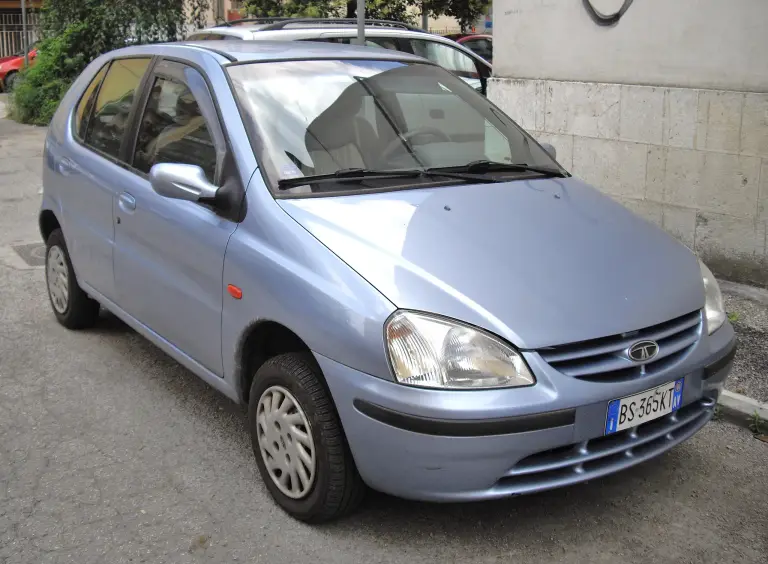
The Nano was Tata’s answer to the motorcycle, and it sat below the Indica in the range just as the Ace sat below the company’s bigger trucks. More Tata cars are in the Tata collection.
Sources
- Tata Nano, English Wikipedia: launch, price, layout, GenX, sales
- Tata Nano, German Wikipedia: engineering, performance, cost cutting, sales figures
- Tata Nano, Russian Wikipedia: trim levels, crash test, production dates
- Tata Nano, Italian Wikipedia: body details, equipment, market context