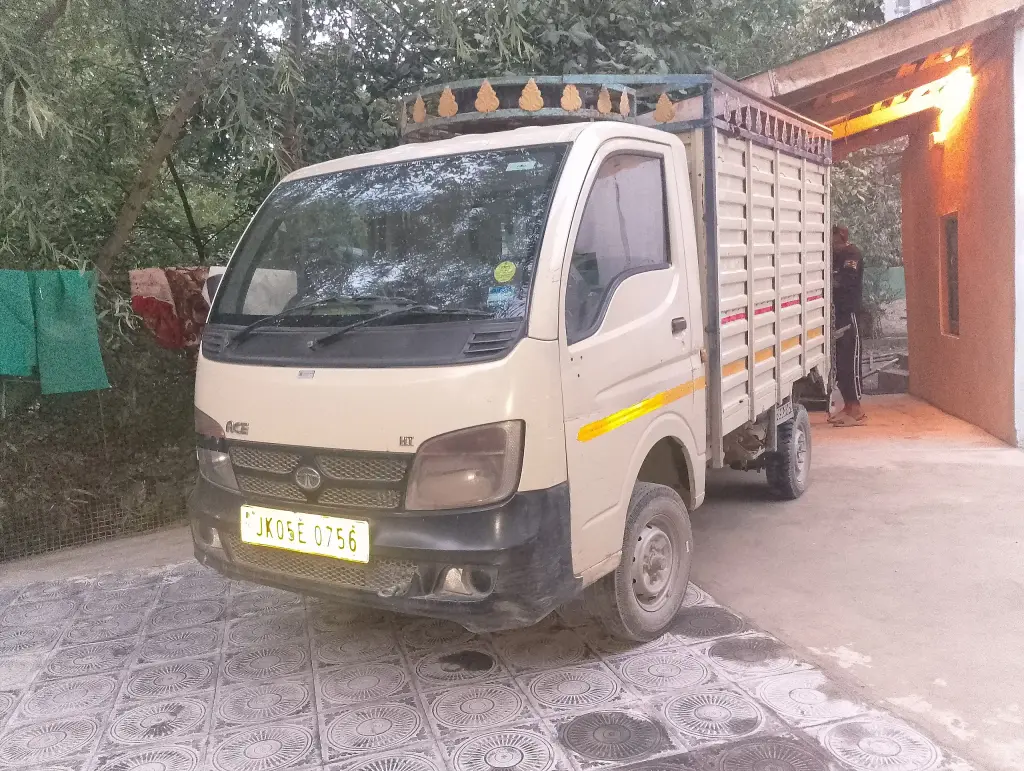
The Tata Ace is a mini truck launched by Tata Motors in May 2005. It was conceived in December 2000, when Girish Wagh was asked to design a light, cheap four-wheeler that could take customers away from India’s three-wheeled cargo rickshaws. A 702 cc engine, a 750 kg payload and a price between 2.25 and 3.35 lakh rupees were enough to create a whole new mini-truck segment.
Tata Ace at a glance
| Maker | Tata Motors, India |
|---|---|
| Launched | May 2005 |
| Class | mini truck |
| Engine | 702 cc two-cylinder diesel, 16 hp at 3200 rpm, 37 Nm at 2000 rpm |
| Gearbox | four-speed manual; five-speed in the Ace EX |
| Payload | 750 kg |
| Top speed | 60 km/h; 70 km/h for the Ace EX |
| Price at launch | 2.25–3.35 lakh rupees |
| Bodied by | Autoline Industries |
| Passenger versions | Magic and Magic Iris |
| Built at | Pune, later Pantnagar, Uttarakhand |
| First 20 months | 100,000 sold |
History of the Tata Ace
The project began in December 2000, when Ravi Kant gave Girish Wagh the task of creating a new light truck line that would add to Tata’s existing range and compete with the three-wheeled cargo rickshaws that carried most small loads in India. Wagh talked to rickshaw operators. They wanted an affordable vehicle for light loads over short distances, and they made clear that a four-wheeler would be preferred for the prestige it carried: one of them told Wagh that with a four-wheeled vehicle he would have better marriage prospects in his village.
Launch and success
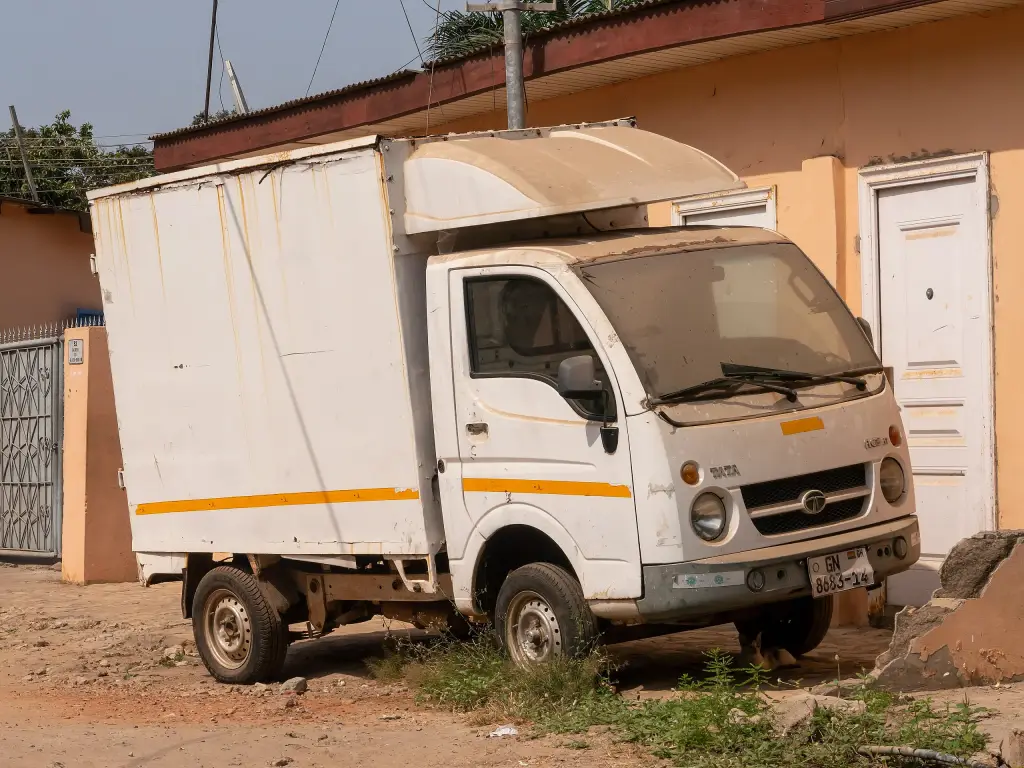
Tata Motors put the Ace on sale in May 2005 for a little over 200,000 rupees. In the first twenty months 100,000 were sold, and at first the truck was offered only in white. The 200,000th Ace was built in August 2008. Production started in Pune and later moved to a new plant at Pantnagar in Uttarakhand, designed for 250,000 vehicles a year. The Ace also suited Indian rules that keep trucks of more than three tonnes out of city centres after 19:00, a gap Tata filled with a vehicle below that limit.
Range
The standard Ace HT has a two-cylinder 702 cc engine of 16 hp at 3200 rpm and 37 Nm at 2000 rpm, a four-speed gearbox, a 750 kg payload and a top speed of 60 km/h. The Ace EX adds a five-speed gearbox, stop-start, 13-inch wheels instead of 12-inch and wider 155 tyres, for 70 km/h. The Super Ace is a one-tonne diesel mini truck with a 2630 mm loading deck, a top speed of 125 km/h, a 5.1 m turning radius, 14 km per litre and a 38-litre tank giving a range of 440 km; its three-way drop body gives a loading height of 60 cm. The Ace Zip is a micro truck from 1.9 lakh rupees with a 611 cc engine of 11.3 hp and a 600 kg payload. The Ace EV, the first product with the EVOGEN powertrain, has a 27 kW (36 hp) motor, 130 Nm, 208 cubic feet of cargo volume and 22 per cent gradeability.
Design and features
- Designed around rickshaw users: the brief came from interviews with three-wheeler operators, and the Ace was priced to convert them.
- 702 cc two-cylinder engine: 16 hp and 37 Nm, with a four- or five-speed gearbox.
- 750 kg payload: light enough for narrow lanes, big enough for village-to-market loads.
- Under the three-tonne city limit: the Ace could enter city centres when larger trucks could not.
Tata Ace versions
- Ace HT: the standard 702 cc mini truck with a four-speed gearbox.
- Ace EX: five-speed gearbox, stop-start, 13-inch wheels, 70 km/h.
- Super Ace: a one-tonne truck with a 2630 mm deck and a 125 km/h top speed.
- Super Ace Bigboy: a prototype passenger version built for the Philippines public utility vehicle programme.
- Ace Zip: a 611 cc micro truck with a 600 kg payload.
- Magic and Magic Iris: passenger carriers with four to seven seats, the Iris on the Ace Zip platform.
- Ace EV: electric version with a 27 kW EVOGEN motor.
The Ace was developed after the success of the 407 light truck, and it shares the small-commercial-vehicle idea with the Telcoline pick-up. More Tata vehicles are in the Tata collection.
Sources
- Tata Ace, English Wikipedia: development, versions, engines, prices
- Tata Ace, German Wikipedia: launch, first 20 months, white-only start, plant
- Tata Ace, Russian Wikipedia: 200,000th unit, body supplier, exports