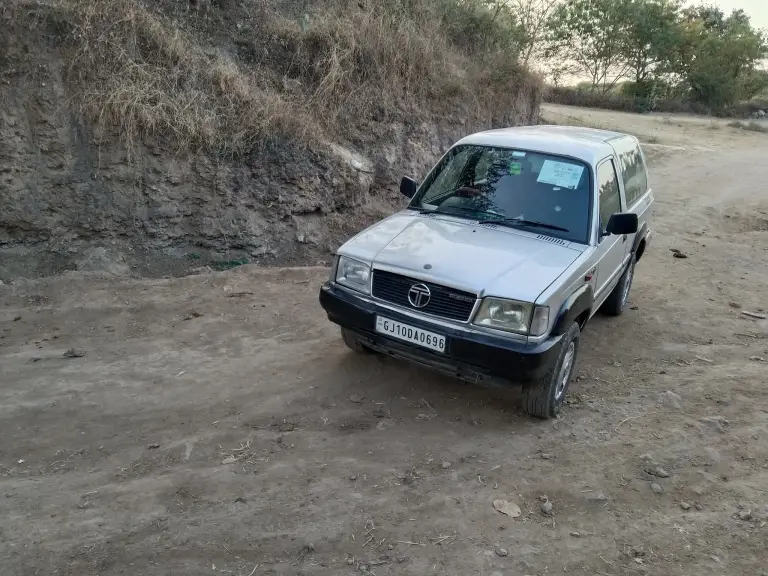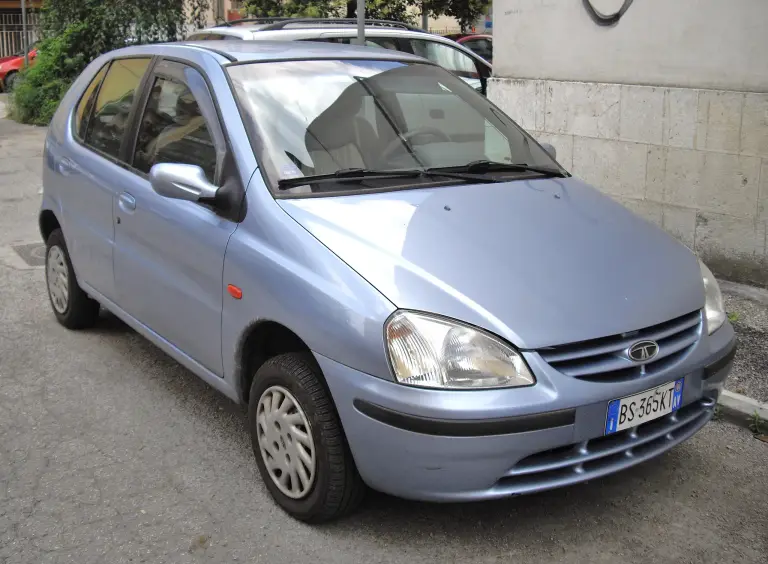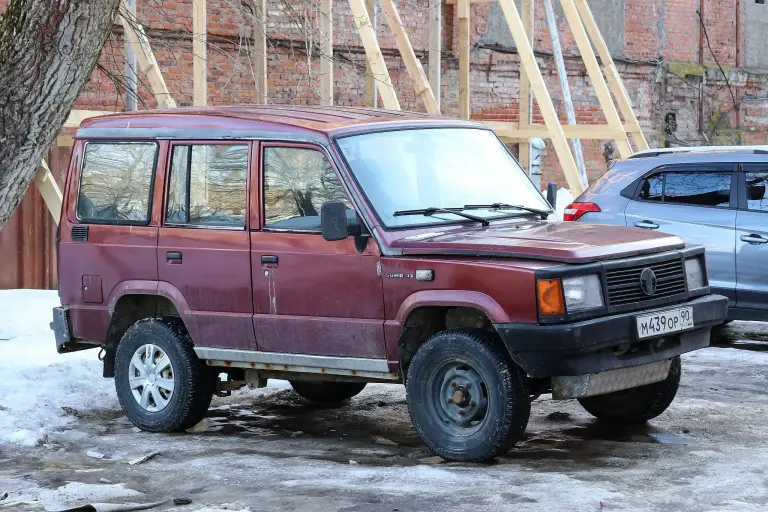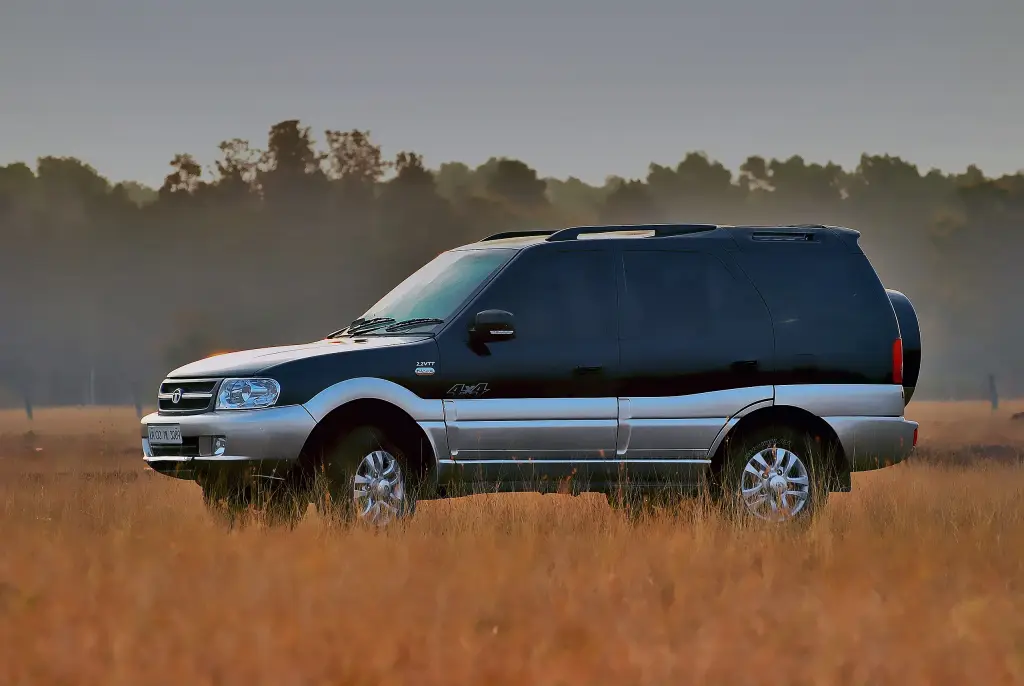
The Tata Safari is a seven-seat SUV that Tata Motors has built since 1998. It was the first SUV designed, developed and built in India. With a foldable third row, a roomy interior and a price well below that of imported off-roaders, it established Tata in the passenger market alongside the Indica and later spawned the Safari Storme and a second generation.
Tata Safari at a glance
| Maker | Tata Motors, India |
|---|---|
| Produced | 1998–2020 (first generation) |
| Class | mid-size SUV, seven seats |
| First engine | 2.0-litre Peugeot XD88 turbodiesel, 87–92 hp |
| 2005 engine | 3.0-litre Dicor common-rail diesel, 116 PS, 300 Nm |
| 2007 engine | 2.2-litre Dicor diesel, 140 hp, 320 Nm |
| Gearbox | five-speed manual |
| Drive | rear-wheel drive or part-time four-wheel drive |
| Platform | Tata X2, body on frame |
| Length | 4.65 m, 4.81 m with the spare wheel |
| Kerb weight | 1,920 kg, plus 110 kg for 4×4 |
| Army order | about 3,192 Safari Storme, 2016 |
History of the Tata Safari
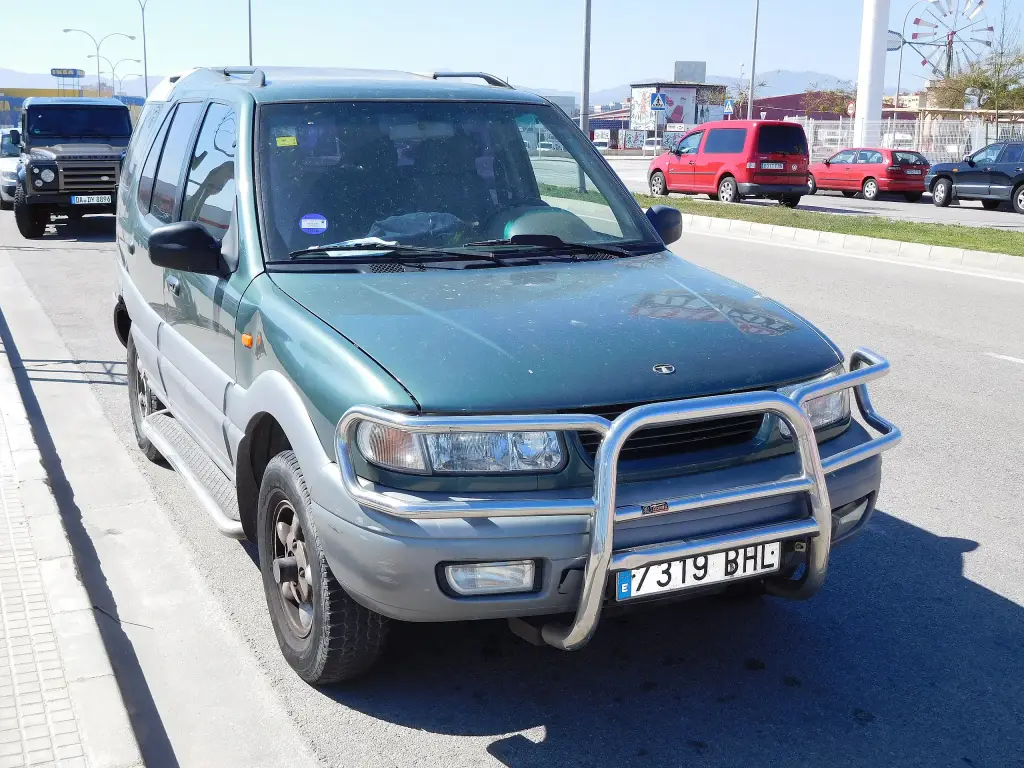
The first-generation Safari was presented in 1998, the year Tata also launched the Indica; exports to Europe began in the same year and British sales in 1999, where the car was also known as the Tata Leisure. It was designed as a comfortable seven-seater with a folding third row, and it was positioned as a cheaper alternative to established off-roaders such as the Mitsubishi Pajero and the Toyota Land Cruiser. The name was chosen to stress its off-road ability, although the car was also meant for the road.
Engines and updates
The original Safari used the 2.0-litre Peugeot XD88 turbodiesel already seen in the Telcoline pick-up and the Sierra, with indirect injection and a KKK turbocharger: 92 hp to Euro 2, later 87 hp to Euro 3. A five-speed gearbox with synchromesh and optional four-wheel drive completed the package, on 235/75×15 tyres. A 2.1-litre 16-valve petrol engine of 135 hp joined in 2003 and was dropped in 2005. That year brought a major facelift with a new bumper shield, new lights, a chrome grille, a new interior and a Borg Warner transmission, and with it the 3.0-litre Dicor, Tata’s first common-rail diesel, derived from a Mercedes-Benz commercial engine also used in the 407: 116 PS and 300 Nm. In December 2006, at the Bologna show, Tata showed the 2.2-litre Dicor based on the PSA DW12, reworked by AVL, with 140 hp and 320 Nm to Euro 4; it replaced the 3.0 in Europe in 2007 while the 3.0 stayed on sale in India. A further facelift in 2010 added a new chrome grille, new trim, wood inserts and new colours.
Chassis
The Safari uses the Tata X2 body-on-frame platform of the Telcoline, with a strengthened rear axle for off-road work. Four-wheel drive is part-time, selected electrically up to 60 km/h, with a self-locking rear differential and front hubs that were manual at first and later automatic. The front suspension is double wishbone with torsion bars, the rear a rigid axle on five trailing arms and coil springs. The first series had full discs and no ABS; from the EX2 series the car had ventilated front discs, self-adjusting rear drums and ABS with EBD.
Storme and the second generation
The Safari Storme appeared at the 2012 Auto Expo and went on sale that October with new lights, a new grille, new bumpers and the spare wheel moved under the floor; Tata counted more than 100 changes and a completely new body, though the silhouette stayed the same. The rear of the X2 platform was modified with a five-link suspension like the Aria’s, and the engine was the 2.2 Varicor with 150 PS; a Varicor 400 of 156 PS and 400 Nm arrived in 2015 with a six-speed gearbox. In December 2016 the Indian army ordered about 3,192 Safari Storme as its official vehicle, replacing the Maruti Gypsy, and the type was also exported to the Seychelles police. The Dicor was phased out in 2017 and the Storme in 2020; the second-generation Safari of 2021 is a front-wheel-drive monocoque crossover sharing its underpinnings with the Harrier.
Design and features
- First Indian-designed SUV: engineered, developed and built in India from 1998.
- Body-on-frame X2 platform: shared with the Telcoline, with a strengthened rear axle for off-road use.
- Part-time four-wheel drive: electric selection up to 60 km/h and a self-locking rear differential.
- Long engine life: from the 2.0 Peugeot unit to the 3.0 and 2.2 Dicor and finally the 2.2 Varicor.
Tata Safari versions
- Safari 2.0 (1998): Peugeot-derived turbodiesel with 87–92 hp.
- Safari Dicor 3.0 (2005): first Tata common-rail diesel, 116 PS.
- Safari Dicor 2.2 (2007): PSA-based engine with 140 hp to Euro 4.
- Safari GX: a version below the VX with two-tone paint, leather and a reversing camera.
- Safari Storme (2012–2019): new body, 2.2 Varicor with 150 PS, later 156 PS.
- Second generation (2021): front-wheel-drive monocoque on the Harrier platform.
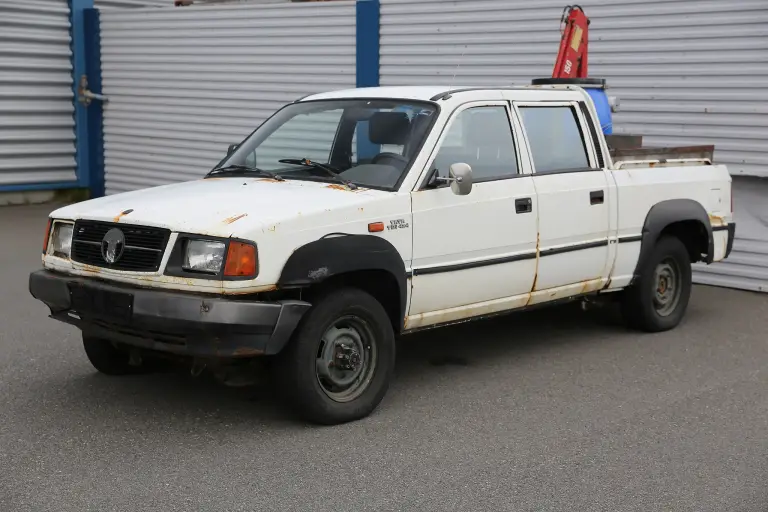
The Safari shared its platform and first engine with the Telcoline, and its later engine family with the Aria and the Sumo. More Tata cars are in the Tata collection.
Sources
- Tata Safari, English Wikipedia: launch, engines, chassis, facelifts
- Tata Safari, Italian Wikipedia: engines, suspension, EX2 brakes
- Tata Safari, German Wikipedia: equipment, weight, road tests
- Tata Safari, Russian Wikipedia: Storme, army order, second generation