Steyr-Daimler-Puch was for much of the twentieth century one of the largest industrial employers in Austria. It made rifles, bicycles, cars, lorries, tractors, motorcycles and off-road vehicles, and it was broken up in stages between 1987 and 2001, its parts continuing under new names.
Steyr-Daimler-Puch at a glance
| Founded | 1864, as Josef und Franz Werndl & Comp., rifle factory |
|---|---|
| Renamed | Steyr-Werke AG in 1926 |
| Merger | 1934, with Austro-Daimler-Puch |
| First car | 1920, six-cylinder Type II 12/40 |
| Headquarters | Steyr, Austria |
| Cars built to 1940 | 34,776 |
| After 1945 | lorries, tractors, Steyr-Fiat licence cars |
| Off-roaders | Haflinger 1959–1974, Pinzgauer 1971–2000, Puch G from 1979 |
| Split up | 1987–2001 |
| Car plant today | Magna Steyr, Graz |
No article exists for a single model here: this page follows the history of the company, which built the Steyr-Puch and Steyr-Fiat vehicles of the two merged records.
History of the Steyr-Daimler-Puch
Rifles, bicycles and the first cars
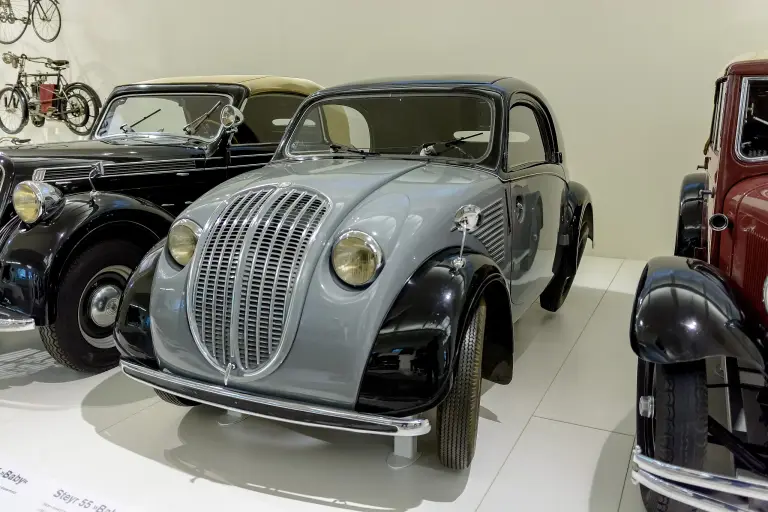
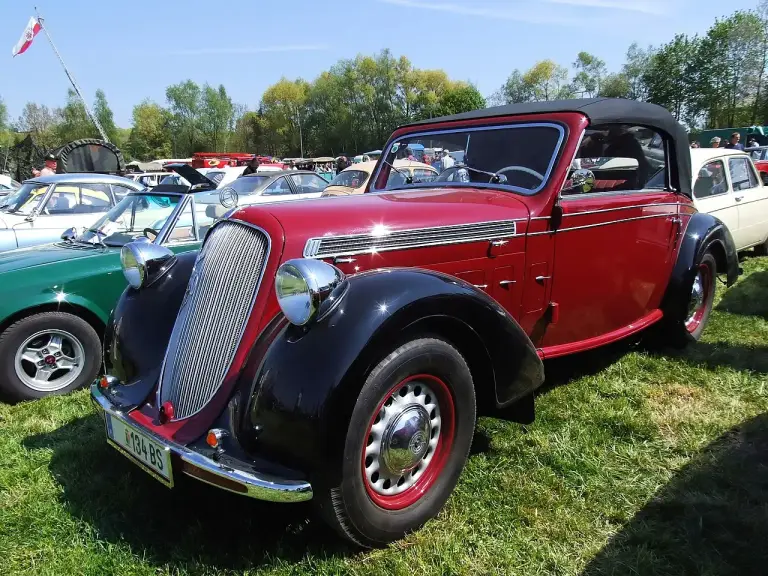
The company began in 1864 as Josef und Franz Werndl and Company, a rifle manufacturer, and started making bicycles in 1894. It grew quickly during the First World War, employing 14,000 people by the end of it, and cars followed after 1918. In September 1917 Steyr had hired Hans Ledwinka, later one of the great automotive engineers of the century, as chief designer to lead the creation of the car business. The first Steyr car, the six-cylinder Type II “12/40”, appeared in 1920, and the 1.5-litre six Type XII of the late 1920s won praise in the international motoring press. In 1926 the firm became Steyr-Werke AG, and in 1934 it merged with Austro-Daimler-Puch to form Steyr-Daimler-Puch. The range of those years consisted of very modern designs with streamlined bodies, from the one-litre Steyr 50 to the 2.3-litre Steyr 220.
War and forced labour
When Austria was part of the Third Reich, the general director Georg Meindl was one of the first German industrialists to suggest using concentration camp prisoners to increase the workforce at Steyr; prisoners were brought from the Mauthausen-Gusen complex 30 km away, and in January 1942 Meindl recommended building a satellite camp nearer the factory. The prisoners were used for construction and to replace manufacturing labour. Wartime production included the Raupenschlepper Ost with an air-cooled 3.5-litre V8 designed by Ferdinand Porsche, as well as small arms, machine guns and aircraft engines.
After the war
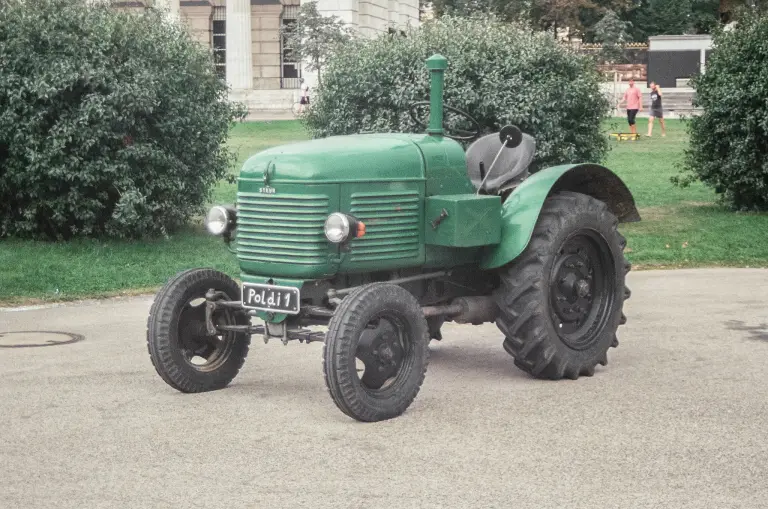
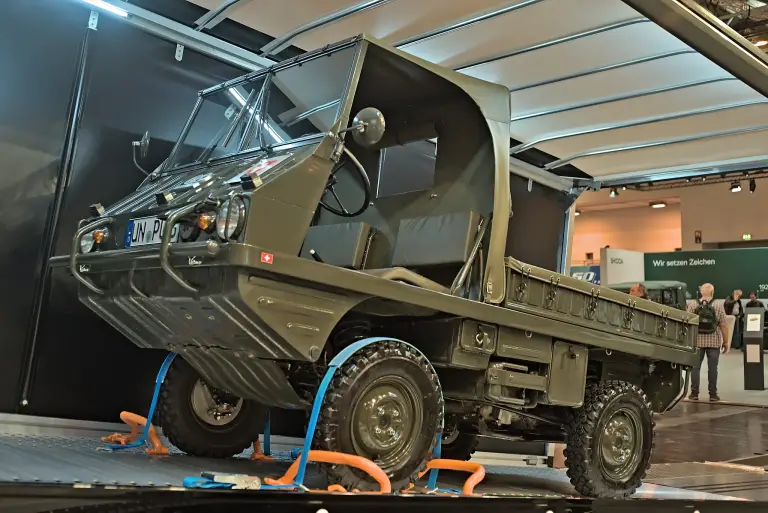
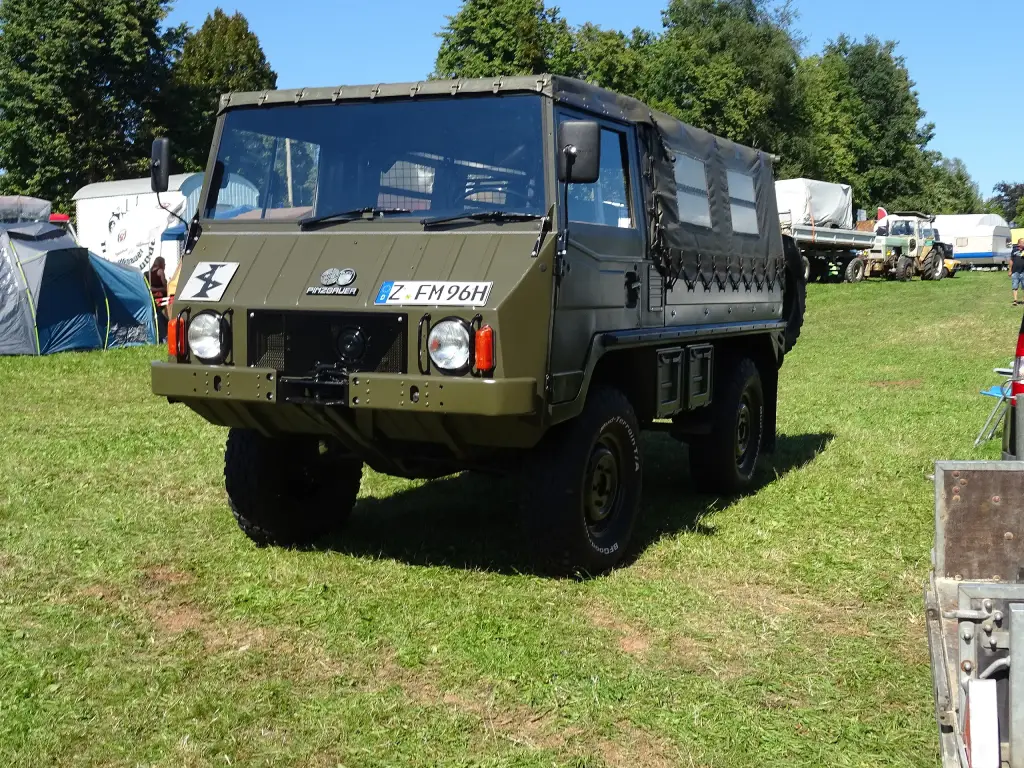
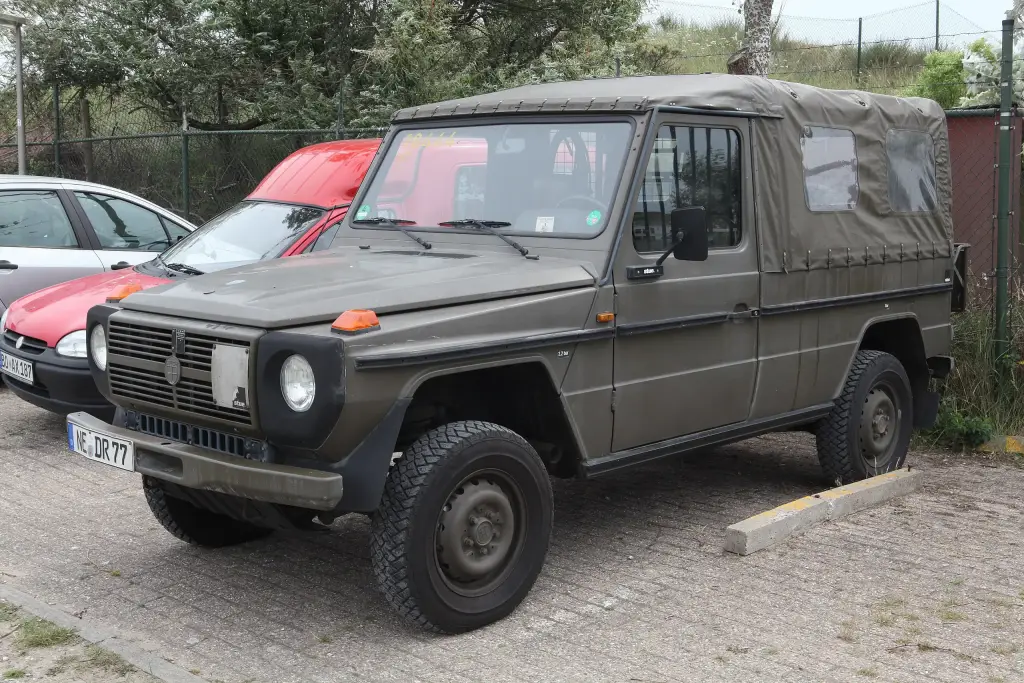
Steyr-Daimler-Puch then built diesel-engined lorries and buses, light and heavy tractors, and returned to cars. It first assembled the Fiat 1100 E, then put its own engine into a Fiat 1400 and renamed the car the Steyr 2000, and from 1957 to the early 1970s it produced the small Puch 500 under licence from Fiat, again with an Austrian-designed engine. Its best-known products became the off-road vehicles: the two-cylinder Haflinger of 1959–1974, the Pinzgauer in 4×4 and 6×6 from 1971 to 2000, and from 1979 the Puch G, identical to the Mercedes-Benz G-Class. The Puch division built motorcycles, mopeds and scooters, some of them sold in the United States through Sears, and civil tractor production had started in 1947.
Breaking up
In 1987 the group began selling off its production lines. Steyr Nutzfahrzeuge AG took the lorry business, Steyr Bus GmbH the buses in Vienna, Steyr-Daimler-Puch Fahrzeugtechnik the car assembly in Graz, and in 1990 Steyr Tractor was formed; the Puch motorcycle division went to Piaggio, and Steyr Mannlicher continued the weapons. Steyr Landmaschinentechnik was sold to Case Corporation in 1996 and became part of CNH in 1999. Car production stayed with Steyr-Daimler-Puch Fahrzeugtechnik until Magna International took a majority in 1998 and absorbed it completely in 2001–2002 as Magna Steyr, which still builds cars in Graz. Military vehicle production was sold in 1998 as Steyr-Daimler-Puch Spezialfahrzeug and in 2003 to General Dynamics.
Design and features
- Very wide product range: rifles, bicycles, cars, lorries, tractors, motorcycles and off-roaders.
- Steyr-Fiat cooperation: Fiat models built under licence for the Austrian market after 1945.
- Off-road specialists: Haflinger, Pinzgauer and the Puch G.
- Magna Steyr today: the Graz car plant continues under Magna ownership.
Steyr-Daimler-Puch versions
The best-known vehicle of the group is the Steyr-Puch Haflinger, and the post-war car was the Steyr 2000. The lorries are described with the Steyr 380. More vehicles are in the Steyr collection.
Sources
- Steyr-Daimler-Puch, English Wikipedia: founding, first cars, wartime labour, post-war products, break-up
- Steyr Daimler Puch, German Wikipedia: company history, merger, product range, Steyr-Fiat cooperation