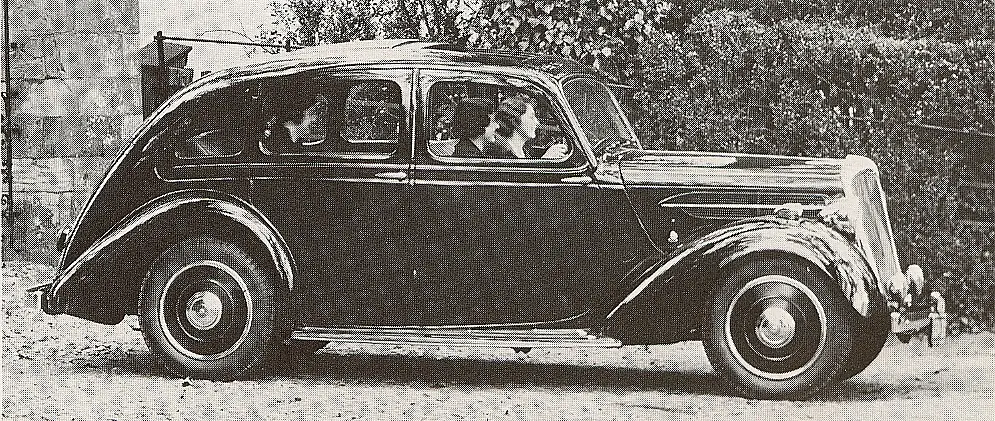
The Standard Twenty was a large car built by the Standard Motor Company in Coventry from 1908 to 1914 and again from 1931 to 1940. The later six-cylinder versions, ending with the Flying Twenty, were the largest cars in the Standard range.
Standard Twenty at a glance
| Maker | Standard Motor Company, Coventry |
|---|---|
| Periods | 1908–1914 and 1931–1940 |
| First 20 hp | 4,032 cc six-cylinder, 89 mm × 108 mm |
| 1912 version | 3,620 cc six-cylinder, longer wheelbase |
| 1913–1914 version | 3,326 cc four-cylinder, two wheelbases |
| 20 hp (1931) | 2,552 cc six-cylinder, 55 bhp, 104 km/h |
| 1935 version | 2,663 cc, 65 bhp, 108 km/h |
| Flying Twenty (1936–1940) | 2,663 cc, 122 km/h, 2,946 mm wheelbase |
| Gearbox (Flying Twenty) | three-speed synchromesh |
| Bodies | four-seat tourer before 1914; four-door saloon later |
There is no English Wikipedia article on the Standard Twenty; this page is based on the German and Italian articles. No free photographs of the model were found, so the article keeps the existing cover image of the record.
History of the Standard Twenty
The early Twenty (1908–1914)
The name first appeared in 1908 on a four-seat tourer with a long-stroke six-cylinder side-valve engine of 4,032 cc (89 mm by 108 mm), an arrangement that matched the four-cylinder 16 hp of the following year. The bare chassis weighed 965 kg. In 1912 the model was updated: the wheelbase grew by 203 mm but the car was about 100 kg lighter, and the engine was even longer-stroked at 3,620 cc (80 mm by 120 mm). A year later it was replaced by a car offered on two wheelbases, 3,073 mm or 3,226 mm, with an entirely new four-cylinder engine of 3,326 cc (89 mm by 133 mm). Production stopped at the start of the First World War. Throughout this period the only body offered was a four-door tourer.
The six-cylinder Twenty (1931–1935)
A new large six-cylinder model called the 20 hp appeared in 1931. Its side-valve engine of 2,552 cc (73 mm by 101.6 mm) produced 55 bhp at 3,000 rpm. The traditional saloons, with upright radiator and windscreen and a flat rear, reached 104 km/h. In 1933 a little-changed successor arrived with the wheelbase shortened by an inch. In 1935 the stroke was increased to 106 mm for 2,663 cc; the new engine still had side valves and produced 65 bhp at 3,800 rpm, raising the saloon’s top speed to 108 km/h. That version, made only in 1935, was available on two wheelbases, 2,972 mm and 3,124 mm. The revised Flying Twenty replaced it in 1936.
Flying Twenty (1936–1940)
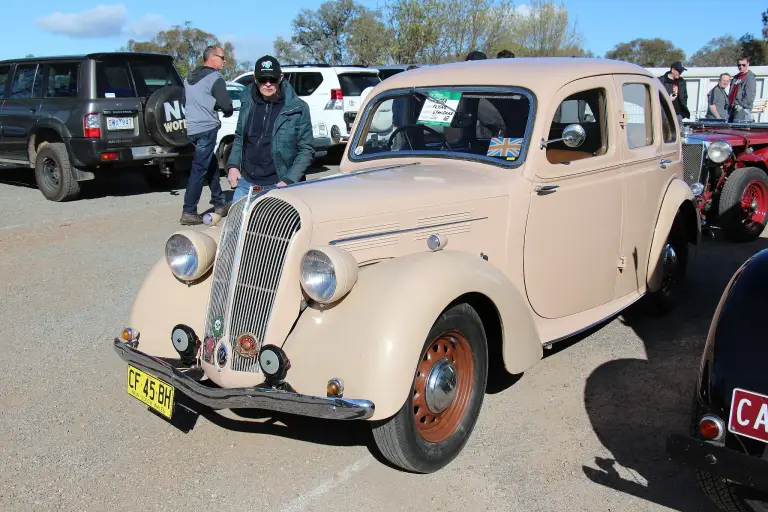
The Flying Twenty followed the 20 hp and wore the pseudo-streamlined bodywork of the Standard Flying range. Its side-valve straight six of 2,663 cc with the long 106 mm stroke came from its predecessor and drove through a synchronised three-speed gearbox. At 2,946 mm its wheelbase was slightly shorter than before. A second version with a shortened chassis, the Flying Light Twenty, was offered only in 1936. These cars reached 122 km/h, well above the less streamlined models they replaced. In 1941 the big six-cylinders were dropped from the Standard range without a replacement; the six did not return until the Vanguard Six of 1960.
Design and features
- Biggest Standard: the six-cylinder Twenty was the largest model in the range in the 1930s.
- Long-stroke engines: from 2,552 cc to 2,663 cc with a 106 mm stroke.
- Flying styling: the 1936 Flying Twenty brought the streamlined body of the Flying range.
- Faster than before: 122 km/h against 104–108 km/h for the earlier six-cylinder cars.
Standard Twenty versions
- 20 hp tourer (1908–1912): 4,032 cc six-cylinder, later 3,620 cc.
- 20 hp (1913–1914): 3,326 cc four-cylinder on two wheelbases.
- 20 hp (1931–1935): six-cylinder saloon, 2,552 cc then 2,663 cc.
- Flying Twenty (1936–1940): 2,663 cc, 122 km/h.
- Flying Light Twenty (1936): short-chassis version.
The Twenty was the largest of the pre-war Standards alongside the Standard Twelve, and the small end of the range is covered by the Standard Nine. More cars are in the Standard collection.
Sources
- Standard Twenty, German Wikipedia: periods, engines, performance, Flying Twenty
- Standard Twenty, Italian Wikipedia: bodies, wheelbases, end of production