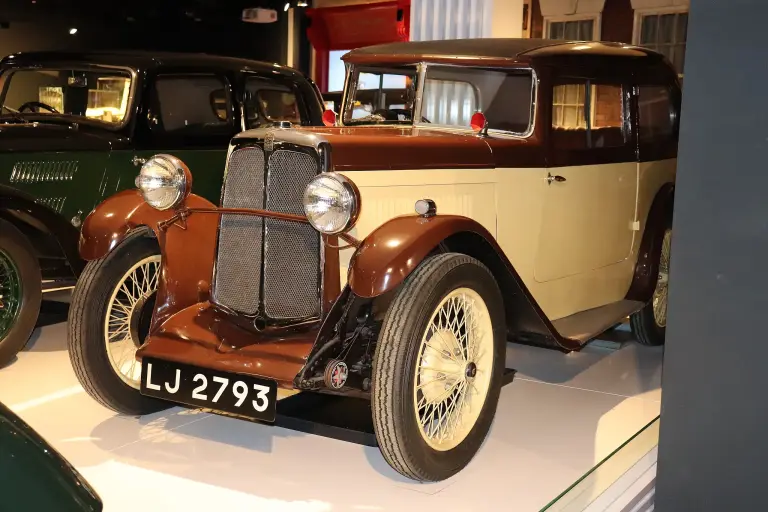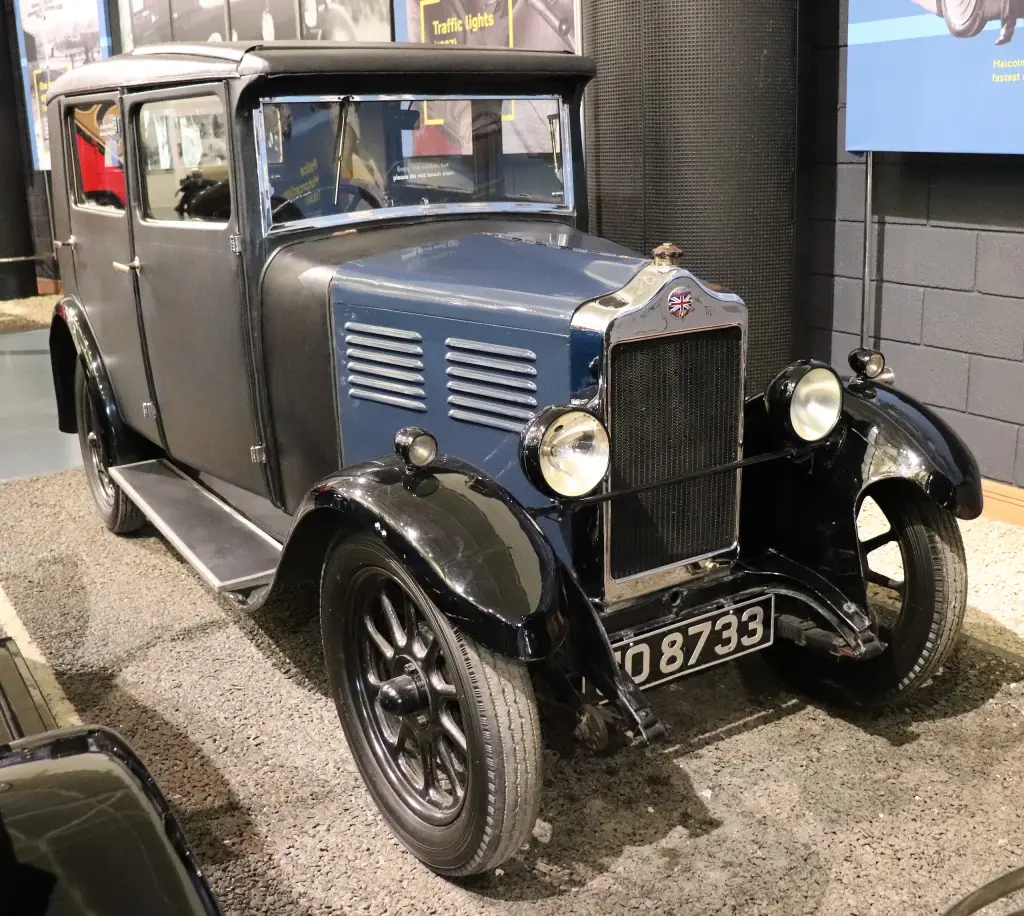
The Standard Nine was a small car built by the Standard Motor Company in Coventry from 1928 to 1940. The name covered the original 9 hp, the Big 9 and the Little 9, and ended with the Flying Nine, the smallest Standard of its day.
Standard Nine at a glance
| Maker | Standard Motor Company, Coventry |
|---|---|
| Production | 1928–1940 |
| 9 hp (1928) | 1,159 cc, 22 bhp at 3,000 rpm, 80 km/h |
| Big 9 (1928–1933) | 1,287 cc, 25 bhp at 3,200 rpm, 87 km/h |
| Little 9 (1933–1936) | 1,006 cc, 1,052 cc from 1934, 22 bhp, 93 km/h |
| Flying Nine (1937–1940) | 1,131 cc side-valve, three-speed gearbox |
| Bodies | four-door torpedo, two- and four-door saloon, two-door roadster |
| Engine layout | four-cylinder side-valve |
| Place in range | the smallest Standard model |
There is no English Wikipedia article on the Standard Nine; this page is based on the German and Italian articles.
History of the Standard Nine
The 9 hp of 1928
The Nine name first appeared in 1928 on the 9 hp, a small car with a long-stroke four-cylinder side-valve engine of 1,159 cc (60.3 mm bore by 101.6 mm stroke) that produced 22 bhp at 3,000 rpm. It was the first car with a side-valve engine that Standard built after the First World War, and it was smaller and simpler than the 14 hp and 18/36 models then on offer. Bodies included a four-door torpedo, two- and four-door saloons and a two-door roadster, and the top speed was 80 km/h. Within the same year the car was renamed Big 9.
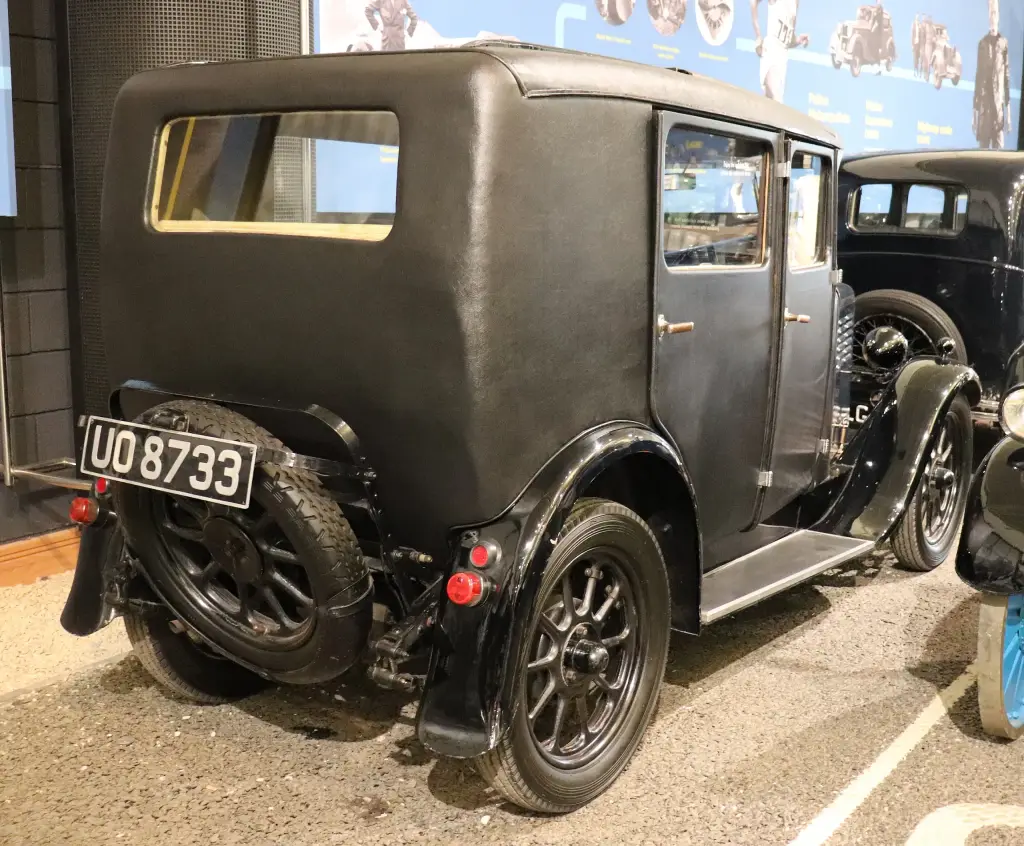
Big 9 and Little 9
The Big 9 was slightly larger than the original: the wheelbase grew by 190 mm and the engine to 1,287 cc, producing 25 bhp at 3,200 rpm and a top speed of 87 km/h. It was built from 1928 to 1933. In 1933 it gave way to the Little 9, whose wheelbase was 260 mm shorter and whose engine measured only 1,006 cc, again with 22 bhp; capacity grew to 1,052 cc the following year. The Little 9 could reach 93 km/h. It was replaced in 1936 by the Flying Nine.
Flying Nine and the end
The 1937 Flying Nine was the smallest car of the Standard Flying range, with the pseudo-streamlined bodywork of that series. Its side-valve four was completely redesigned, with 1,131 cc from a 60 mm bore and 100 mm stroke, and drove through a synchronised three-speed gearbox. Production ended in 1940 because of the war, when Standard, like other British makers, converted its works to military production. The Flying Nine is described on its own page; here the earlier 9 hp, Big 9 and Little 9 are the main subject.
Design and features
- Three generations under one name: the 9 hp, the Big 9 and the Little 9 before the Flying Nine.
- Economical side-valve engines: from 1,006 to 1,287 cc, with 22–25 bhp.
- Many body styles: torpedo, saloons and roadster were listed.
- The smallest Standard: throughout its life the Nine was the entry model of the range.
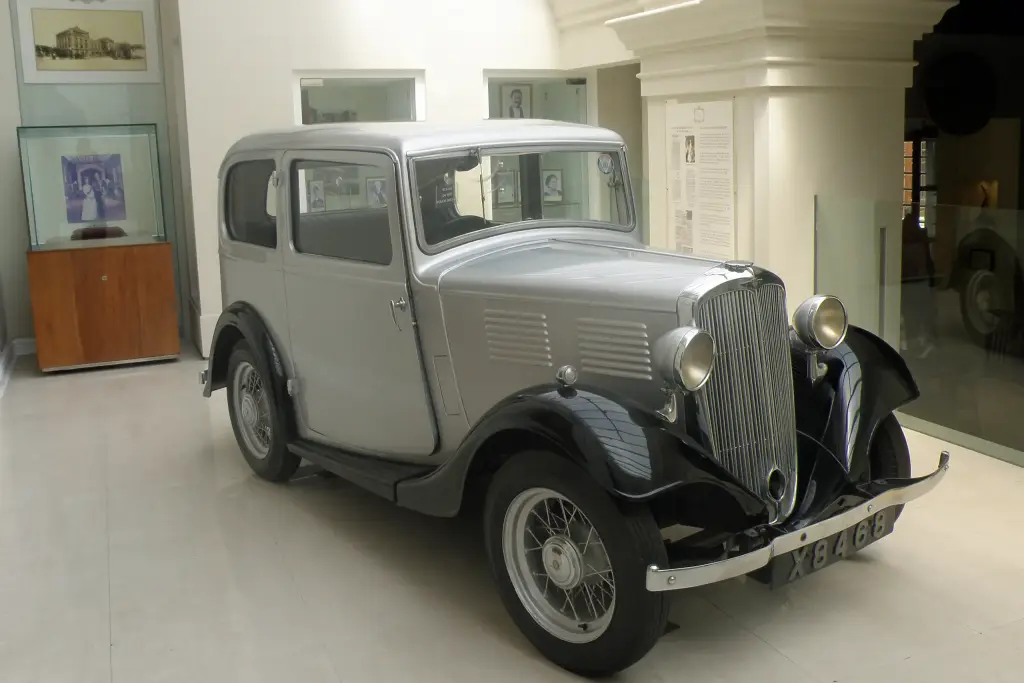
Standard Nine versions
- 9 hp (1928): 1,159 cc, 22 bhp, 80 km/h.
- Big 9 (1928–1933): longer wheelbase, 1,287 cc, 25 bhp.
- Little 9 (1933–1936): shorter wheelbase, 1,006 cc then 1,052 cc, 93 km/h.
- Flying Nine (1937–1940): streamlined bodywork and a new 1,131 cc engine.
The last of the line is described in Standard Flying Nine, and the small-car story continued with the Standard Eight. More cars are in the Standard collection.
Sources
- Standard Nine, German Wikipedia: 9 hp, Big 9, Little 9, Flying Nine
- Standard Nine, Italian Wikipedia: bodies, engines, performance