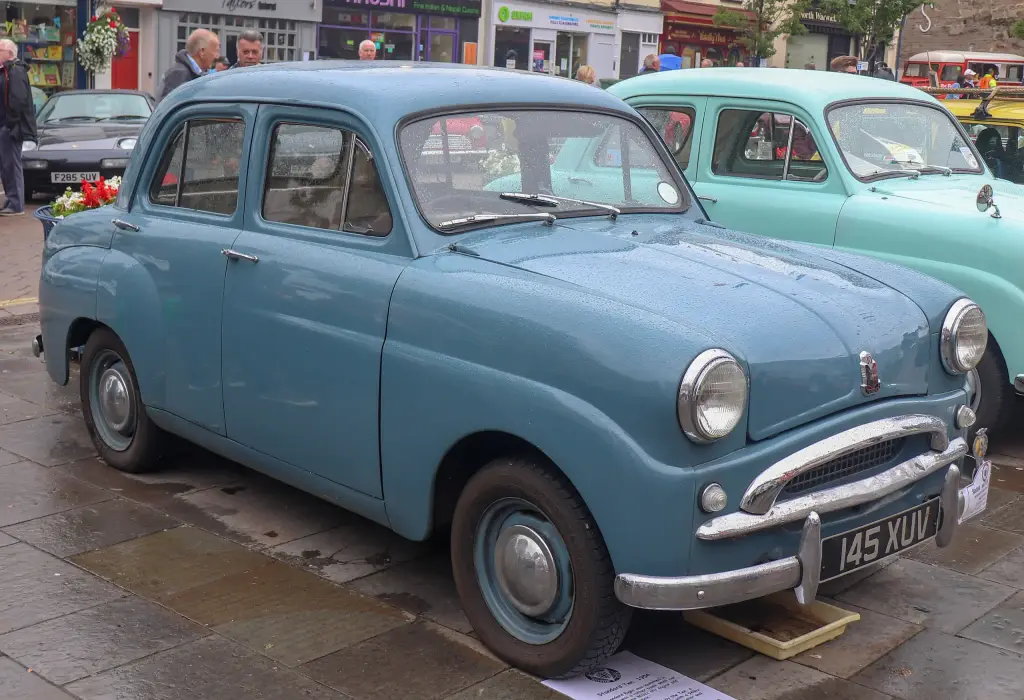
The Standard Ten was a model name used by the British Standard Motor Company for several small cars between 1906 and 1961. It referred to the car’s tax horsepower, and the best-known versions are the Flying Ten, the post-war 948 cc Ten and the Standard Pennant.
Standard Ten at a glance
| Maker | Standard Motor Company, Coventry |
|---|---|
| Name used | 1906–1961 |
| Flying Ten | 1937–1940, 1,267 cc, 33 bhp |
| Post-war Ten | from 1954, 948 cc |
| Pennant | from October 1957, 37 bhp |
| Ten test (1954) | 69 mph, 0–60 mph in 38.3 seconds, £580 |
| Pennant test (1958) | 70.2 mph, 0–60 mph in 35.3 seconds, £728 |
| Estate | Companion, from June 1955 |
| Rally win | RAC Rally 1955, Jimmy Ray and Brian Horrocks |
| Export names | Triumph 10 in the US, Vanguard Junior in Scandinavia, Cadet in Australia |
| Replaced by | Triumph Herald in 1961 |
Based on one source, the English Wikipedia article on the Standard Ten, which also covers the Pennant.
History of the Standard Ten
Early Tens and the Flying Ten
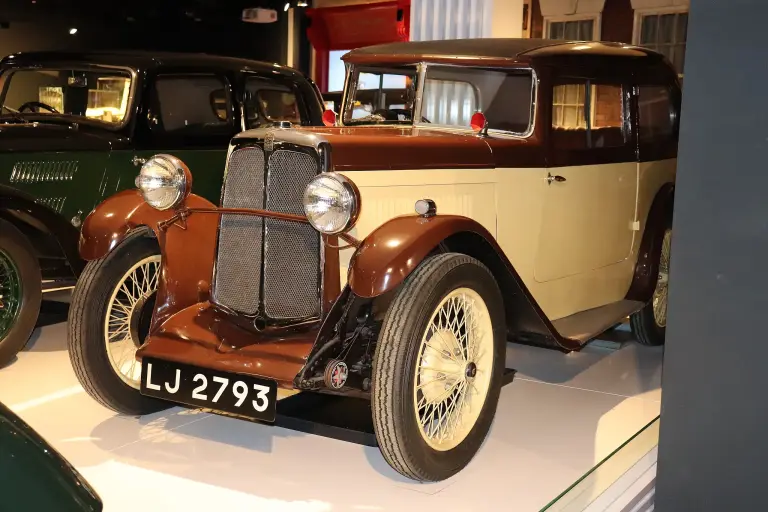
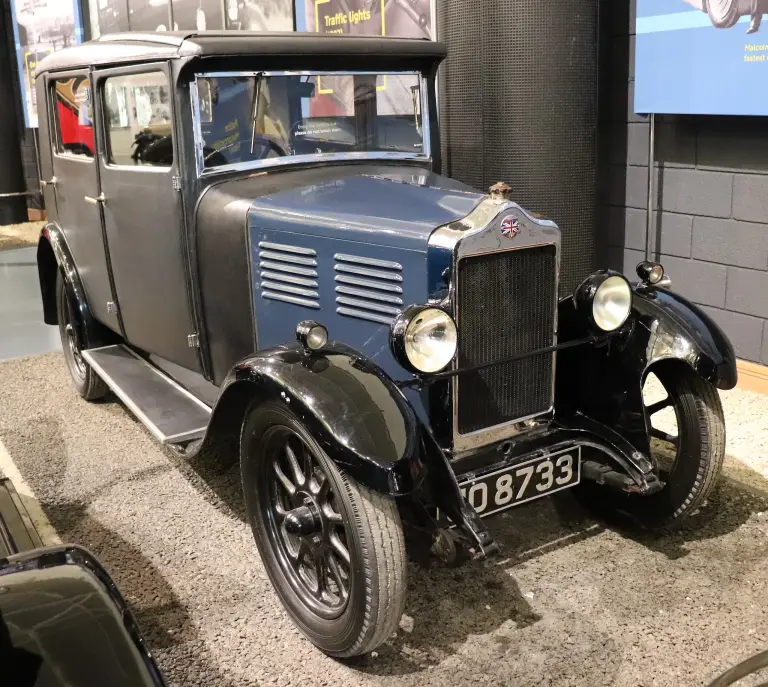
The name was first used in 1906 on an experimental two-cylinder 10 tax horsepower car with a 70 mm bore and 82 mm stroke, giving 631 cc. A 9.5 tax horsepower four-cylinder car followed in 1914 and was built until 1915, with a longer-wheelbase, longer-stroke version offered in 1919. Standard returned to the 10 tax horsepower market in 1934, and that model was replaced in 1937 by the Flying Ten, which lasted until the outbreak of the Second World War. The Flying Ten had the semi-streamlined look of the Flying range and a long-stroke 1,267 cc side-valve engine with a single Zenith carburettor, producing 33 bhp at 4,000 rpm. Drive went through a three-speed synchromesh gearbox, the front suspension was at first a solid axle and independent with a transverse leaf spring from 1939, and the top speed was around 65 mph. Brakes were cable-operated Bendix units. A sportier Light Flying Ten was also made, and in early 1941, after civilian production had ceased, 150 four-door cars were built for the military.
The post-war Ten
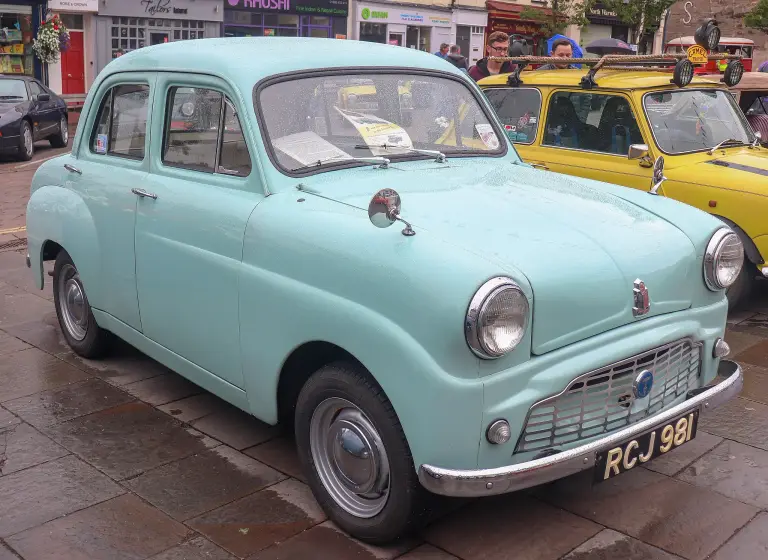
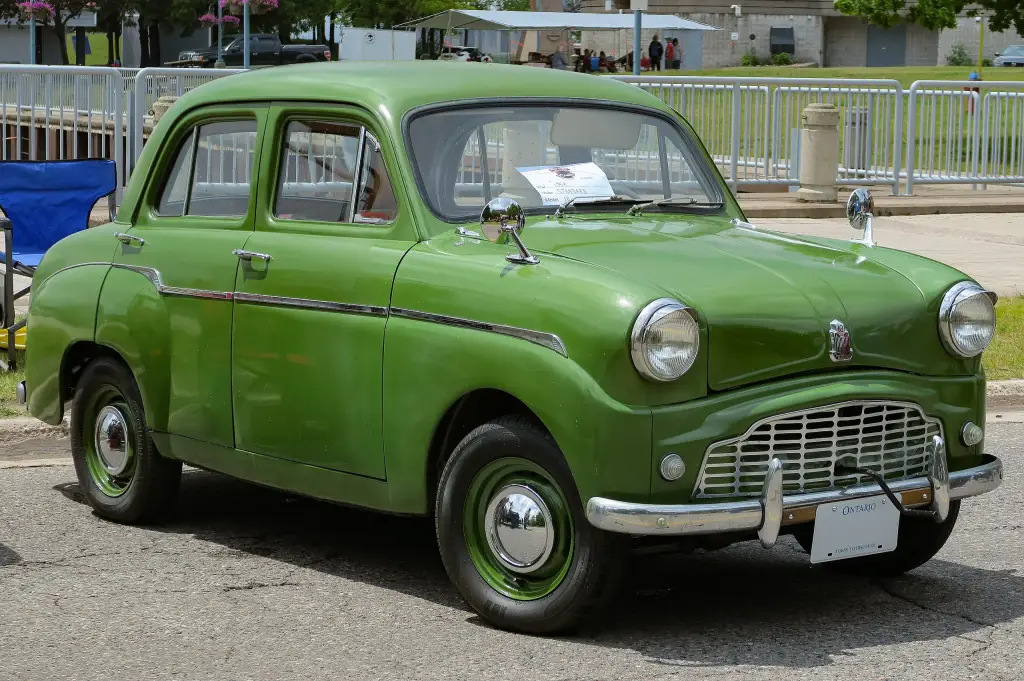
In 1954 the Ten returned as a more powerful, better-appointed version of the Standard Eight, using the Eight’s Standard SC engine enlarged to 948 cc and sharing a similar frame and transmission. Overdrive, from March 1957, or a temperamental semi-automatic gearbox were optional. An estate version, the Companion, was launched in June 1955 and was among the first small British estates to have rear passenger doors, unlike the Ford Squire and Hillman Husky with their two-door van arrangement. A small number of left-hand-drive Tens went to the United States as the Triumph TR-10, with the two-tone colour scheme normally reserved for the Pennant. The car was also badged Triumph 10 in the US, Standard Vanguard Junior in Scandinavia and Cadet in Australia. A Ten saloon tested by The Motor in 1954 reached 69.0 mph and accelerated from 0 to 60 mph in 38.3 seconds, returning 34.4 mpg; the test car cost £580 including taxes. In 1955 a factory-prepared Ten driven by Jimmy Ray and Brian Horrocks won the RAC Rally.
The Pennant
A tail-finned version of the Ten with optional two-tone paint, the Standard Pennant, was launched in October 1957. Engine power rose to 37 bhp and an overdrive gearbox was optional, along with a radio, heater, leather upholstery and clutchless two-pedal control. Indian-produced Pennants were branded Standard 10. A Pennant tested by The Motor in 1958 reached 70.2 mph, accelerated from 0 to 60 mph in 35.3 seconds and returned 40.2 mpg; it cost £728 including £243 of taxes. The Ten and the Pennant were replaced by the Triumph Herald in 1961.
Design and features
- Tax-horsepower name: the ‘Ten’ referred to fiscal horsepower, used as a size label long after the original meaning had gone.
- Flying Ten: 1,267 cc and 33 bhp in the streamlined Flying body of 1937–1940.
- Post-war small saloon: a 948 cc development of the Standard Eight with optional overdrive.
- Companion estate: one of the first small British estates with rear passenger doors.
- Pennant: a tail-finned, more powerful version with two-tone paint as an option.
Standard Ten versions
- Experimental 10 (1906): two-cylinder, 631 cc.
- 9.5 hp (1914–1919): four-cylinder tax-class model.
- Ten (1934–1936): the model replaced by the Flying Ten.
- Flying Ten (1937–1940): 1,267 cc, later with independent front suspension; Light Flying Ten also offered.
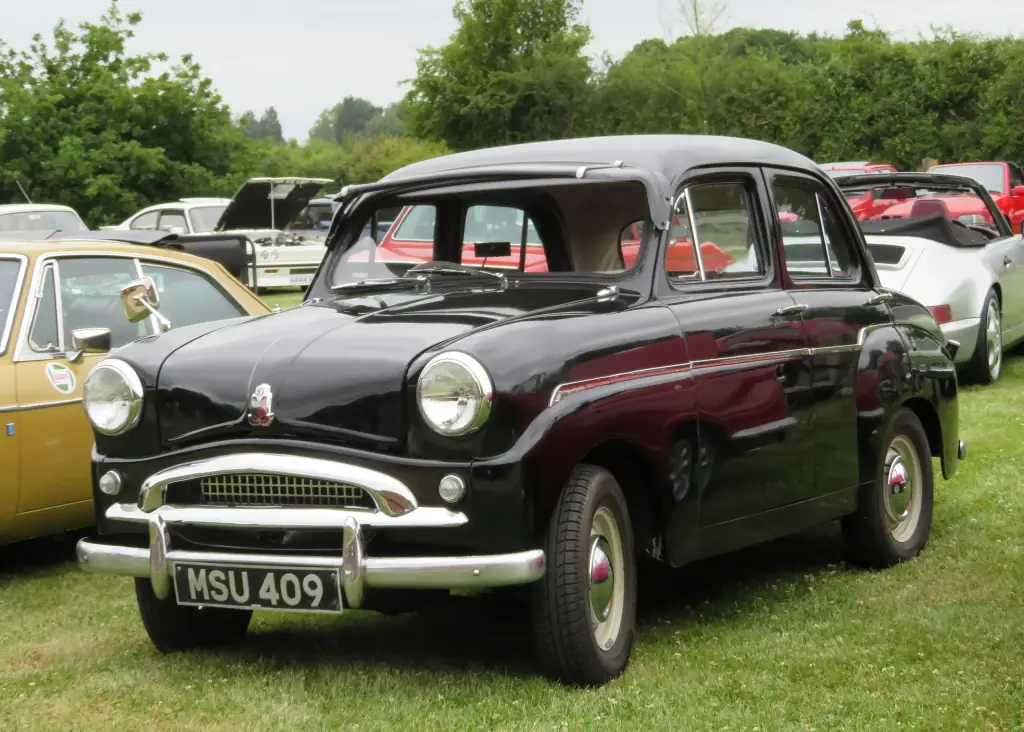
- Ten (1954–1961): 948 cc, overdrive or semi-automatic optional.
- Companion (1955): estate version with rear passenger doors.
- Pennant (1957–1961): 37 bhp, tail fins and optional two-tone paint.
The Ten was the bigger brother of the Standard Eight and was replaced by the Standard Herald line. More cars are in the Standard collection.
Video: Standard Eight & Standard Ten | Middlewich Classic Car Show 2013
Video on YouTube.
Sources
- Standard Ten, English Wikipedia: early Tens, Flying Ten, post-war Ten, Pennant, road tests