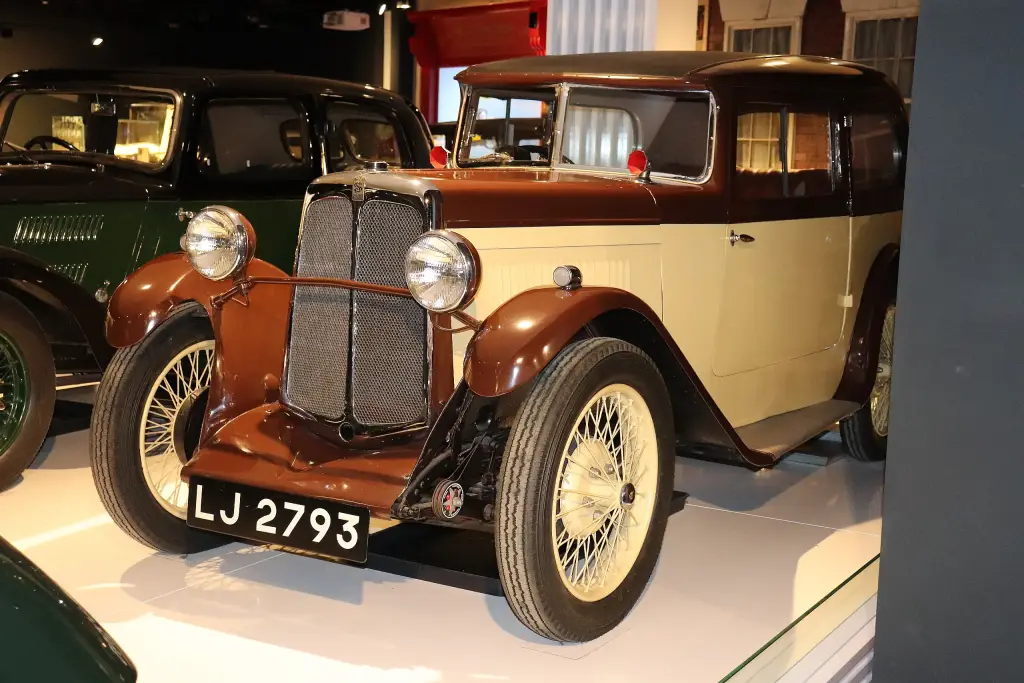
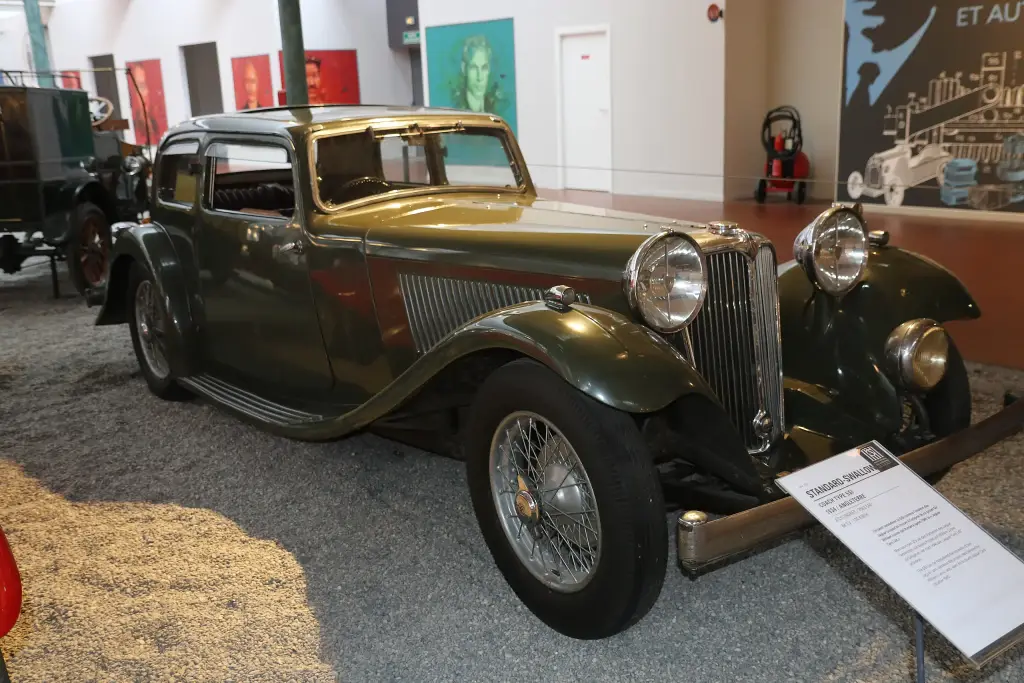
Standard Swallow was the name given to cars built by the Swallow coachbuilding company of Coventry on Standard Motor Company chassis in the late 1920s and early 1930s. This work led directly to the SS 1 and SS 2, the first models of the company that became Jaguar.
Standard Swallow at a glance
| Coachbuilder | Swallow Coachbuilding, Coventry |
|---|---|
| Base | Standard Motor Company chassis and engines |
| First models | 1929, on Standard, Swift and Fiat chassis |
| One-off | 1929 Standard Swallow boat-tail roadster |
| SS 1 | 1932, 2-litre or 2½-litre six-cylinder |
| SS 2 | 1-litre four-cylinder |
| Engines and chassis | supplied by Standard |
| Bodies | coupé and tourer at first, saloon from 1934 |
| Founders | William Walmsley and William Lyons |
| Successor | S.S. Cars Limited, later Jaguar Cars |
The English Wikipedia article covers the whole Swallow company; only its Standard-based cars are described here. The 1929 Standard Swallow models are documented briefly in the source.
History of the Standard Swallow
From sidecars to car bodies
Swallow began as a Blackpool sidecar business founded by William Walmsley and William Lyons, whose partnership became official on 4 September 1922. With a small team they built motorcycle sidecars, then took larger premises and added car repairs, painting, new hoods and upholstery; coachbuilding was added to the business name. Their first car body of any quantity was the Austin Seven Swallow, announced in May 1927 with a distinctive open two-seater body and a detachable hardtop, priced at only £175; the brightly coloured two-tone bodywork imitated much more expensive cars and sold well, and a saloon version followed.
Coventry and the Standard chassis
Rising demand took the company in 1928 to a part-disused First World War munitions factory at Holbrook Lane, Coventry, and in 1929 the owners took a stand at the London Motor Show. Three new Swallow models appeared in 1929 on Standard, Swift and Fiat chassis. That year John Black and William Lyons also produced a one-off sports car, the ‘First’ SS (Standard Swallow), a sleek boat-tail roadster with a flowing, streamlined design that clearly aimed at making a fast car, possibly with racing in mind; it is believed to have been shipped to Australia in the late 1940s. Swallow bodies on the Wolseley Hornet chassis followed from January 1931, the first six-cylinder Swallows.
SS 1 and SS 2
Engines and chassis supplied by the Standard Motor Company were fitted with Swallow bodies styled under Lyons’s supervision. The first of the SS range available to the public was the 1932 SS 1, with a 2-litre or 2½-litre side-valve six-cylinder engine, joined by the SS 2 with a four-cylinder 1-litre side-valve engine. Both were initially offered as a coupé or tourer, and a saloon was added in 1934 when the chassis was modified to be two inches wider. The success of the new range brought a number of changes, and the business continued as S.S. Cars Limited under Lyons, eventually growing into Jaguar Cars Limited.
Design and features
- Standard underpinnings: Swallow bodies on Standard chassis and engines, alongside Swift and Fiat-based models.
- Boat-tail one-off: the 1929 Standard Swallow roadster was a streamlined sports car built as a single example.
- Birth of Jaguar: the SS 1 and SS 2 developed from this work and led to S.S. Cars and then Jaguar.
- Two-tone style: brightly coloured paintwork imitating expensive cars was a Swallow trademark.
Standard Swallow versions
- Standard Swallow models (1929): Swallow bodies on Standard chassis, one of three new ranges that year.
- Standard Swallow boat-tail roadster (1929): a one-off sports car, the ‘First’ SS.
- SS 1 (1932): Standard chassis with a 2-litre or 2½-litre six.
- SS 2 (1932): Standard chassis with a 1-litre four.
Swallow used Standard chassis and engines; the Standard range of the time included the Standard Nine and the Standard Twenty. More cars are in the Standard collection.
Sources
- Swallow Sidecar Company, English Wikipedia: company history, 1929 Standard models, boat-tail SS, SS 1 and SS 2