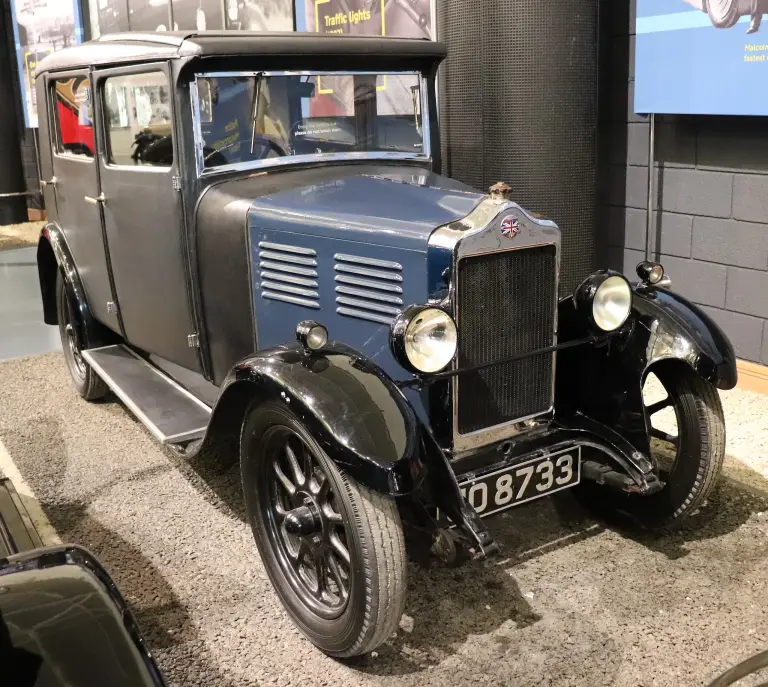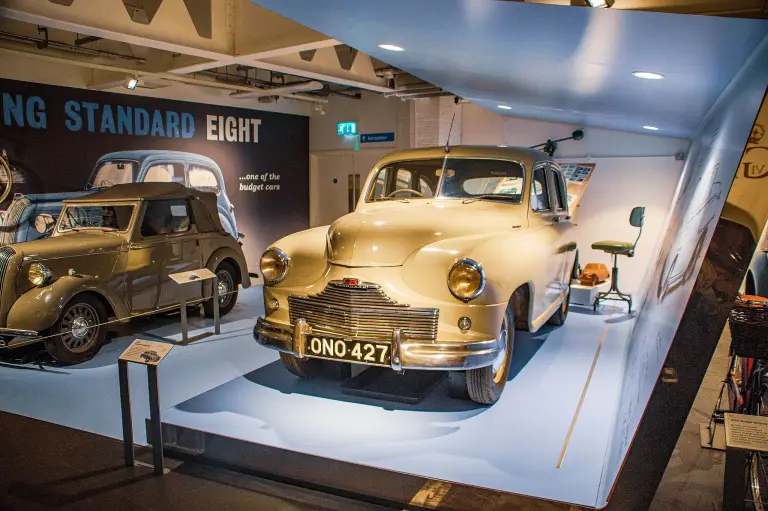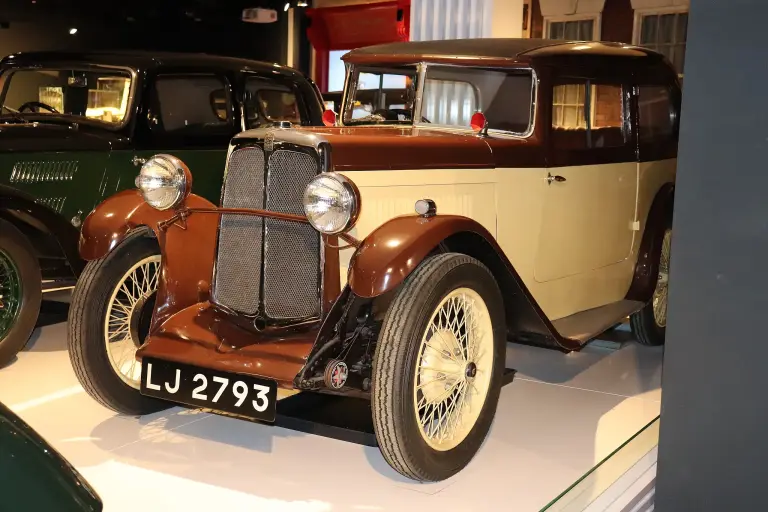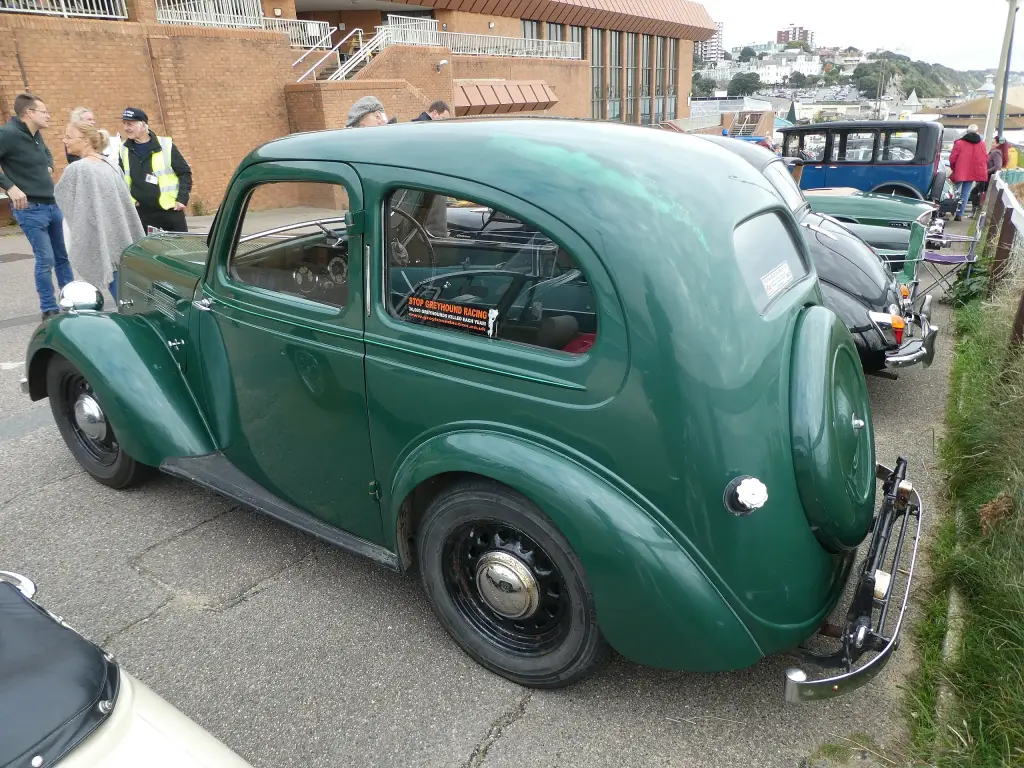
The Standard Flying Nine was a small family car produced by the Standard Motor Company from July 1936 to 1940. It was the smallest of the streamlined Flying Standard range and the last of the company’s Nine models before the Second World War.
Standard Flying Nine at a glance
| Maker | Standard Motor Company, Coventry |
|---|---|
| Production | July 1936–1940 |
| Engine | 1,131 cc side-valve four |
| Bore and stroke | 60 mm × 100 mm |
| Power | 30 bhp at launch, 33 bhp by 1939 |
| Gearbox | four-speed, synchromesh on the top three |
| Body | two-door, four-light, all-steel |
| Roof | sliding sunroof as standard |
| Front suspension | rigid axle, independent from 1940 |
| Models | basic and DeLuxe; 9B and 9BA from 1938; Super and Popular in 1939 |
Based on one source, the English Wikipedia article on the Standard Flying Nine.
History of the Standard Flying Nine
A streamlined small Standard
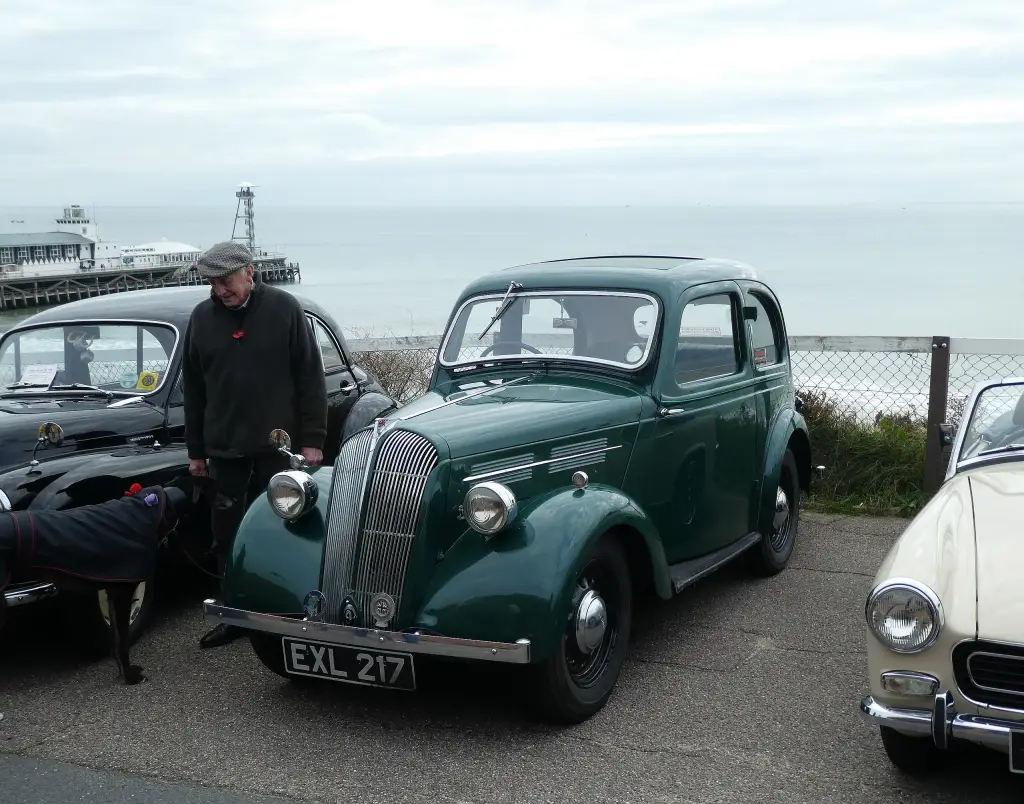
The Flying Nine was introduced in July 1936, part of the Flying Standard series that began with the Flying Twelve, Sixteen and Twenty in October 1935 and then grew downwards to the smaller 8 hp cars. Behind its rearward-sloping radiator grille sat a 1,131 cc side-valve engine with a long 100 mm stroke and a 60 mm bore; the long stroke maximised capacity within the British 9 hp tax class, which was based on cylinder bore. Maximum output was 30 bhp at launch, with an aluminium head, a single Zenith carburettor and thermo-siphon cooling. Power went to the rear wheels through a four-speed gearbox synchronised on the top three gears. By 1939 the engine gave 33 bhp at 4,000 rpm.
Body and equipment
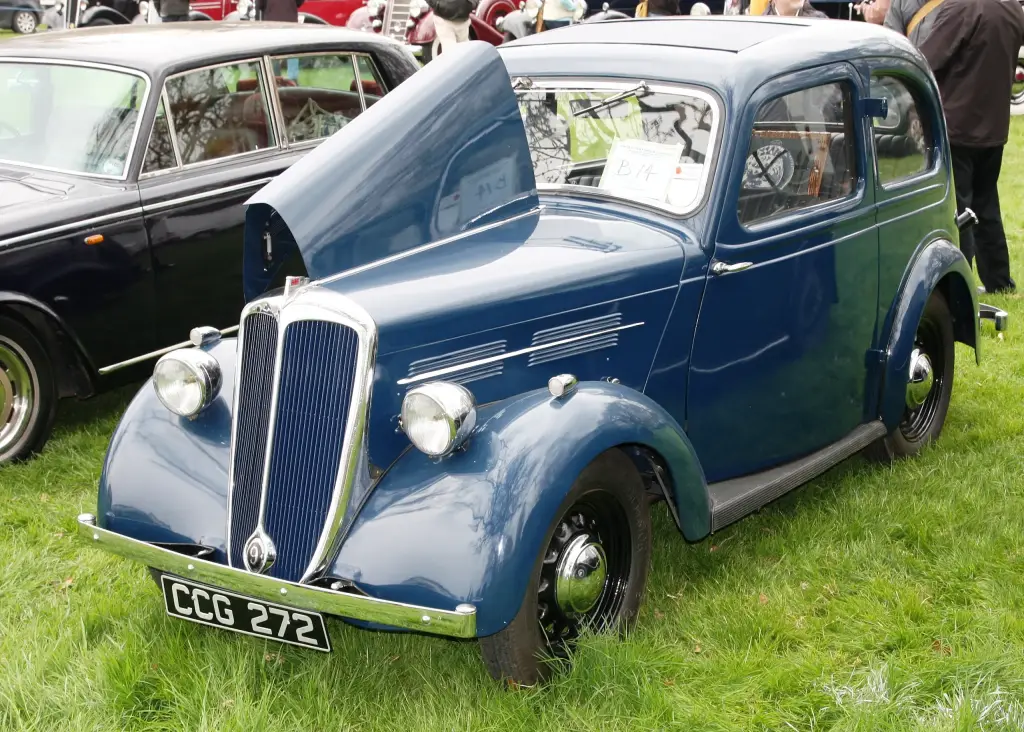
The two-door, four-light body was all-steel and had a sliding sunroof as standard. The Flying Nine departed from the existing range in being available only as a two-door, with no outside access to the luggage compartment, an externally mounted spare wheel and running boards. A basic model and a DeLuxe were offered; the DeLuxe added a dome light, wind-down rear side windows and a body-coloured spare-wheel cover, and had leather upholstery where the base saloon used ‘leather cloth’. A facelift for the 1938 model year changed the radiator grille to the more curvilinear Waterfall style, and the model numbers became 9B and 9BA.
1939 and the end
For 1939 a Super Saloon joined the range with revised rear bodywork and an external bootlid. The base and DeLuxe remained alongside it for a time, then a base version of the updated design called the Popular Saloon replaced them, losing the clock, dome light and sun visor and using black-plated headlights instead of chromed ones. The short 1940 model year gained independent front suspension; earlier cars had a rigid H-section axle on longitudinal leaf springs. Production ended in 1940 as British factories switched to war supplies. By then the similarly bodied but smaller-engined Standard Eight was outselling it, and after the war only the Eight was revived.
Design and features
- Streamlined styling: a rearward-sloping grille and the Flying range’s pseudo-streamline shape.
- Long-stroke engine: 1,131 cc from a 60 mm bore and 100 mm stroke, sized for the 9 hp tax class.
- Standard sunroof: the all-steel two-door body had a sliding roof as standard equipment.
- Waterfall grille: the 1938 facelift gave the car a more curvilinear radiator.
- Late independent suspension: the 1940 cars were the only ones with independent front suspension.
Standard Flying Nine versions
- Flying Nine (1936–1938): basic and DeLuxe models with the original grille.
- 9B and 9BA (1938–1939): Waterfall grille and revised body details.
- Super Saloon (1939): DeLuxe equipment plus a rear bootlid and notchback rear.
- Popular Saloon (1939–1940): base version of the updated body.
- 1940 model: independent front suspension for the shortened final season.
The Flying Nine was replaced in the range by the Standard Eight, and the earlier Nines are described under the Standard Nine. More cars are in the Standard collection.
Sources
- Standard Flying Nine, English Wikipedia: design, equipment, model history, production end