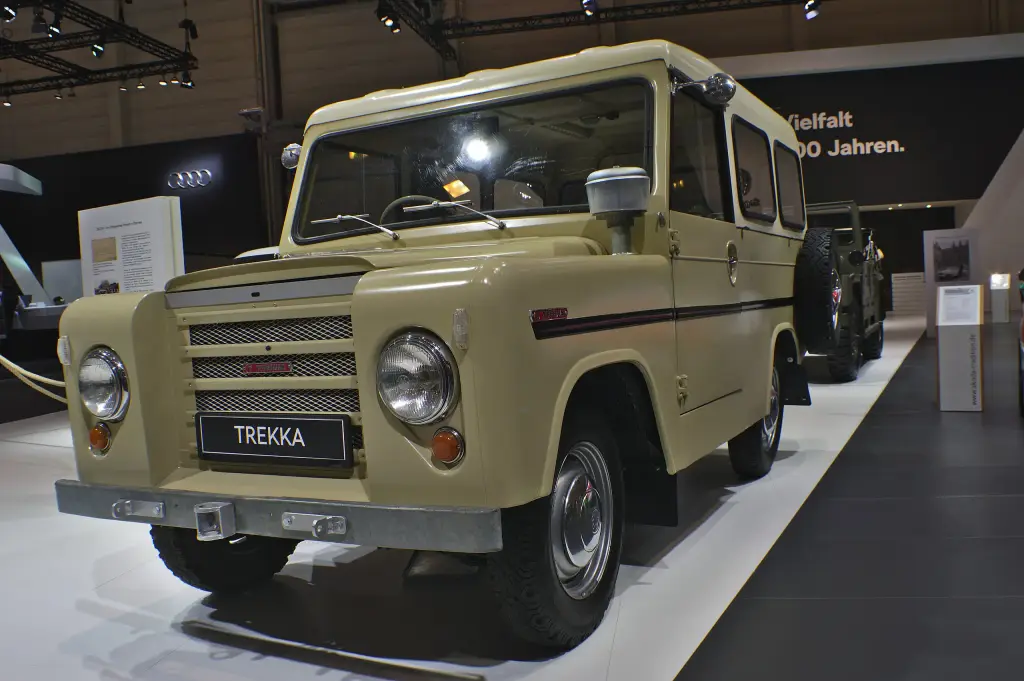
The Trekka was a light utility vehicle built in New Zealand between 1966 and 1972 on the chassis, engine and drivetrain of the Czechoslovak Škoda Octavia. It was sold as an agricultural vehicle to avoid import restrictions, about 2,500 were built, and it remains the only vehicle designed and made in New Zealand to have entered commercial production for any length of time.
Škoda Trekka at a glance
| Built by | Motor Lines, later Motor Holdings, Auckland |
|---|---|
| Production | 1966–1972 |
| Basis | Škoda Octavia chassis, engine and drivetrain |
| Engine | 1,221 cc four-cylinder, 47 hp (35 kW) |
| Drive | rear-wheel drive |
| Bodies | van and ute (pick-up) |
| Launch price | £899, less than a Morris 1100 |
| Built | about 2,500 |
| Local content | about 80 per cent New Zealand |
| Successor role | taken over by no direct replacement |
This page is based on one source, the English Wikipedia article on the Trekka.
History of the Škoda Trekka
An idea from an assembly company
The idea came from Philip Andrews, who had taken over his father’s vehicle assembly firm Motor Lines, and who convinced its new owner Noel Turner of the market for a farm vehicle built on Škoda Octavia mechanicals. Agricultural vehicles carried no tariff in New Zealand at the time and there was no limit on how many could be sold, which made the plan attractive. A prototype of a small utility vehicle had already been built by an engineering company in Kawerau around a British Bradford engine; its owner allowed it to be taken to Auckland expecting a joint venture, but Motor Lines developed its own Škoda-powered vehicle from it. Under Colin French, manager from 1966, the project began with two hand-built prototypes using the rear-wheel-drive Octavia powertrain imported from Czechoslovakia, with its 1,221 cc four of 47 hp. The result looked superficially like a Land Rover but was far less capable off the road, and it was built as a van and as a ute.
Production and sales
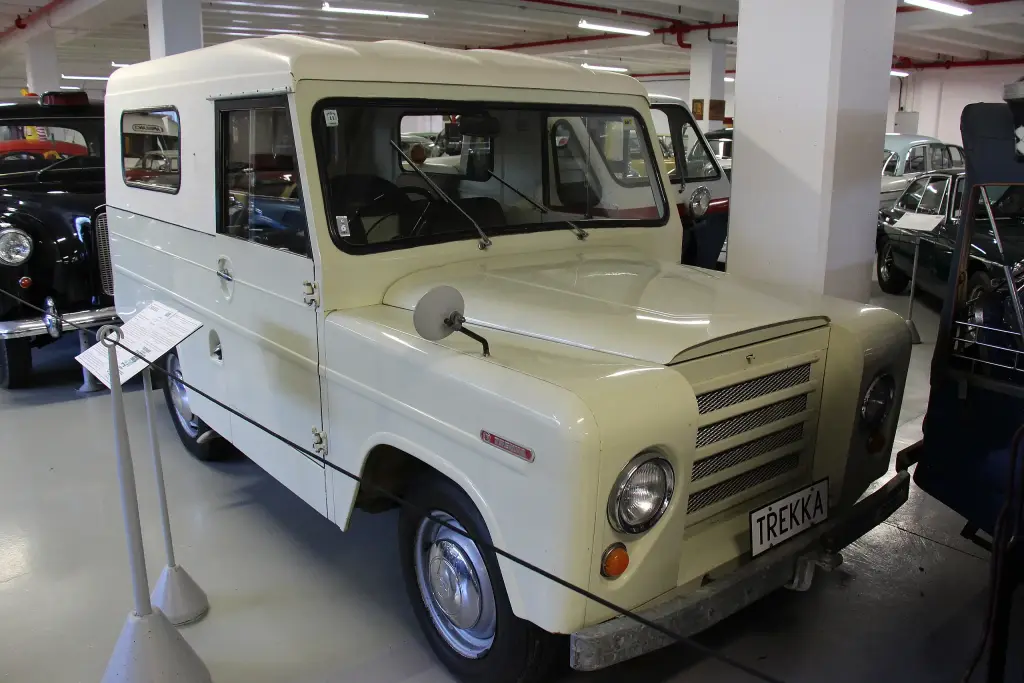
The Trekka was launched on 2 December 1966 as an agricultural vehicle, though it ended up selling to rural buyers and urban tradesmen alike. The first cars reached customers in 1967, by which time Motor Lines had become Motor Holdings. The first model, the 2-10, cost £899, less than a Morris 1100; all were painted green with canvas tops and a tow bar was the only option. Output began at six vehicles a day with hand-formed steel panels and rose after panel forming was contracted to an Auckland lawnmower manufacturer. 708 were sold in the first year and the 1,000th was built by January 1968. Buyers wanted a more weatherproof top, so a white fibreglass canopy was offered, made by another Auckland firm, and later cars had better seats. The standard Škoda differential could not cope with slippery farms and building sites, so a limited-slip unit was developed for the Trekka by Ray Stone, who had built such units for racing cars.
Exports and the end
Motor Holdings looked for export markets from 1968 and the first Trekkas went to Fiji, followed by other Pacific islands. Australia agreed to take up to 720 a year duty-free in exchange for extra New Zealand licences for Holden cars, but Australian buyers preferred their own larger and stronger vehicles and fewer than 100 were sold there. In July 1969 five Trekkas were flown to South Vietnam in RNZAF Bristol Freighters for a New Zealand surgical team, where they served as runabouts and sometimes as ambulances, and broke down in the rains and bad roads. A single Trekka went to General Motors in Detroit in 1969, and CKD kits were sent to Indonesia from 1971; others reached Latin America, the Caribbean, the Arab countries, Africa, Afghanistan and south-east Asia. Because the Trekka was 80 per cent New Zealand made and sold as an agricultural vehicle, it escaped the import limits that made new cars hard to buy, and local authorities and tradesmen bought it in large numbers. When import restrictions eased the economics no longer worked, and production ended in 1972 after about 2,500 vehicles. It is now remembered as an icon of 1960s New Zealand ingenuity and survives in collections there and in Australia.
Design and features
- Škoda mechanicals: the Octavia’s 1,221 cc engine, gearbox and separate chassis, imported from Czechoslovakia.
- Agricultural loophole: sold as a farm vehicle, it avoided New Zealand’s car import restrictions.
- Fibreglass canopy: a weatherproof top was added after buyers complained about the canvas.
- Limited-slip differential: developed specially because the standard Škoda unit struggled on farms.
Škoda Trekka versions
- Trekka 2-10 (1966): the original green van with a canvas top, £899.
- Trekka with fibreglass canopy: later cars with a white hardtop and better seats.
- Trekka ute: pick-up body on the same chassis.
- Limited-slip cars: fitted with the Ray Stone differential for farm and site work.
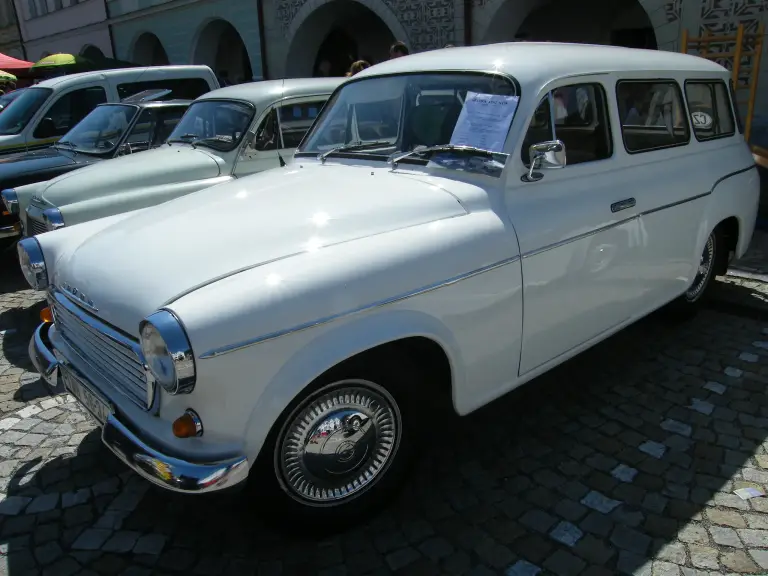
The Trekka was built on the chassis of the Škoda Octavia. More cars are in the Škoda collection.
Sources
- Trekka, English Wikipedia: development, production, exports, prices, market appeal