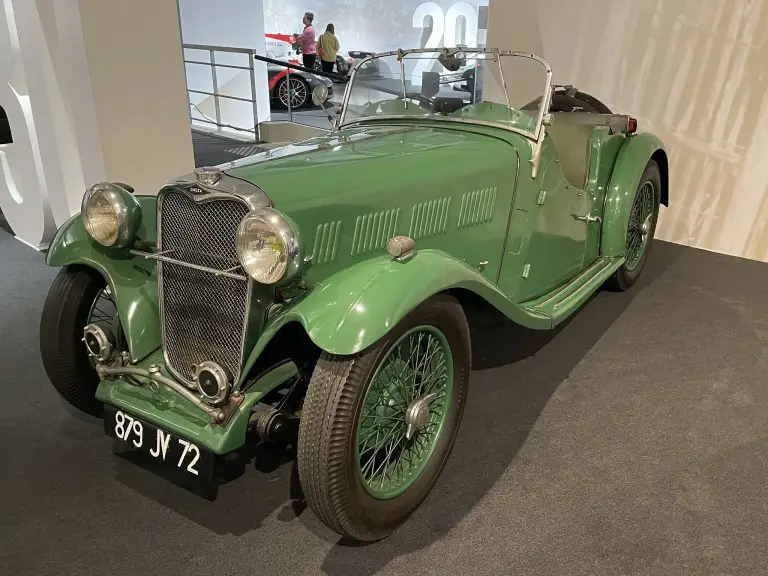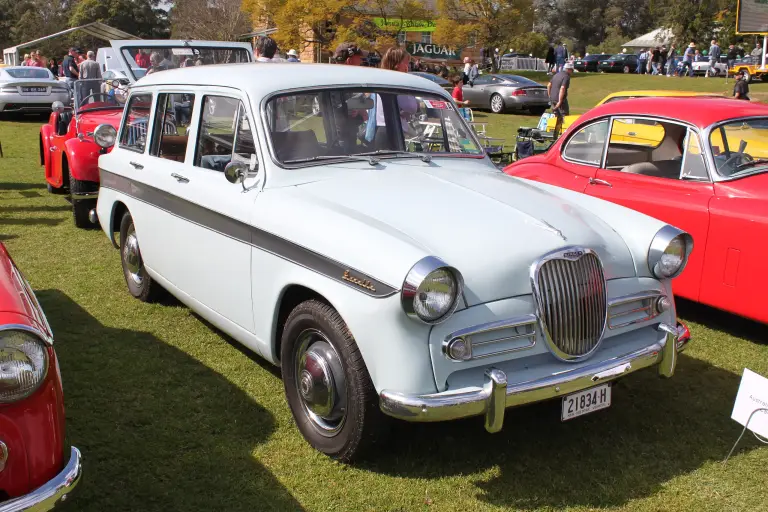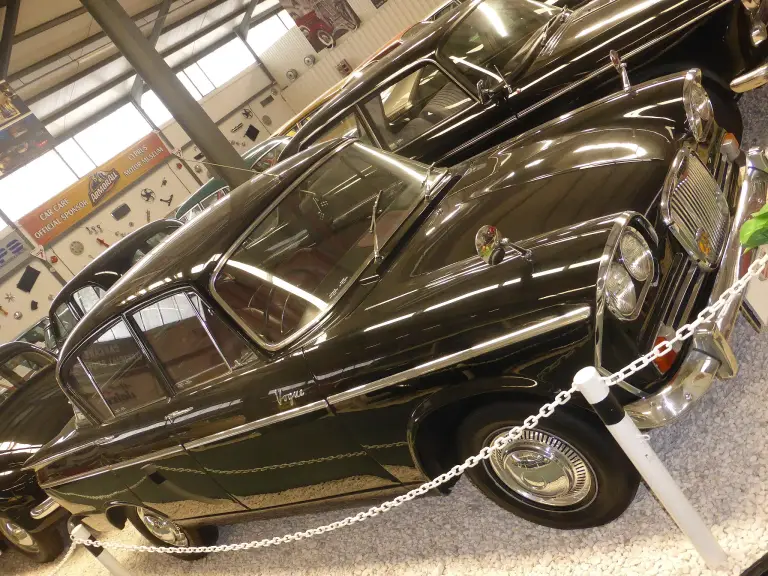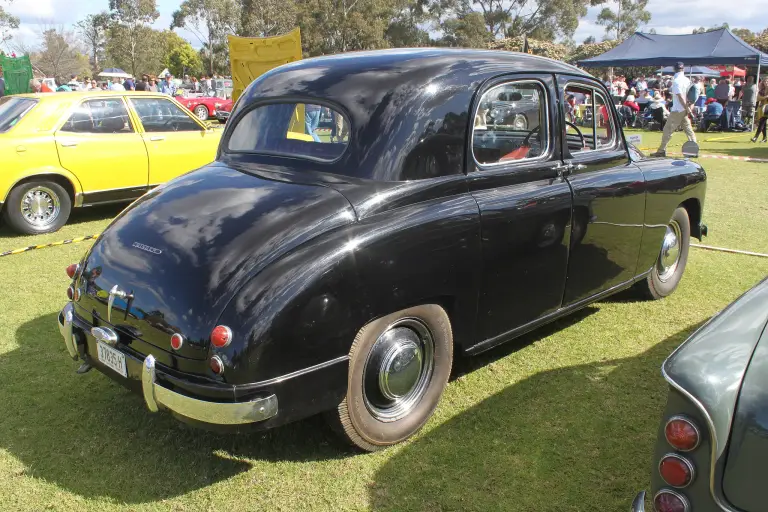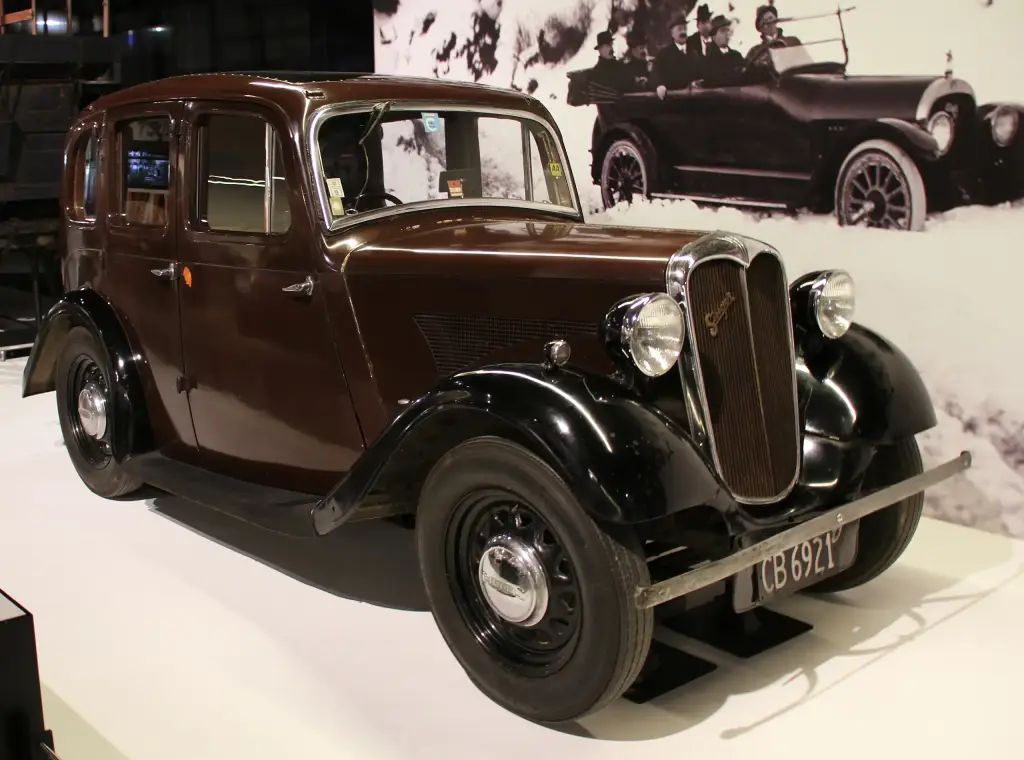
The Singer Bantam was Singer’s economy model of 1936 to 1939 and the first Singer to use an all-steel body, supplied by the Pressed Steel Company. Shown at the 1935 London Motor Show, it replaced the Nine saloon and borrowed its chassis and overhead-camshaft engine from the Le Mans.
Singer Bantam at a glance
| Maker | Singer Motors, Coventry |
|---|---|
| Production | 1936–1939 |
| Replaced | Singer Nine saloon |
| Body | all-steel, by Pressed Steel Company |
| Body styles | 2- and 4-door saloon, tourer from 1937 |
| Trim levels | Popular and De-Luxe |
| Engine, early | 972 cc overhead-camshaft four |
| Engine, 1938 | 1,074 cc, 30 hp |
| Gearbox | three-speed manual, synchromesh on third |
| Chassis | Le Mans underslung chassis |
| Top speed | about 60 mph (97 km/h) |
| Mascot | chrome flying Bantam until 1937 |
based on one source
History of the Singer Bantam
The Bantam was announced at the 1935 London Motor Show as Singer’s new economy car, replacing the Nine saloon. It was the first Singer with an all-steel body, built by the Pressed Steel Company, and its styling was a close copy of the Ford Model Y. Two body styles, two- and four-door, were offered in Popular and De-Luxe trim; all shared the same bodyshell, but the De-Luxe had a sliding sunroof where the Popular had a fixed roof panel, plus leather seats, chrome bumpers and a rear luggage rack.
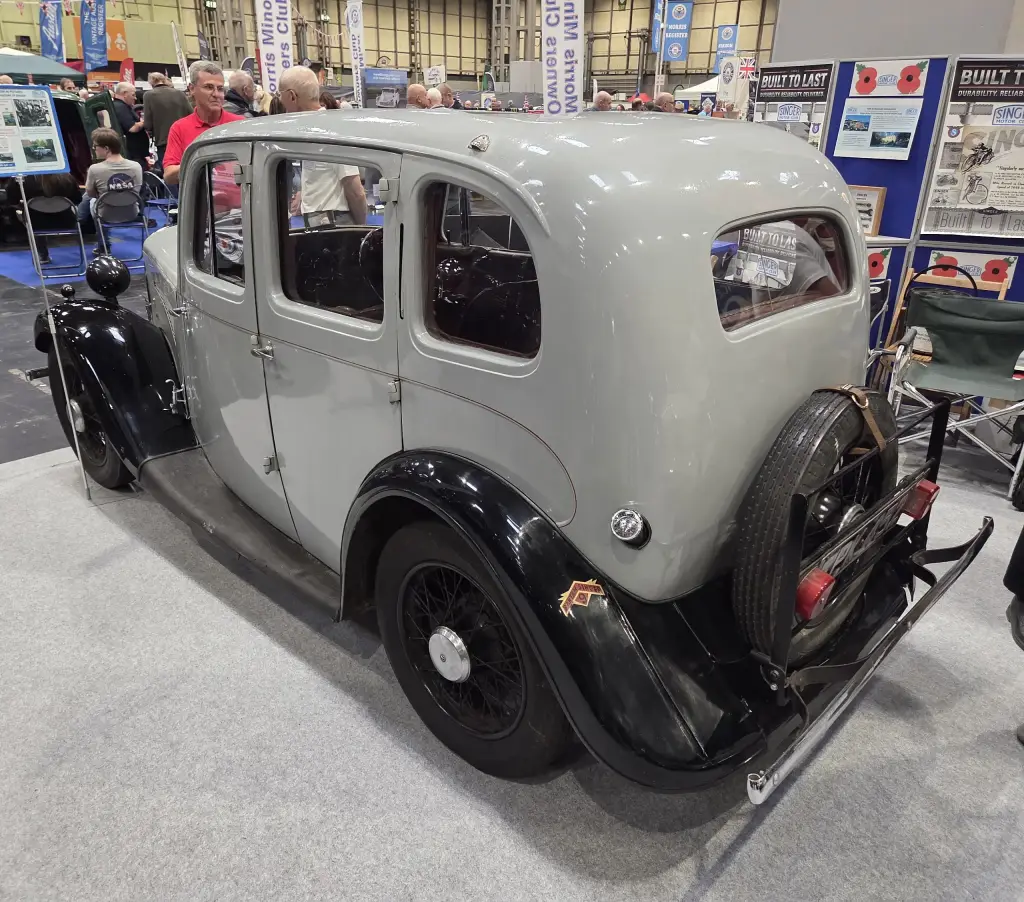
Underneath, the Bantam used many existing Singer components: the Le Mans’ underslung chassis and the 972 cc overhead-camshaft engine, detuned with a lower compression ratio and a single Solex carburettor. Drive went through a three-speed gearbox with synchromesh on third. Early cars had wire wheels, with the optional Easyclean wheels becoming standard from 1937, and a chromed mascot of a flying Bantam chicken sat on the radiator until new legislation banned it in 1937.
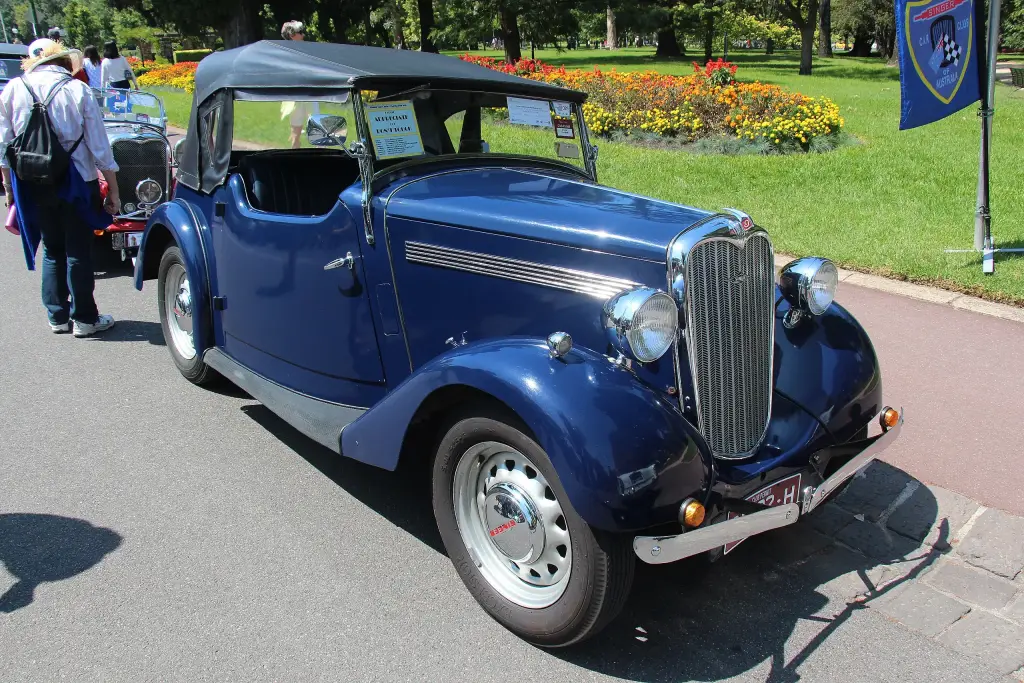
A Tourer was announced for 1937 but very few were built and fewer survive. The saloon was upgraded for the 1938 model year with a strengthened chassis and suspension for a larger 1,074 cc engine quoted at 30 hp, and cable-operated brakes replaced the earlier system. Apart from an extra chrome trim strip across the doors and revised bonnet louvres, the body was unchanged. The Bantam was also exported to Australia and New Zealand as a rolling chassis with complete powertrain, mostly bodied locally by the Flood company as tourers and roadsters — which is thought to have prompted Singer’s own Roadster of 1939.
The Times tested the Bantam and found the engine pulled strongly, though the gearchange was stiff and vague and a pause was needed for the synchromesh. The brakes were effective but pulled to the nearside, the driving position was excellent, and a comfortable top speed in poor weather was 60 mph. The four-wheel Lockheed hydraulic brakes, half-elliptic springs and worm-and-nut steering made it a conventional but capable small car, and one won the 1939 Australian Stock Car Road Championship in the hands of Tom Brady.
Design and features
- All-steel body: the first Singer built this way, by Pressed Steel.
- Le Mans chassis: underslung frame and overhead-cam engine carried over from the sports model.
- Two trim levels: De-Luxe cars added a sunroof, leather and chrome.
- Export rolling chassis: many cars were bodied locally in Australia and New Zealand.
Singer Bantam versions
- Bantam saloon (1936–1939): two- and four-door, Popular and De-Luxe.
- Bantam Tourer (1937): announced but built in very small numbers.
- 1938 model: 1,074 cc engine, stronger chassis, cable brakes.
- Bantam-based Roadster (1939): the open model that followed the Bantam chassis.
The Bantam replaced the Singer Nine and led directly to the Singer Roadster. More cars are in the Singer collection.
Sources
- Singer Bantam, English Wikipedia: history, engines, trim, road test, motorsport