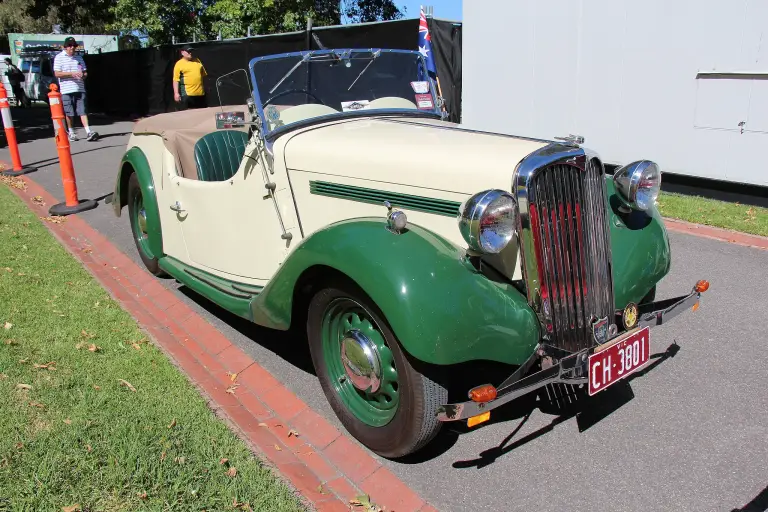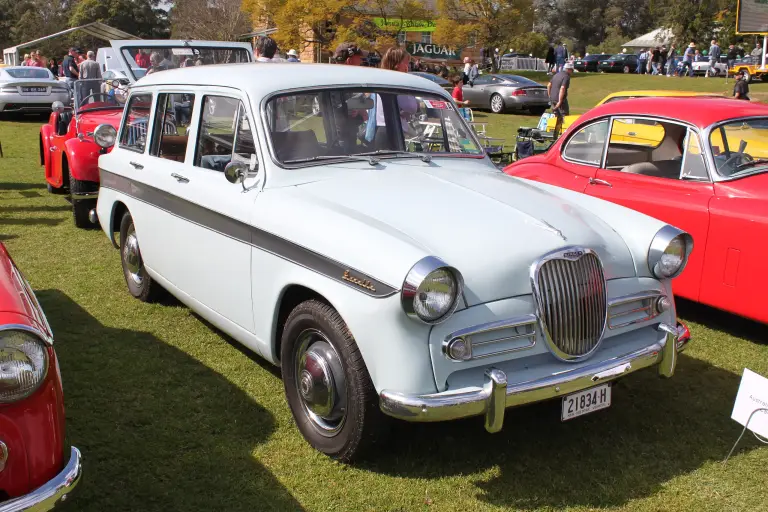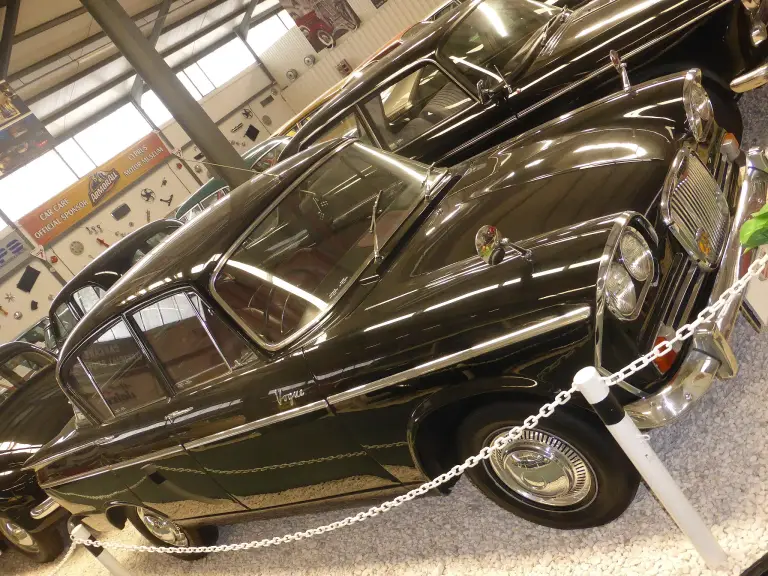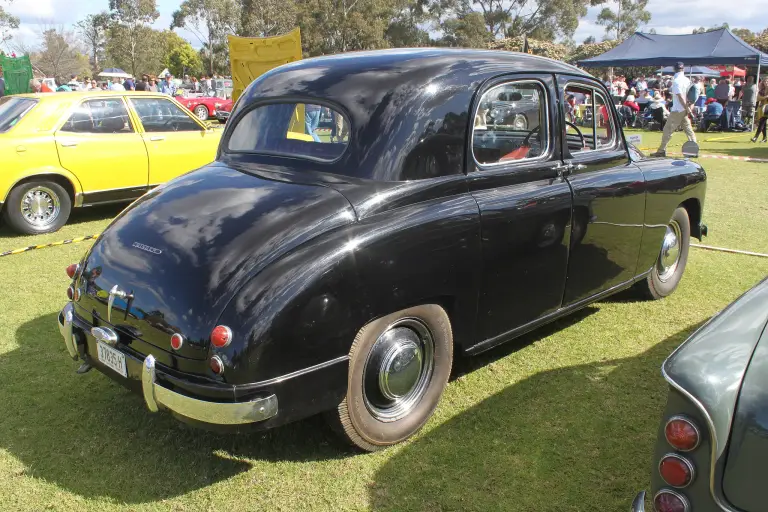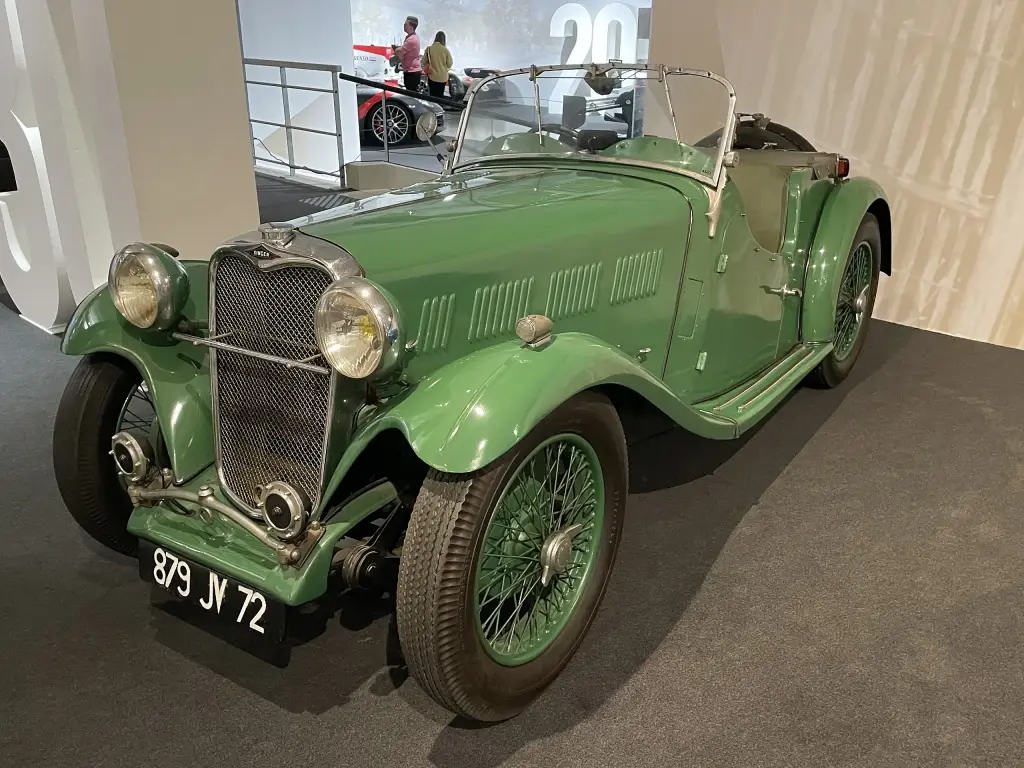
The Singer Nine was Singer Motors’ economy model of the 1930s, introduced in February 1933 to replace the Junior. Its 972 cc overhead-camshaft engine and light body made it quick for its class, and the sporting Le Mans version turned a small Coventry firm into a name at Brooklands and in rallying.
Singer Nine at a glance
| Maker | Singer Motors, Coventry |
|---|---|
| Production | 1933–1937; Roadster from 1939 to 1949 |
| Replaced | Singer Junior |
| Engine | 972 cc overhead-camshaft four |
| Power | 26.5 hp in standard form |
| Gearbox | four-speed manual |
| Sports version | from October 1933 |
| Power, Sports | 34 hp at 4,600 rpm |
| Top speed, Sports | 66 mph (106 km/h) with the screen down |
| Le Mans | from 1933, underslung chassis, 34 hp |
| Special Speed | 1935, 38.5 hp |
| Le Mans Replica | four built, over 98 mph |
based on one source
History of the Singer Nine
The Nine arrived in February 1933 as Singer’s new economy model, replacing the Junior. Its engine was a 972 cc overhead-camshaft four derived from the 848 cc unit of the 8 hp Junior, and in standard form it produced 26.5 hp through a four-speed gearbox. A short-lived interim model, the Junior Nine, had already put the new engine into the older Junior body in 1932 while production problems were sorted out; surviving examples carry a cursive Nine badge on the radiator stone-guard.
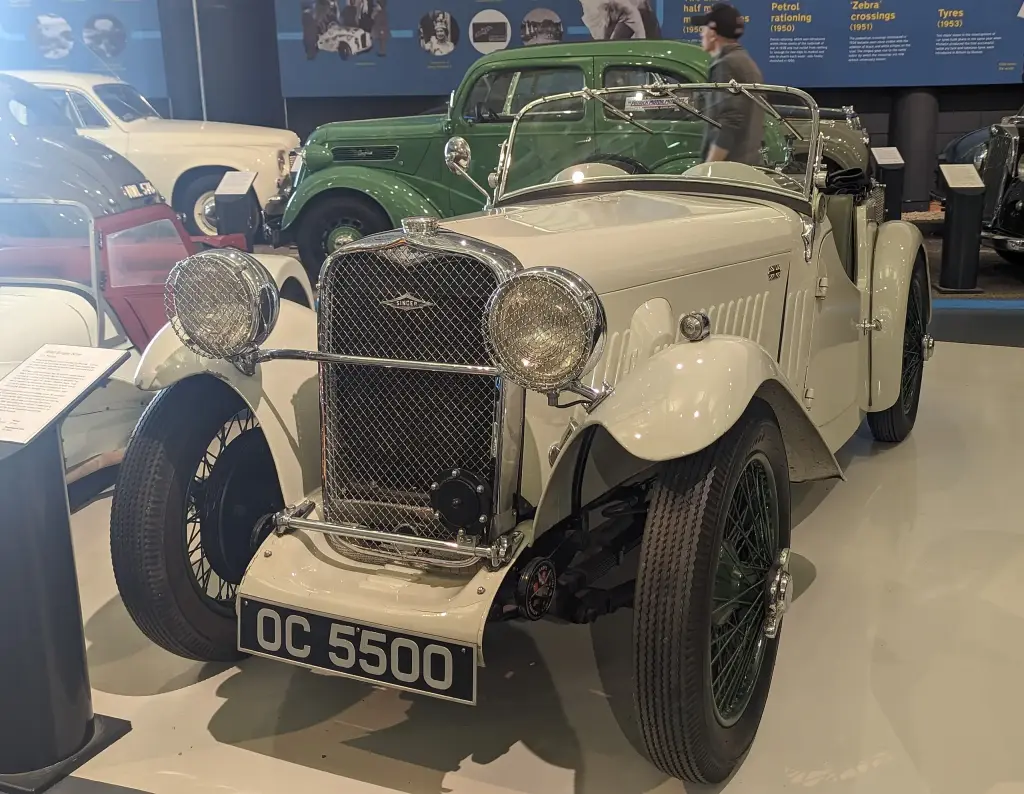
In October 1933 Singer added the Nine Sports, a four-seat tourer with abbreviated front wings and no running boards. One of these finished thirteenth at the 1933 24 Hours of Le Mans, and to celebrate the result Singer launched the two-seat Nine Le Mans, a lower, underslung car with twin Solex carburettors, a close-ratio gearbox, an external 12-gallon tank and twin spare wheels. The Sports was quoted at 34 hp at 4,600 rpm, although the two-bearing crankshaft could not safely be taken past about 3,600 rpm and the reliable output was nearer 28 hp.
For 1934 the front wings were lengthened to protect the paintwork, and for 1935 the Sports gained running boards, larger doors and a curvier rear end, becoming known as the “Long-tail Nine”. The same year brought a four-seater Le Mans, the more spacious Special Speed with a 38.5 hp engine and a 13.5-gallon tank, and the Le Mans Replica, a lightweight special of which only four were built. The saloon was replaced in 1936 by the shorter Bantam Nine, and the Nine was dropped in 1937; the name returned in 1939 on the Bantam-based Roadster.
The Le Mans was never a major winner at the race that named it, but it collected hillclimb, trial and endurance results at Liège–Rome–Liège and in the Alpine Cup, and its hydraulic Lockheed brakes were better than the cable brakes of contemporary MGs. A Replica finished as the first one-litre car at Le Mans in 1935, second in the 1.1-litre class, with a top speed of over 98 mph from a 10:1 compression ratio.
Design and features
- Overhead-camshaft engine: a 972 cc four with chain-driven camshaft, unusual in an economy car of 1933.
- Underslung Le Mans chassis: dropped behind the radiator, giving a much lower profile than the Sports.
- Hydraulic brakes: Lockheed brakes gave the Singer an advantage over rival MGs.
- Competition pedigree: wins in hillclimbs, trials and the Alpine Cup rather than at Le Mans itself.
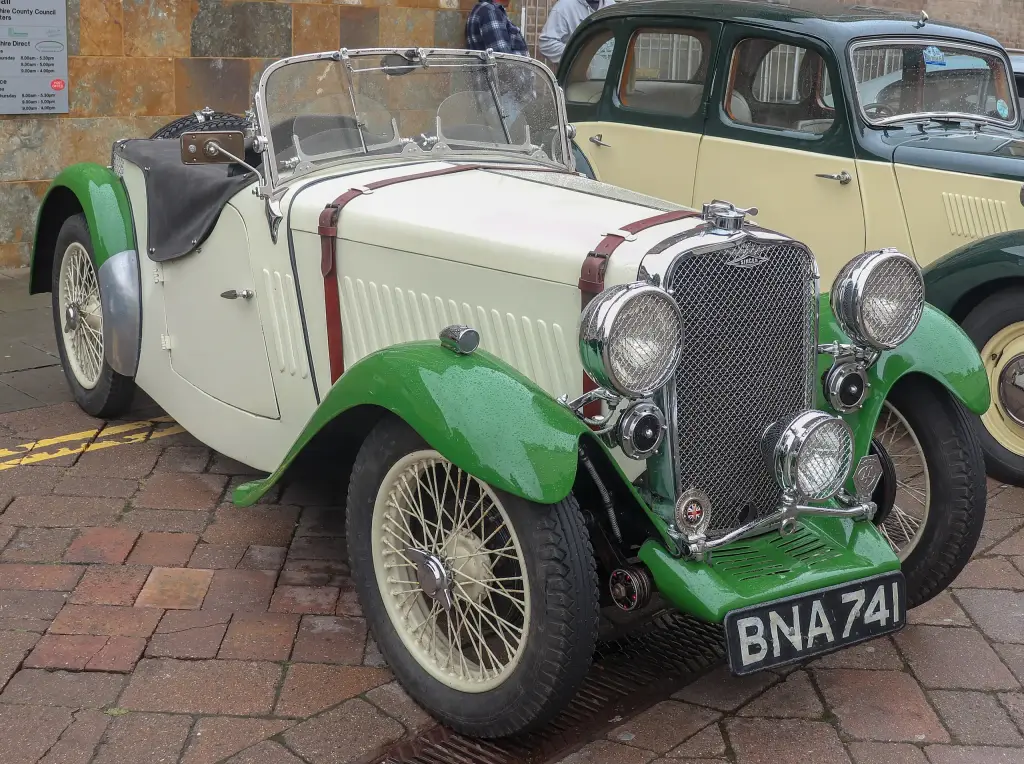
Singer Nine versions
- Nine saloon (1933–1936): the standard two- and four-door economy car.
- Nine Sports (1933–1935): four-seat tourer, 34 hp, no running boards.
- Nine Le Mans (1933–1937): two-seat sports model, close-ratio gearbox, external fuel tank.
- Special Speed (1935–1937): roomier and more powerful, with a 38.5 hp engine.
- Le Mans Replica (1935): four lightweight works cars with streamlined bodies.
- Junior Nine (1932): interim model combining the Junior body with the new engine.
The Nine was replaced in the saloon range by the Singer Bantam, and its spirit returned after the war in the Singer Roadster. More models are in the Singer collection.
Video: Singer Nine (9) 1933 Saloon Car
Video on YouTube.
Sources
- Singer Nine, English Wikipedia: production, engine, Sports, Le Mans, Special Speed, Replica