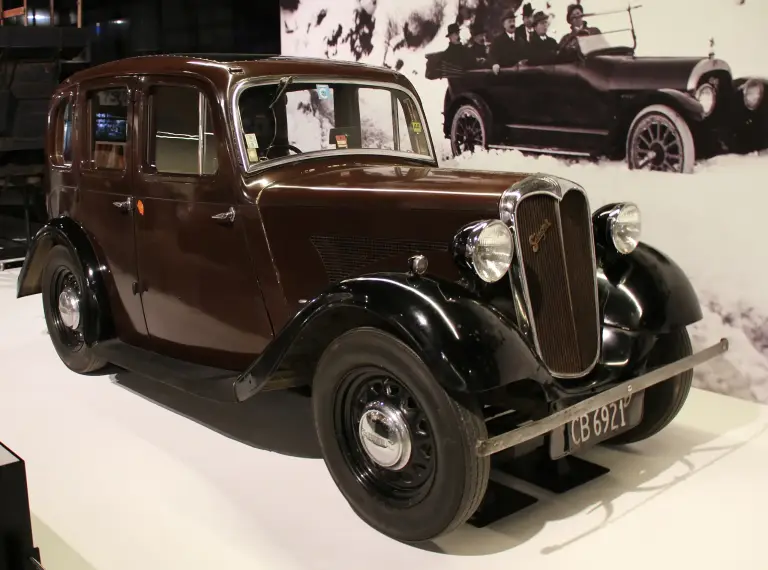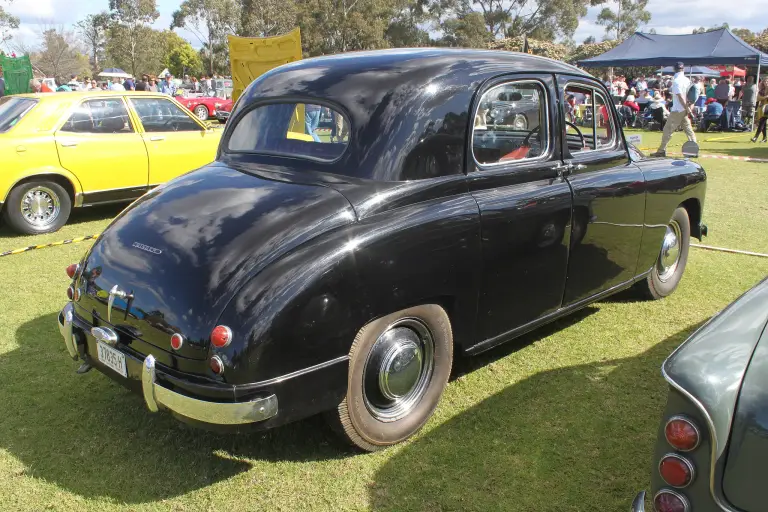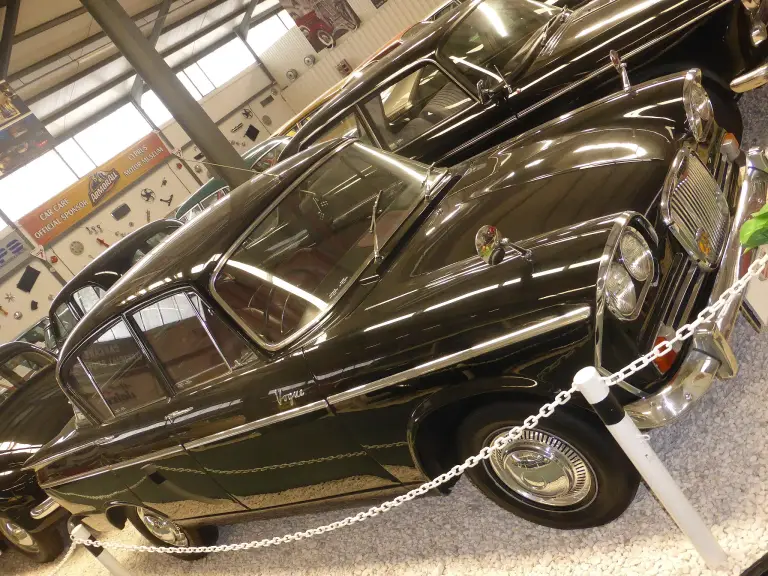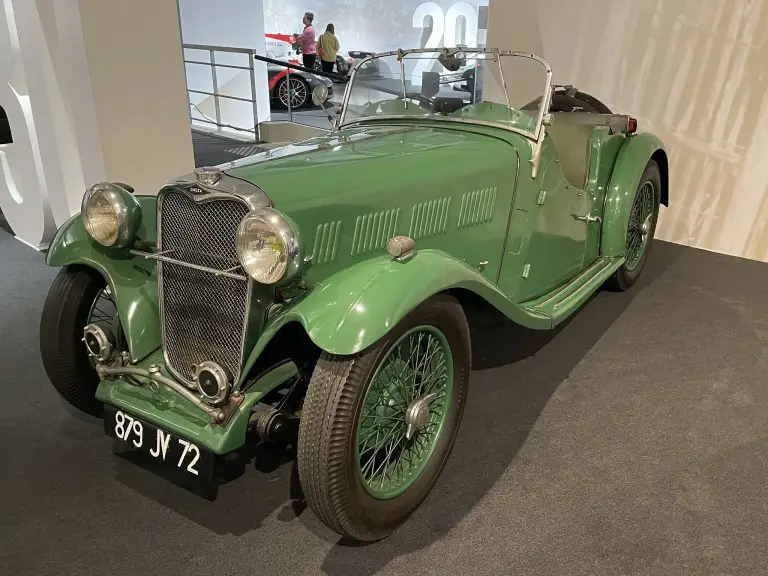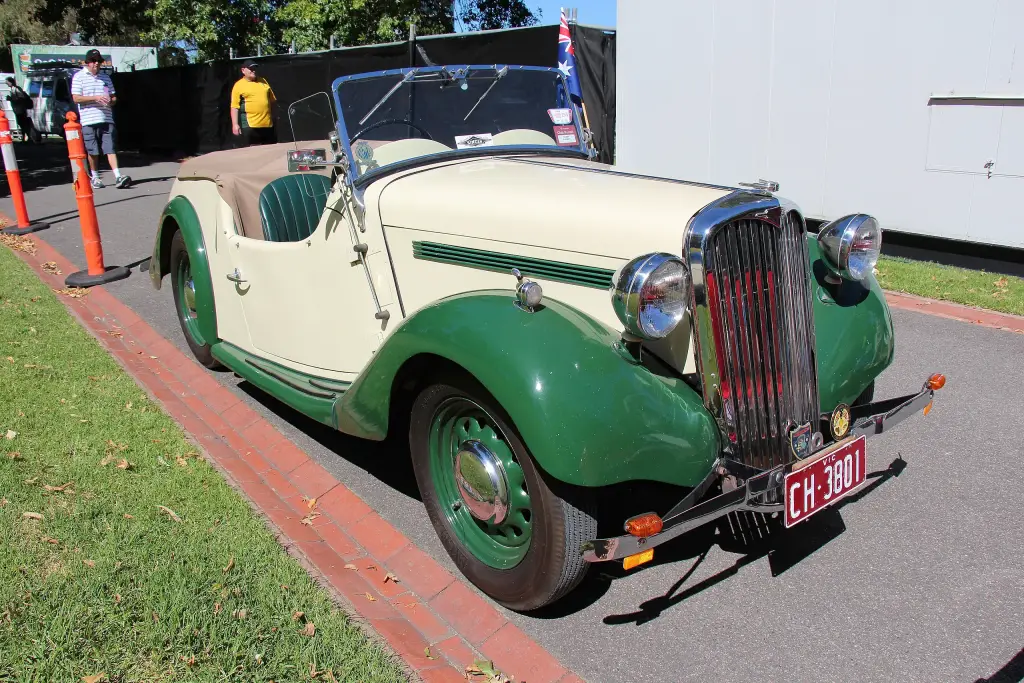
The Singer Roadster was launched in March 1939 as an open version of the Bantam saloon, using the same 1,074 cc overhead-camshaft engine and much of the Bantam’s running gear. Built with interruptions and steady improvements until 1955, it was Singer’s answer to the MG T series.
Singer Roadster at a glance
| Maker | Singer Motors, Coventry |
|---|---|
| Production | 1939–1955 |
| Based on | Singer Bantam |
| Body | two-door open tourer, occasional four seats |
| Engine, original | 1,074 cc overhead cam, 36 hp |
| Gearbox | three-speed, four-speed from 1949 |
| Top speed, original | about 65 mph (105 km/h) |
| Top speed, 4AD | 73 mph (117 km/h) |
| 4AB chassis | independent front suspension by coil springs |
| 4AD engine | 1,497 cc, 48 hp |
| SMX | glass-fibre body, about ten built |
| Rival | MG T series |
based on one source
History of the Singer Roadster
The original Singer 9 Roadster appeared in March 1939 as an open, occasional four-seat, two-door tourer based on the Bantam saloon. Its 1,074 cc overhead-camshaft four was tuned to 36 hp at 5,000 rpm with a high-efficiency hot-spot manifold, a downdraught SU carburettor and higher compression. The Bantam’s three-speed gearbox limited performance to about 65 mph. A chromed bumper was standard, twin aero screens were supplied for use with the windscreen folded flat, and a fitted suitcase made the most of the luggage space.
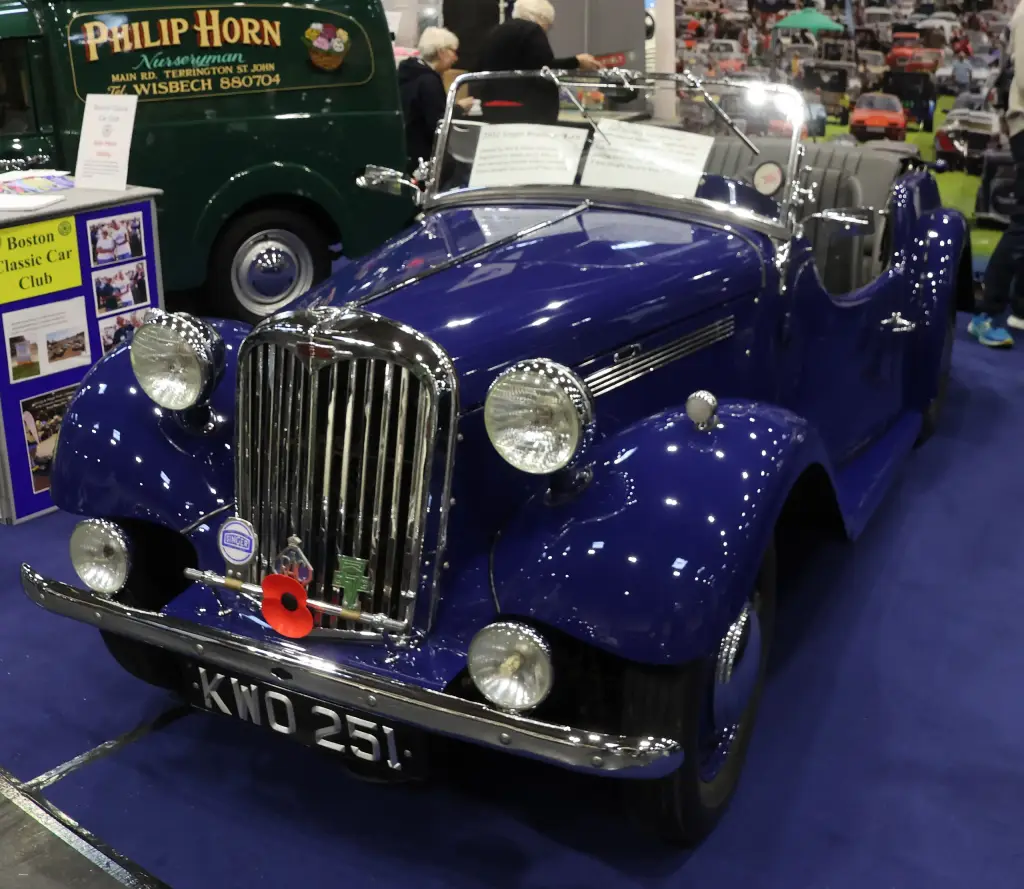
Production stopped after less than six months for the Second World War and restarted in 1946 with the engine moved forward, better seating, a flat luggage platform at the rear, rubber shackle bushes and improved engine mountings. Most post-war cars were exported, and the Roadster was popular with wealthy buyers in India, appearing in a few Maharaja collections. The body was built in the traditional way, with aluminium panels on a wooden frame, and the chassis used rigid axles on leaf springs with mechanical brakes.
In September 1949 the car became the 4A, gaining the four-speed gearbox from the Singer Hunter, a Solex carburettor in place of the SU and an extra horsepower, plus easier entry and a better-placed gearchange. The 4AB followed in October 1950 with coil-spring independent front suspension and Girling hydro-mechanical brakes, a shorter bonnet, disc wheels and curvier, deeper wings; its steering box was centred in the chassis to simplify right- and left-hand-drive production. About a dozen 4AC prototypes used a 1,194 cc engine, a down-sleeved version of the SM1500’s 1.5-litre unit.
The final version, the 4AD SM Roadster, was shown at the Paris Motor Show in October 1951 and was initially for export only. It used the 48 hp, 1,497 cc engine of the SM1500 in a virtually unchanged chassis and body, keeping the hybrid braking system; a 58 hp twin-carburettor option arrived in 1953, the year the 1.5-litre car also went on sale in Britain. The Motor tested a 4AD in 1951 at 73 mph and 0–60 mph in 23.6 seconds. A glass-fibre SMX experimental version was displayed at Earls Court in 1953, probably around ten being made, and the last Roadsters were built in 1955.
Design and features
- Bantam roots: the same overhead-cam engine and much of the running gear as the saloon.
- Steady development: three-speed to four-speed, mechanical to hydro-mechanical brakes, 1.1 to 1.5 litres.
- Traditional body: aluminium panels over a wooden frame.
- Export success: most post-war production went overseas, notably to India.
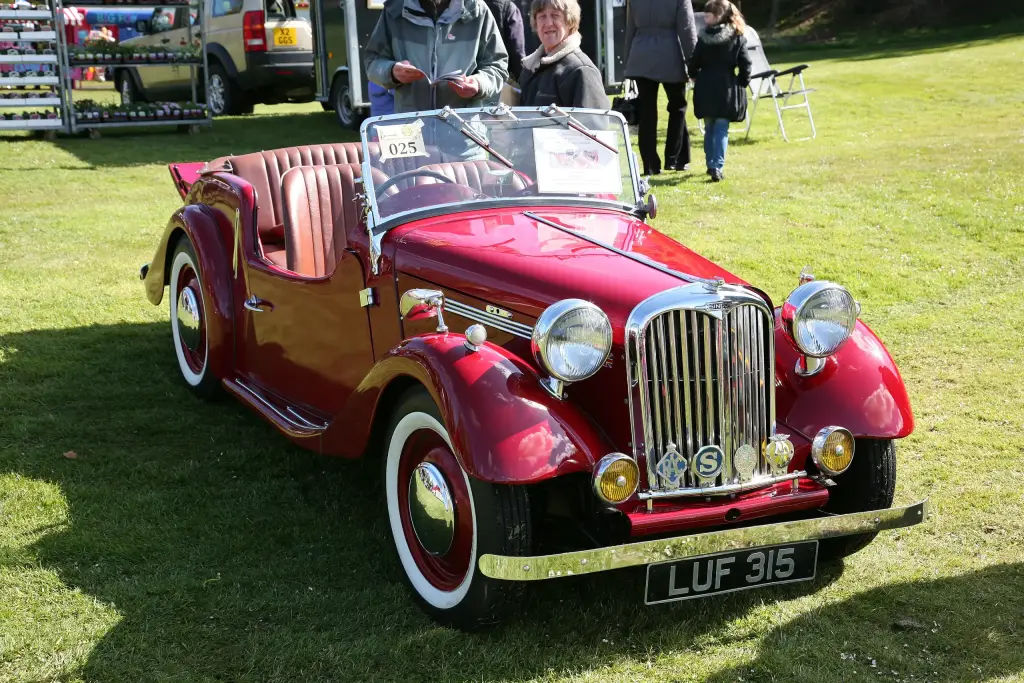
Singer Roadster versions
- 9 Roadster (1939–1949): original 1,074 cc three-speed open tourer.
- 4A (1949–1950): four-speed gearbox and Solex carburettor.
- 4AB (1950–1953): independent front suspension and Girling hybrid brakes.
- 4AC (prototype): about a dozen cars with a 1,194 cc engine.
- 4AD SM Roadster (1951–1955): 1.5-litre SM1500 engine, export first.
- SMX (1953): experimental glass-fibre body, about ten built.
The Roadster grew out of the Singer Bantam and shares its engine with the Singer SM1500. More cars are in the Singer collection.
Sources
- Singer Roadster, English Wikipedia: history, series 4A to 4AD, SMX, performance