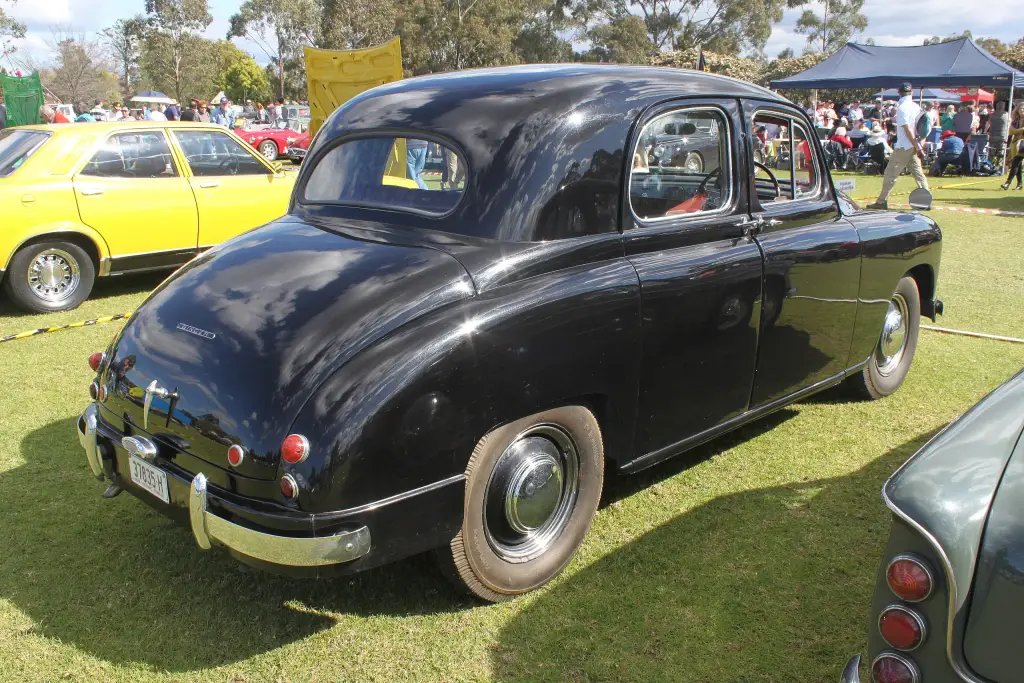
The Singer SM1500 was the first new Singer design after the Second World War, aimed at replacing the Super Ten and Super Twelve. A sturdy separate-chassis saloon with an overhead-camshaft engine, it was face-lifted in 1952 and renamed the Singer Hunter in 1954, remaining in production until shortly after Rootes took over the company.
Singer SM1500 at a glance
| Maker | Singer Motors, Coventry |
|---|---|
| Production | 1948–1956 |
| Replaced | Singer Super Ten and Super Twelve |
| Body | pressed-steel saloon on a separate chassis |
| Engine | 1,506 cc overhead-camshaft four, 1,497 cc from 1951 |
| Twin-carb option | 58 hp from 1952 |
| Gearbox | four-speed, column change |
| Suspension | Packard-designed independent front, coil springs |
| Brakes | Lockheed hydraulic, 9 in drums |
| Top speed | 76 mph (122 km/h), twin-carb |
| Renamed | Singer Hunter, September 1954 |
| Built | 17,382 SM1500, 4,772 Hunter |
based on one source
History of the Singer SM1500
A first prototype and a description of the new unnamed car were announced in November 1947, and an early production car appeared at the Earls Court Motor Show in October 1948. The first demonstrators went overseas at Christmas 1948, but production only began at the end of July 1949, with export-only deliveries first. As the chairman told shareholders in 1950, Singer had built no cars between March 1940 and the end of the war, and the SM1500 therefore used pre-war technology.
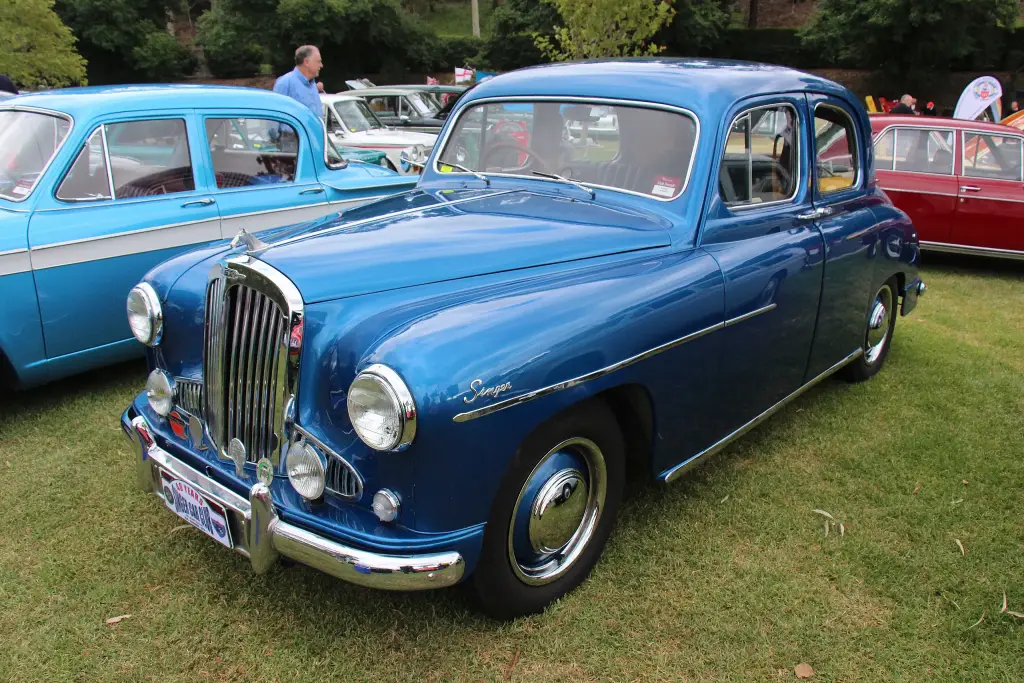
The car had a pressed-steel body on a separate chassis, with Packard-designed coil-spring independent front suspension built under licence. Lockheed hydraulic brakes with 9-inch drums were fitted, and the four-speed column gearchange was notoriously difficult, second and reverse sometimes impossible to select. The 1,506 cc overhead-camshaft engine was rare among British volume saloons and was derived from the Super 12 unit with a larger bore and shorter stroke; from 1951 the stroke was shortened again to give 1,497 cc and bring the car under the 1,500 cc class. A 58 hp twin-carburettor version cost £28 more from 1952, and the engine was said to be strong enough for 65,000 miles between reboring.
The body was styled by Leo Shorter, Singer’s chief engineer, under the influence of Howard Darrin’s 1946 Kaiser-Frazer; the result was later described as one of the ugliest saloons of its period. The interior had a bench front seat with a folding armrest, optional leather and wood-grain metal trim, and by 1952 a heating and demisting unit was standard. The car was spacious, stable and reliable, but heavy controls and the column change put off many buyers, and it became common as a provincial taxi before full-width bodies made it look dated and overpriced.
The 1952 face-lift brought a reworked grille and raised headlamps, with leather upholstery a £39 option. In September 1954 the car was renamed the Singer Hunter, with a traditional radiator grille, a fibreglass bonnet and a horse-head mascot, twin horns and screenwash as standard. The Times found the ride smoother than most cars of its size and the top-gear acceleration excellent, though the pillars were thick and the column gear lever stiff. A basic Hunter S and a twin-cam Hunter 75 with an HRG-designed head were announced in October 1955; very few, perhaps twenty, of the 75 were built before the range was cancelled. In all 17,382 SM1500s and 4,772 Hunters were made, and a coupé utility version was sold in Australia.
Design and features
- Overhead-camshaft engine: unusual in a British volume saloon, derived from the Super 12.
- Packard-designed suspension: coil-spring independent front end built under licence.
- Separate chassis: sturdy construction that also made the Australian coupé utility possible.
- Hunter trim: traditional grille, fibreglass bonnet, twin horns and screenwash.
Singer SM1500 versions
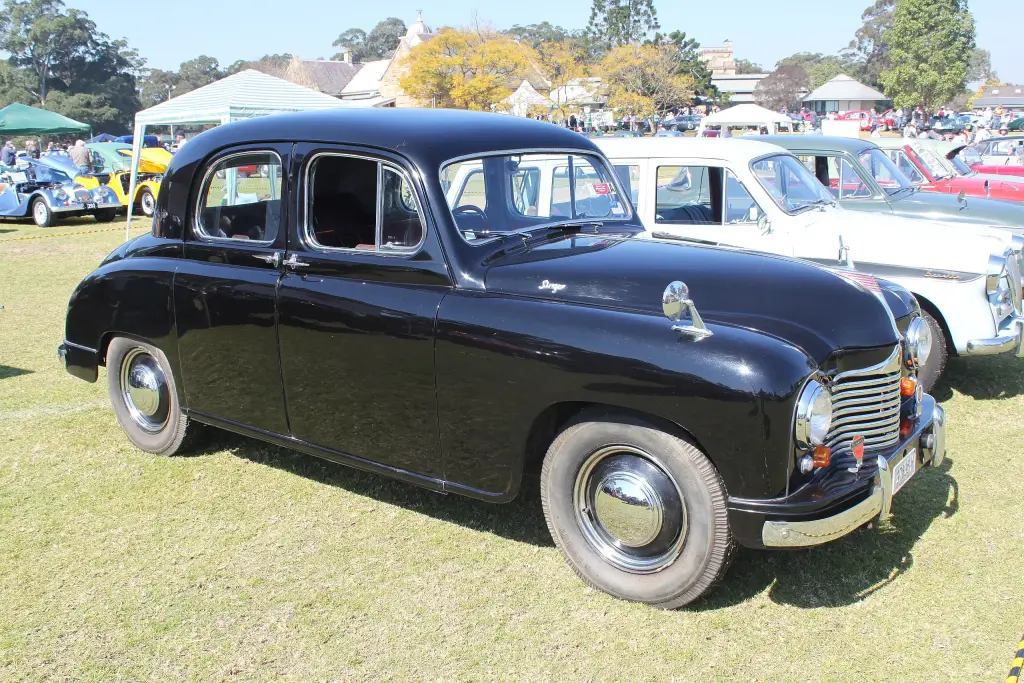
- SM1500 (1949–1952): original 1,506 cc saloon with column change.
- 1952 face-lift: reworked grille, raised headlamps, optional leather.
- SM1500 coupé utility: Australian market variant.
- Hunter (1954–1956): traditional grille and fibreglass bonnet.
- Hunter S: more basic model announced for 1955.
- Hunter 75: twin-cam HRG head, very few built.
The SM1500’s engine later went into the Singer Roadster 4AD, and its place in the range passed to the Singer Gazelle. More cars are in the Singer collection.
Sources
- Singer SM1500, English Wikipedia: design, engines, road tests, Hunter, production