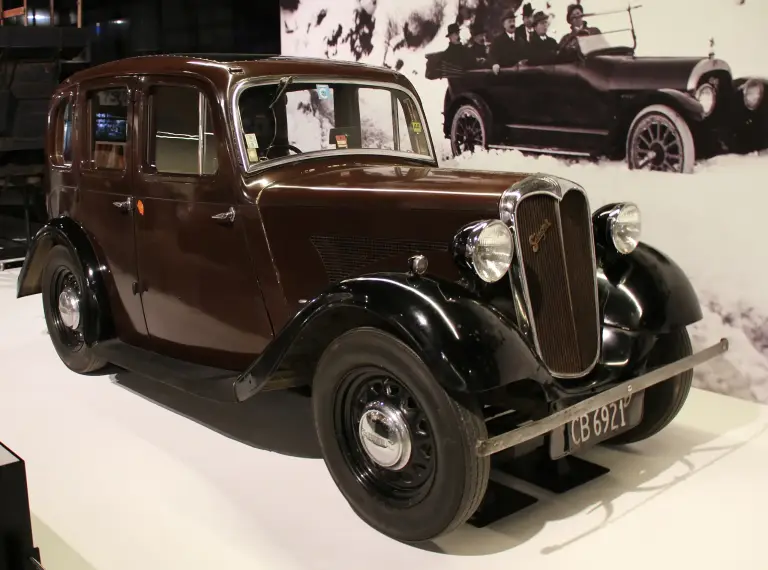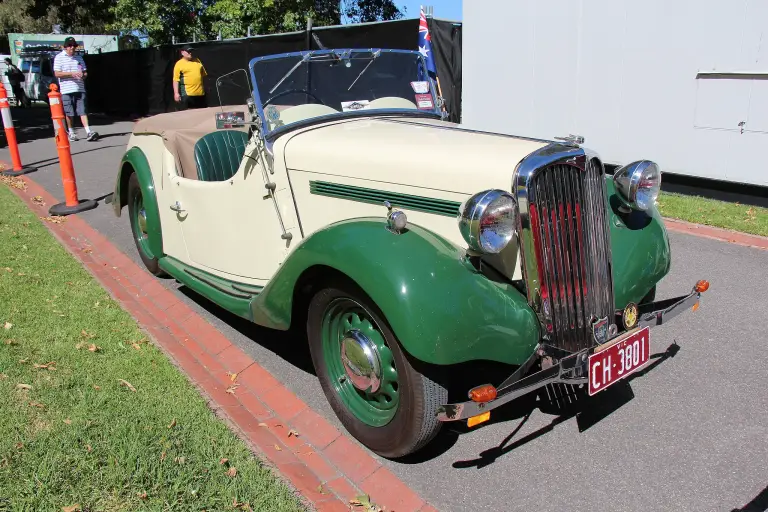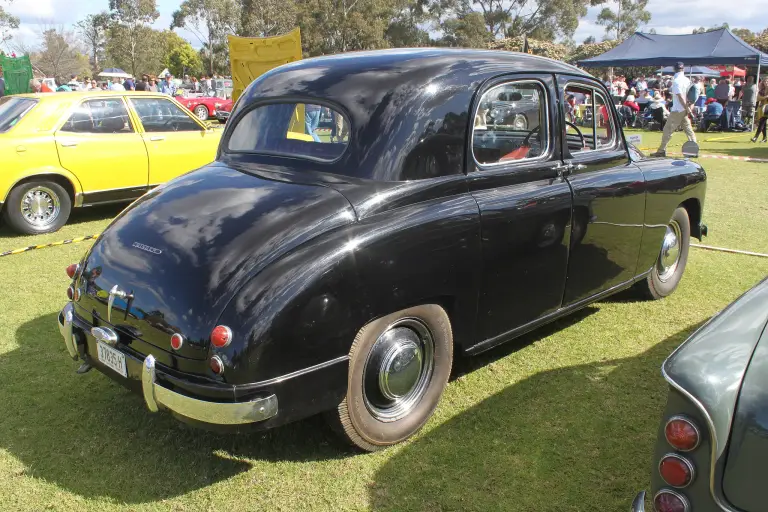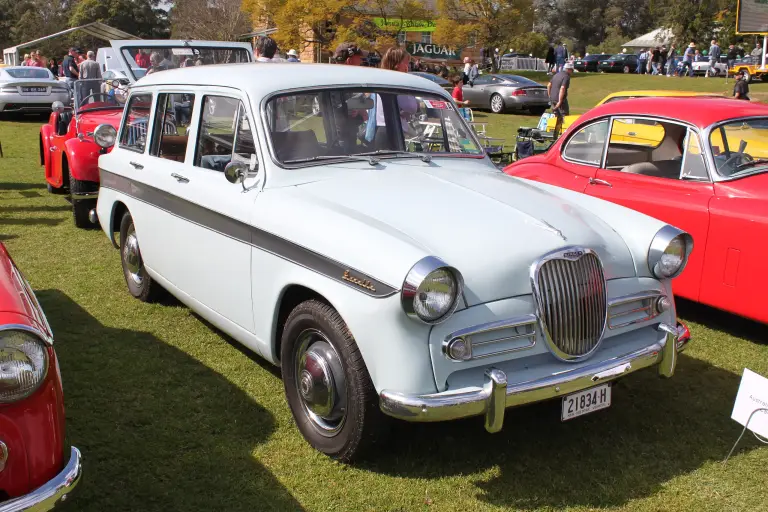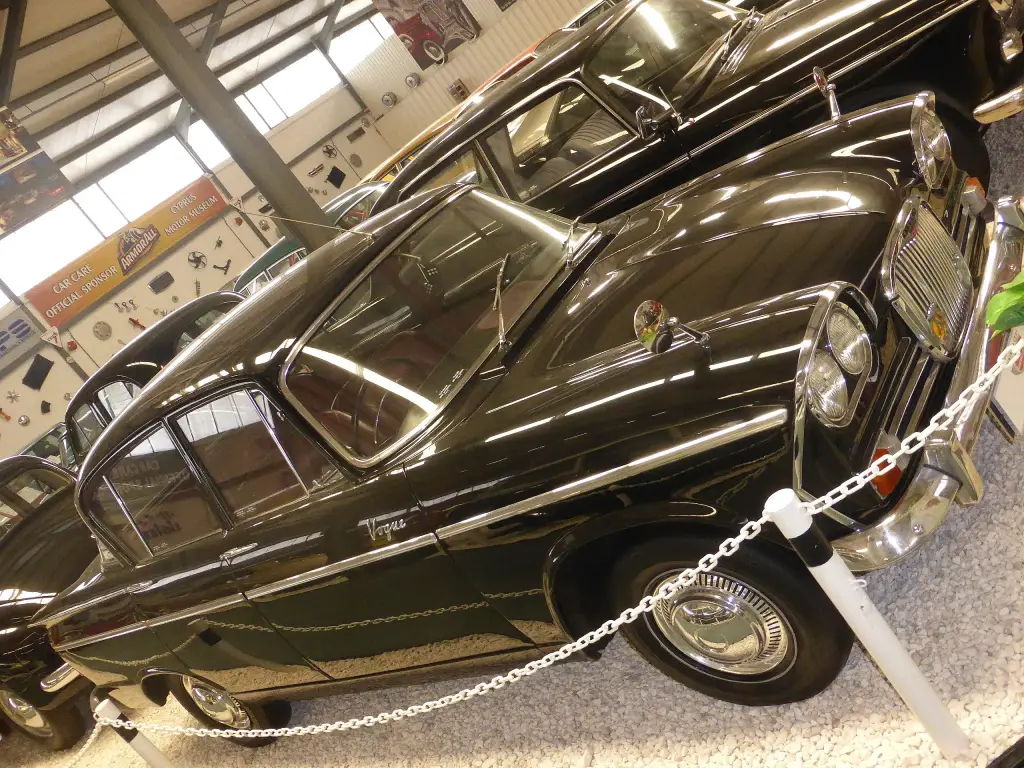
The Singer Vogue was introduced in July 1961 as a badge-engineered Hillman Super Minx, positioned above the Super Minx and the Gazelle in the Rootes range. It was distinguished by twin headlamps and a more powerful 1,592 cc engine, and the second-generation New Vogue of 1966 brought rectangular headlamps, a British first.
Singer Vogue at a glance
| Maker | Singer Motors, under Rootes Group |
|---|---|
| Production | 1961–1970 |
| Based on | Hillman Super Minx, then Rootes Arrow |
| Body styles | four-door saloon and estate |
| Engine, Series I | 1,592 cc, 66 bhp |
| Engine, Series III | 84 bhp |
| Engine, Series IV | 1,725 cc |
| Series II changes | front disc brakes, amber indicators |
| Series III changes | six-light bodywork |
| New Vogue | 1966, Arrow saloon, rectangular headlamps |
| Australian version | Humber Vogue from 1963 |
| Last built | 1970 |
based on one source
History of the Singer Vogue
The first-generation Singer Vogue I, II, III and IV were built from 1961 to 1966 as badge-engineered versions of the Hillman Super Minx. Launched in July 1961, the Vogue sat above both the Super Minx and the Singer Gazelle in the Rootes hierarchy and combined twin headlamps with a more powerful 66 bhp version of the 1,592 cc Minx engine. It came as a four-door saloon and an estate car.
Rootes updated the car in small steps, each with a new series number. The Series II of 1963 brought front disc brakes as standard, interior changes, the removal of the chrome bonnet strip and amber front indicator lenses. The Series III of 1964 gained six-light bodywork and an increase in power to 84 bhp, and the Series IV, shown at the 1965 motor show, took the engine out to 1,725 cc without changing the output. A Gazelle IV was never produced, because the body intended for it became this car.
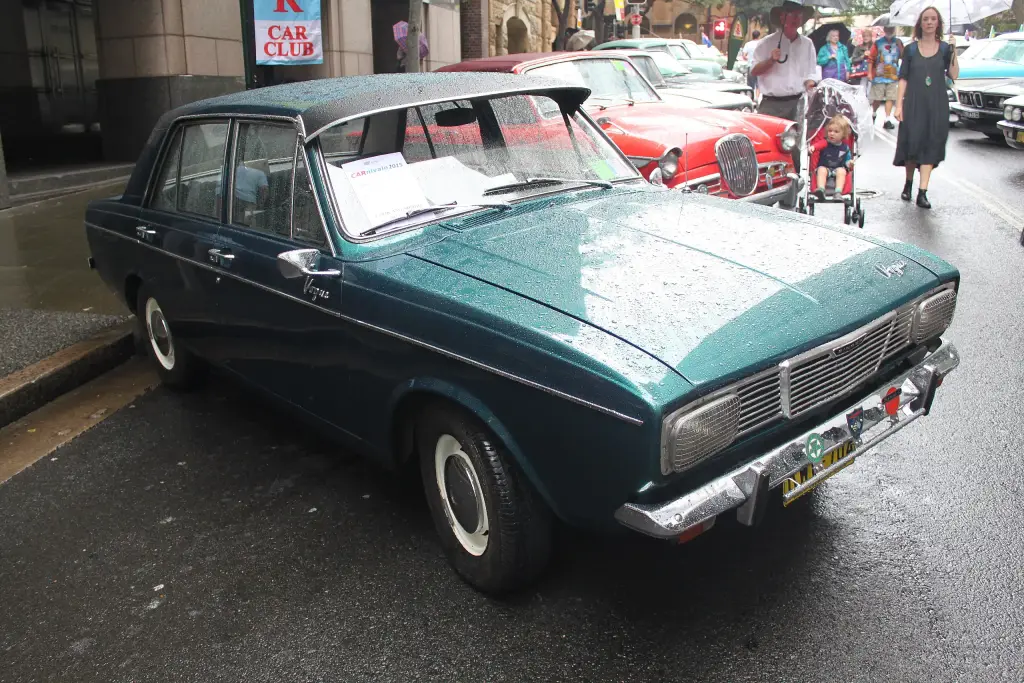
The Vogue was also built in Australia by Rootes Australia and sold as the Humber Vogue from 1963. A Vogue Sports followed with a Sunbeam Rapier engine giving a 35 per cent increase in power to 85.5 hp, along with improved suspension, brakes and wheels. The Rapier-powered Vogue III arrived in early 1965, when the Sports was dropped, with the squared roofline already used on the Singer Vogue III; Australian production ended in 1966 after Chrysler Australia took over Rootes Australia.
The second-generation Singer New Vogue was launched at the 1966 British International Motor Show. Based on the Rootes Arrow saloon and more upmarket than the Hillman Hunter, it used the same 1,725 cc engine and was the first British car to feature rectangular headlamps. An estate version followed in April 1967. In New Zealand, Todd Motors built a Singer Vogue as an upmarket Hunter with a wooden dashboard and door cappings. Like every other Singer, the Vogue was discontinued in 1970, replaced by the short-lived Sunbeam Vogue. Dinky Toys made a 1:44 scale model of the Series 1 Vogue as No. 145 between 1962 and 1966.
Design and features
- Twin headlamps: the Vogue’s visual signature over the Hillman Super Minx.
- More power: a 66 bhp version of the 1,592 cc engine at launch, 84 bhp by the Series III.
- Rectangular headlamps: the 1966 New Vogue was the first British car so equipped.
- Rootes Arrow basis: the second generation shared its body with the Hillman Hunter.
Singer Vogue versions
- Vogue Series I (1961–1963): Super Minx-based saloon and estate, twin headlamps.
- Vogue Series II (1963): front disc brakes and amber indicators.
- Vogue Series III (1964): six-light bodywork and 84 bhp.
- Vogue Series IV (1965–1966): 1,725 cc engine, same output.
- Humber Vogue (Australia, 1963–1966): local production, including the Vogue Sports.
- New Vogue (1966–1970): Arrow-based saloon and estate, rectangular headlamps.
The Vogue took the place above the Singer Gazelle, and the New Vogue shared the Rootes Arrow body with the Gazelle VII. More cars are in the Singer collection.
Video: 1964 Singer Vogue
Video on YouTube.
Sources
- Singer Vogue, English Wikipedia: series I to IV, Australian production, New Vogue