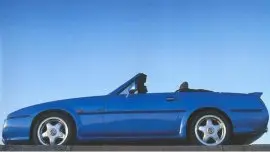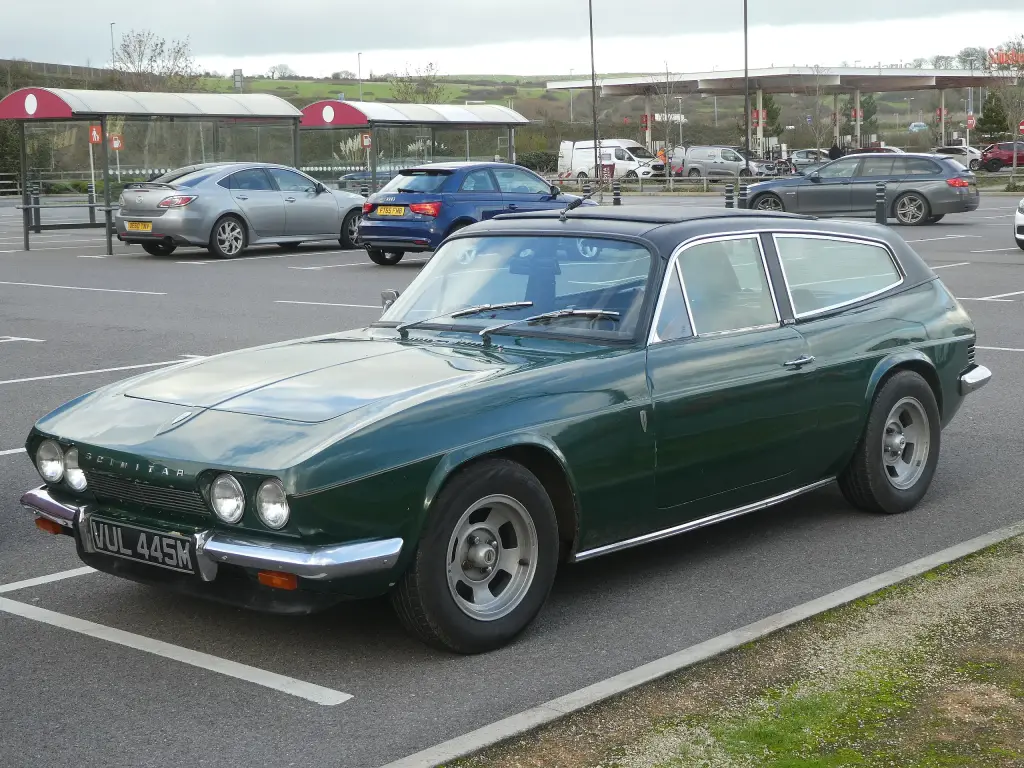
The Reliant Scimitar name was used for a series of sports car models produced by the British manufacturer Reliant between 1964 and 1986. Over 22 years it evolved from a coupé into a sports estate, with a convertible variant launched in 1980; all of them have a fibreglass body on a steel box-section chassis and Ford engines.
Reliant Scimitar at a glance
| Production | 1964–1986 |
|---|---|
| Bodies | coupé, sports estate, convertible |
| Construction | fibreglass body on a steel box-section chassis |
| Engines | Ford 2.6-litre straight six, 3.0-litre and 2.5-litre Essex V6 |
| Scimitar GT power | 120 bhp |
| Scimitar GT top speed | 117 mph (188 km/h) |
| Scimitar GT price, 1964 | £1,292 |
| SE4 production | just over 1,000 |
| GTE | SE5 from 1968, SE5A from 1972 |
| GTC convertible | from 1980 |
The English Wikipedia article covers the whole Scimitar series and includes the GTC convertible, which has no separate article. Based on one source.
History of the Reliant Scimitar
From the Sabre to the Scimitar GT
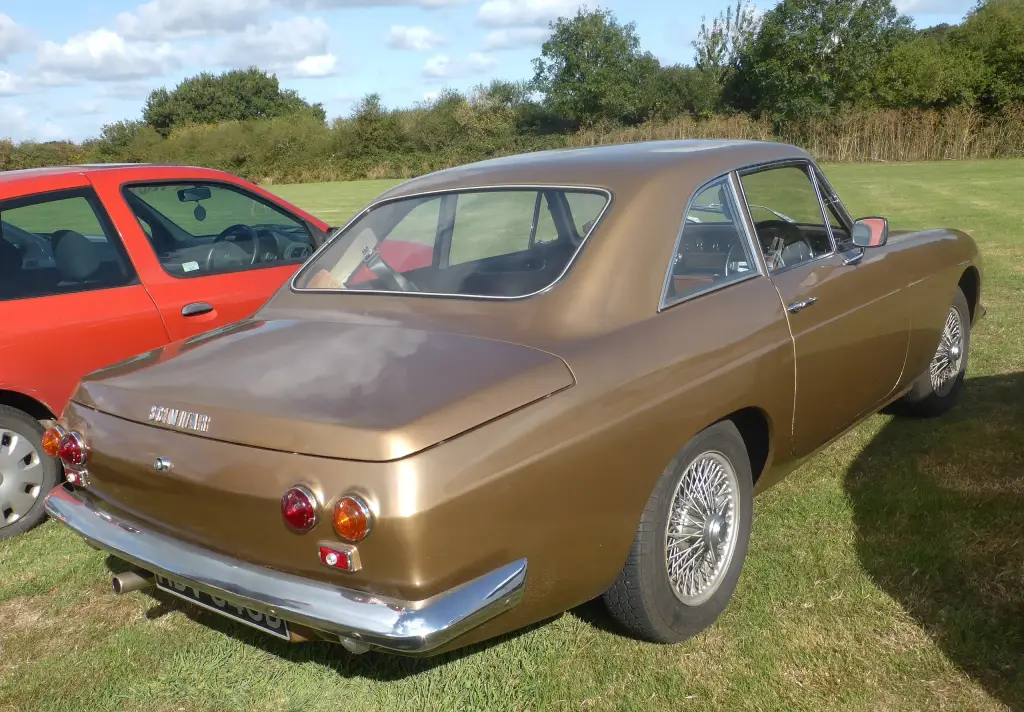
Reliant’s first Scimitar was a coupé based on the styling of a Daimler SP250 prototype, renamed the SX250, and on the chassis of a Reliant Sabre. It was first displayed in 1964. As the Sabre 6 began to look dated, managing director Ray Wiggin started looking for a new design and, at the 1962 Motor Show, saw the Ogle SX250: it had been designed by David Ogle and was based on the Daimler Dart SP250 chassis and running gear. The car had been privately commissioned by Boris Forter, managing director of the Helena Rubenstein Company (UK), and Daimler did not use the design, so Reliant approached Ogle and bought the rights. Subtle changes were made to the bodyshell and it was modified to fit the Sabre chassis and running gear.
The new Scimitar GT kept the straight-six engine of the Sabre but, with triple SU carburettors as standard, it now produced 120 bhp and gave a top speed of 117 mph (188 km/h). It was launched at the Earls Court Motor Show in 1964 and was praised for its lines and performance at a price of £1,292, which included wire wheels and a luxurious interior with comprehensive instrumentation. Optional extras included a De Normanville overdrive, an electric sunroof and a ZF gearbox. Reliant produced approximately 296 straight-six Scimitar GTs.
The Essex V6
In late 1966 Ford dropped the 2.6-litre straight six and replaced it with the new 3-litre Essex V6, as used in the latest Mk IV Ford Zodiac. Reliant had to do a good deal of development work to fit the more powerful engine and get the best performance and handling: because the Essex engine was shorter it was mounted further back in the bulkhead to improve weight distribution, the lower wishbones were repositioned, the tower structures and cross members were reinforced and an anti-roll bar was fitted. Wire wheels gave way to wider steel wheels as standard and the rear axle ratio went from 3.875:1 to 3.58:1. The interior became all anti-dazzle black, with crash pads at the top and bottom of the fascia and directionally variable ventilator jets. Approximately 591 of these cars were built.
Reliant introduced a third and final V6 Scimitar GT in late 1967. Using Ford’s 2.5-litre version of the Essex engine meant the car could still reach over 110 mph (177 km/h) and had slightly better fuel economy, while costing about £120 less. Externally the only difference from the 3-litre was a small badge on the boot giving the engine size. Approximately 118 of the 2.5-litre cars were sold before the version was withdrawn, and production of the standard Scimitar GT continued until November 1970.
The GTE estate and the GTC
Tom Karen of Ogle was asked to submit body designs based on the Ogle Design GTS estate car experiment for a new four-seater Scimitar, the SE5. Managing director Ray Wiggin, chief engineer John Crosthwaite and the fibreglass body expert Ken Wood went to Ogle’s in Letchworth to view mock-ups, and Wiggin told Wood to proceed with a proper master. The SE5 was conceived and ready for the 1968 Motor Show in less than twelve months: for it, Crosthwaite and his team designed a completely different, longer chassis frame, revised suspension, a new and relocated fuel tank, a rollover bar and a new cooling system, and moved the spare wheel into the nose. The SE5 was replaced by the SE5A in 1972, and in 1980 the range gained a convertible variant, the Scimitar GTC.
Design and features
- Fibreglass on steel: a glass-fibre body mounted on a steel box-section chassis, with Ford engines throughout.
- Coupé to estate: the range grew from a two-door coupé into a four-seater sports estate.
- Ogle styling: the GT body came from David Ogle’s SX250 design, the GTE from Tom Karen.
- Ford power: 2.6-litre straight six, then the 3.0-litre and 2.5-litre Essex V6.
Reliant Scimitar versions
- Scimitar GT SE4 (1964–1966): 2.6-litre straight six, about 296 built.
- Scimitar GT SE4A/B (1966–1967): 3.0-litre Essex V6, about 591 built.
- Scimitar GT SE4C (1967–1970): 2.5-litre Essex V6, about 118 built.
- Scimitar GTE SE5 (1968–1972): the four-seater sports estate.
- Scimitar GTE SE5A (1972–1975): the revised estate.
- Scimitar GTC (from 1980): the convertible version.
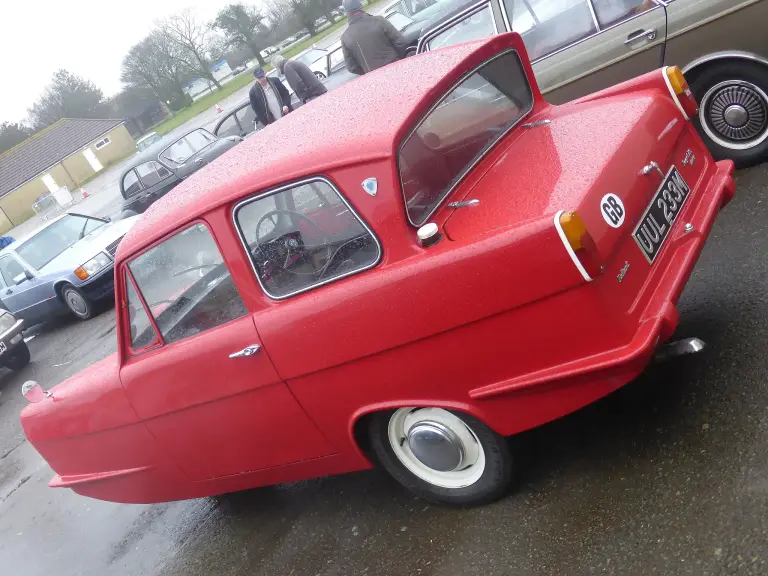
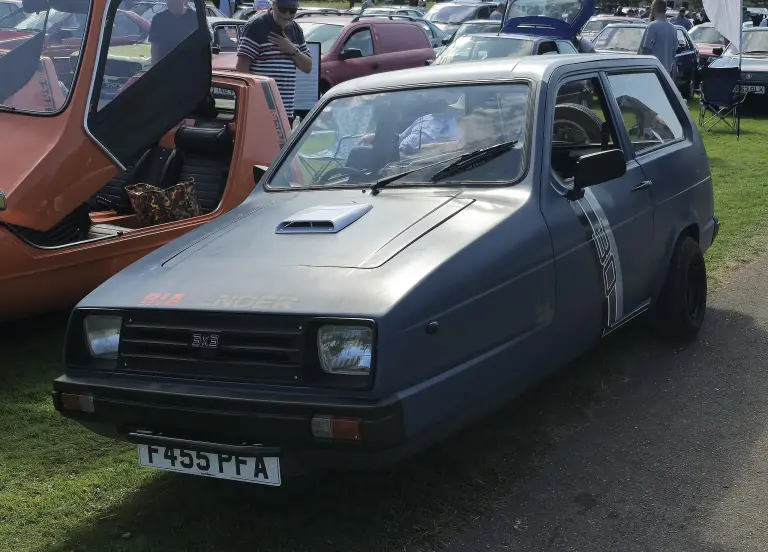
The Scimitar was built on the chassis of the Reliant Sabre, and the same factory made the three-wheeled Reliant Regal and the Reliant Kitten. More cars are in the Reliant collection.
Video: Scimitar
Video on YouTube.
Sources
- Reliant Scimitar, English Wikipedia: history, engines, production, models