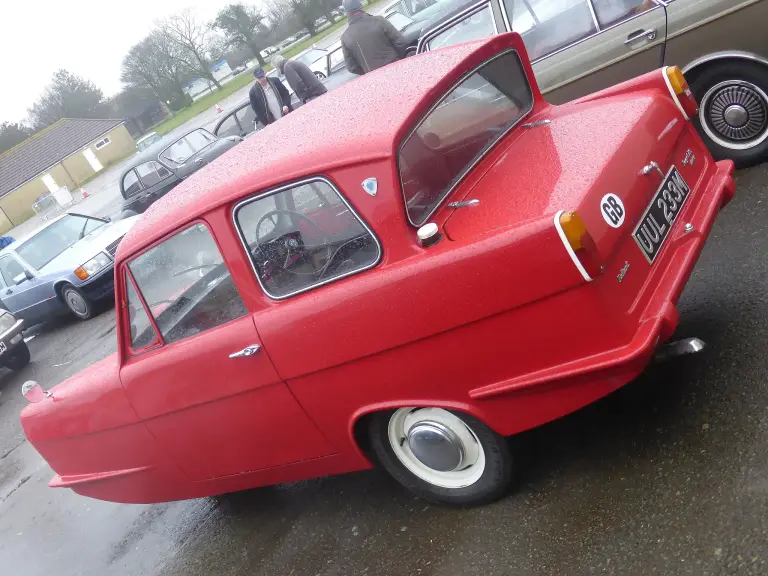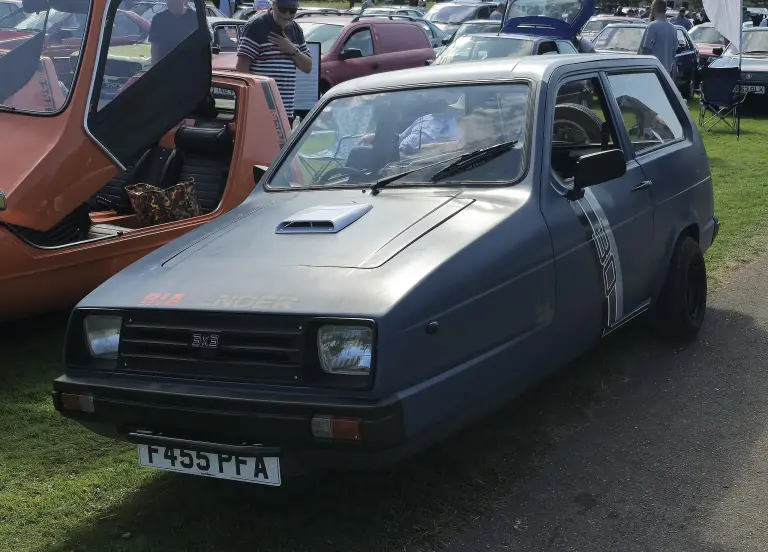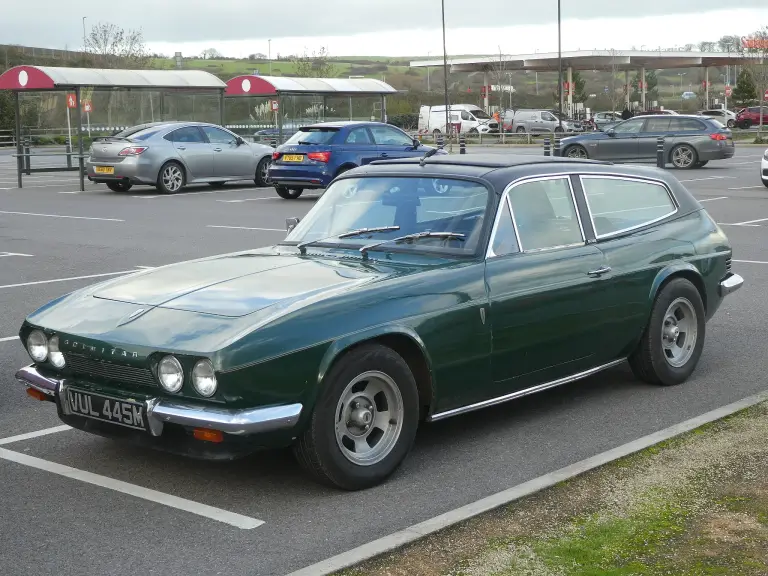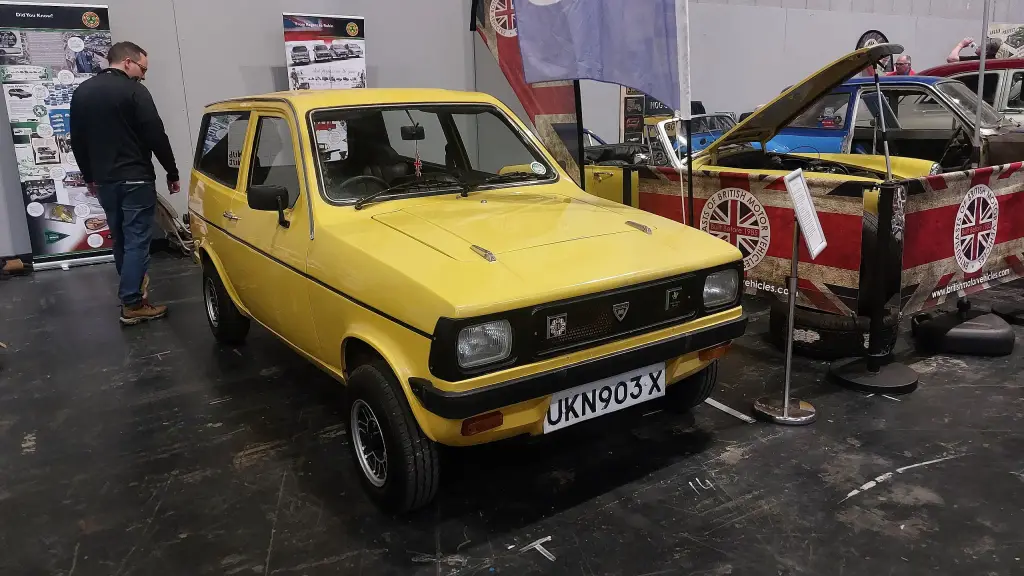
The Reliant Kitten was a small four-wheeled economy car manufactured from 1975 to 1982 in saloon, van and estate variants by the Reliant Motor Company in Tamworth, England. It was Reliant’s second attempt at selling into the small-car market after the 1960s Rebel, and it was the first production car to use the company’s 850 cc engine.
Reliant Kitten at a glance
| Production | 1975–1982, Tamworth |
|---|---|
| Bodies | saloon, estate, van |
| Design | based on the Reliant Robin, styled by Ogle Design |
| Engine | 848 cc four-cylinder, 40 hp (30 kW) |
| Gearbox | four-speed |
| Front suspension | Reliant-designed double wishbone |
| Rear suspension | leaf springs and a solid axle, as on the Robin |
| Kitten DL | October 1976, with a higher trim level |
| Van | December 1977 |
| Built | 4,551 |
| Successor | Reliant Fox, 1983 |
The article follows the English Wikipedia page on the Kitten. Based on one source.
History of the Reliant Kitten
A four-wheeled Robin
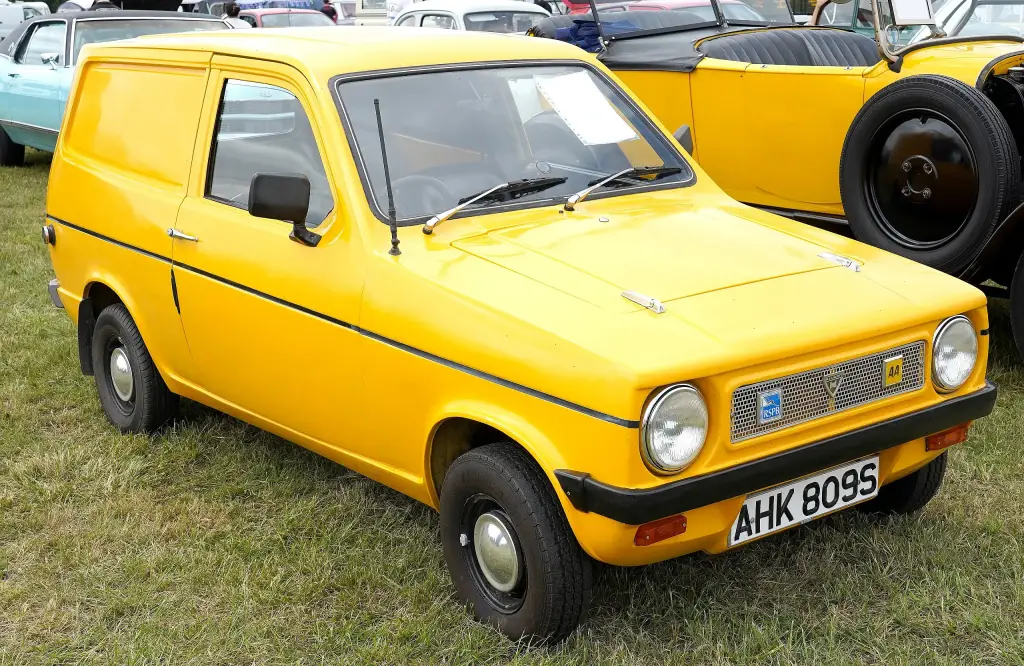
The Kitten was Reliant’s second attempt to sell into the general small-car market; the first had been the Reliant Rebel of the 1960s. For the new car Reliant told Ogle Design to keep as much of the Robin as possible, to keep production costs down through parts sharing, because the company knew sales would be lower than those of the three-wheeler. The chassis from the mid-section backwards is essentially that of the Robin, with leaf springs and a solid rear axle; from the middle forwards the car is significantly different, with the engine moved forward and a Reliant-designed, Lotus-inspired double wishbone front suspension. Moving the engine forward also gave more room for the driver and front passenger than in the three-wheeled cars.
The 850 cc engine
The Kitten was originally going to use the 750 cc engine then fitted to the Robin, but after driving prototypes Reliant decided that its 32 hp (24 kW) was not acceptable. Engineers found that by changing the crank and rods the 750 cc unit could become an 850 cc engine without changing the liners or pistons, which saved production costs again. The new engine developed 40 hp (30 kW) and could also be used in the Robin as an upgrade.
Launch and the DL
Prototypes were shown to the public in 1974 and were criticised for looking like a “4 wheeled Robin”, so the front end was quickly redesigned: round headlights gave way to square Lucas lamps shared with the Austin Allegro, with a black light panel and black bumpers front and rear. That earlier nose was later reused on the van, because 7-inch round headlamps were significantly cheaper than the square Lucas items. The Kitten launched in 1975 as a saloon and estate with a large range of optional extras and a choice of black or tan interiors, and it was one of the first small UK cars sold as standard with radial tyres.
In October 1976 a de luxe version, the Kitten DL, was announced. It brought revised springs and dampers and a different anti-roll bar, but was mainly an interior package: reclining and tilting seats in brown or black cloth, stronger doors with chrome interior handles, vinyl door cards with map pockets, a parcel shelf, volt meter and oil pressure gauges, a radio with twin speakers, Gemini alloy wheels, extra carpets and fog lights. Reliant claimed the DL was the first UK small car with a rear wiper as standard, something journalists compared with its bigger brother, the Scimitar GTE.
The van and the end
On 1 December 1977 a van version was announced. It shared the estate’s profile but used the prototype nose with 7-inch Lucas round headlamps, and blank panels replaced the windows behind the B-pillar. The black vinyl interior could be ordered with a rear bench seat that folded flat, and the van came with or without a front passenger seat: with the seat the load volume was 43 cu ft (1,200 litres), without it 53 cu ft (1,500 litres). Many vans ended up with windows fitted, because it was cheaper to buy one than an estate.
After production problems with the Robin cut sales and staff, Reliant closed the Kitten line and concentrated on the Robin, so from 1978 the Kitten became a special-order vehicle built by taking staff off the Robin line. In 1982, after 4,551 Kittens had been built, the last one left the line; a small number had been built in left-hand drive for export. The Kitten was not replaced by a new car, but the Reliant Fox, a four-wheeled pickup with similar mechanicals, went into production in 1983. Some Kittens were still sold in 1983 and 1984 as dealer-built kits using the Fox’s 12-inch wheels and Q registration plates. The whole production assembly was sold to the Indian firm Sipani Automobiles, where production ran until the mid-1990s.
Design and features
- Robin-based package: the rear half of the chassis, the axle and much of the body design came from the three-wheeler.
- First 850 cc Reliant: the new engine made 40 hp and later became a Robin upgrade.
- Four wheels and a boot: the saloon and estate offered space the three-wheelers could not.
- Well equipped for its class: radial tyres as standard, and a rear wiper on the DL.
Reliant Kitten versions
- Kitten saloon (1975–1982): the standard two-door car.
- Kitten estate (1975–1982): with a tailgate and rear side windows.
- Kitten DL (from October 1976): the de luxe trim with a better interior and extra instruments.
- Kitten van (from December 1977): estate profile with the round-headlamp nose and blank rear panels.
- Dealer-built kits (1983–1984): cars assembled from remaining parts, on Fox 12-inch wheels.
The Kitten sat alongside the three-wheeled Reliant Robin and the earlier Reliant Rebel, and its bigger stablemate was the Reliant Scimitar. More cars are in the Reliant collection.
Video: Reliant Kitten Bike Engine
Video on YouTube.
Sources
- Reliant Kitten, English Wikipedia: history, engine, bodies, production total