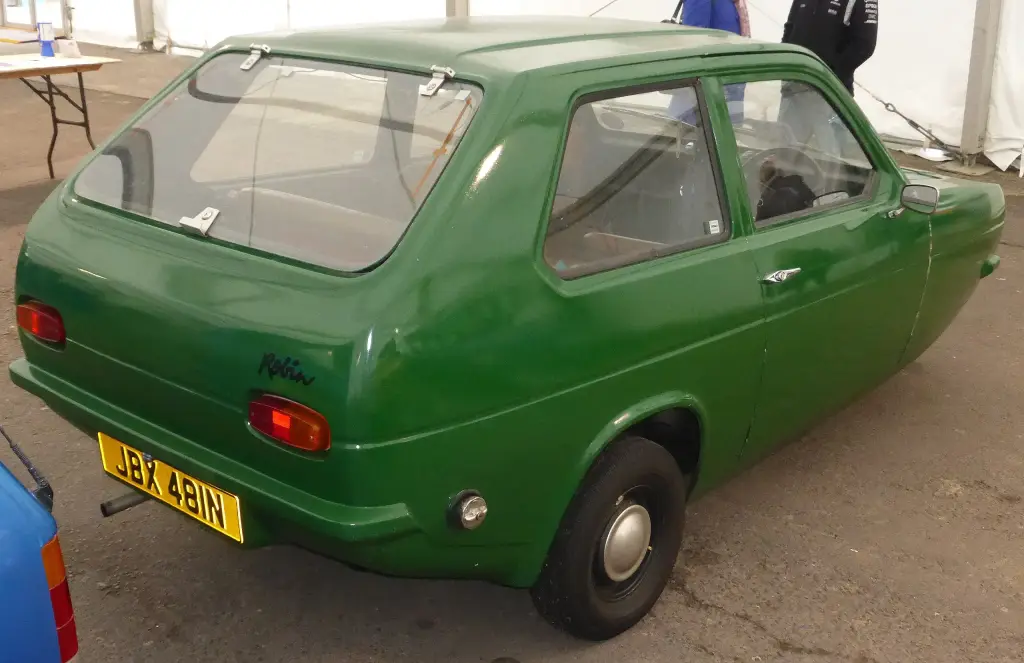
The Reliant Robin is a small three-wheeled car produced by the Reliant Motor Company in Tamworth, England. It was offered in several versions over a period of about thirty years, and it is the second-most popular fibreglass car in history after the Chevrolet Corvette.
Reliant Robin at a glance
| Production | 1973–2001, Tamworth |
|---|---|
| Bodies | saloon, estate, van, hatchback |
| Mk 1 | from October 1973, 750 cc then 850 cc |
| Mk 2 | from 1989 |
| Mk 3 | from 1999 |
| Engine | 750 cc and 850 cc four-cylinder |
| Top speed | 85 mph (137 km/h) |
| Acceleration | 0–60 mph in 14 seconds |
| Economy | up to 70 mpg |
| Licence | under 450 kg, counted as a tricycle |
| Greek production | MEBEA, 1974–1978 |
The article follows the English Wikipedia page on the Robin. Based on one source.
History of the Reliant Robin
Mk 1
The Robin was first manufactured in October 1973 as a direct replacement for the Reliant Regal. These models had a 750 cc engine, but in 1975 the car gained a number of improvements including an engine boost to 850 cc. The Robin was well received in the 1970s because of the good work of Ogle Design, who had previously designed the Bond Bug and the Reliant Scimitar, and because of its affordable price: 70 and 85 mph were possible, and orders increased with the fuel crisis of the decade. The final original version rolled off the production line in 1982, and after a number of limited editions, including the GBS and the Jubilee, it was replaced by the restyled Reliant Rialto designed by IAD. The Robin was also produced under licence in Greece by MEBEA between 1974 and 1978.
Mk 2
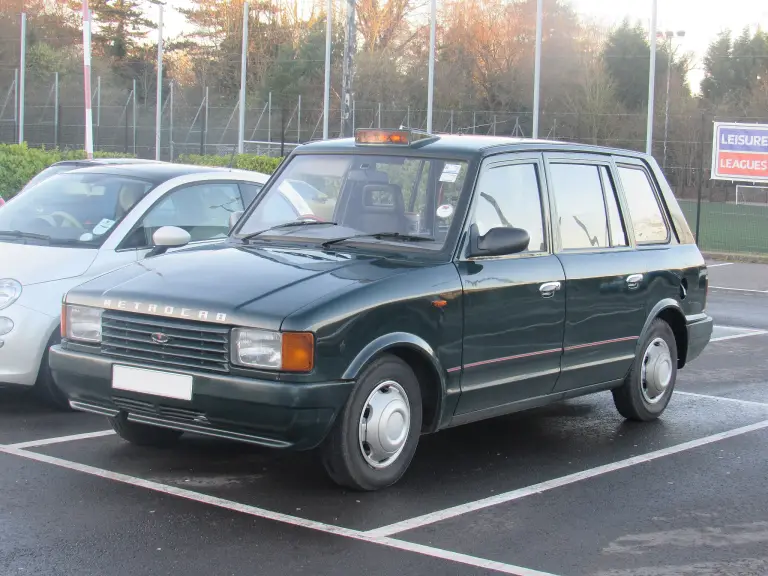
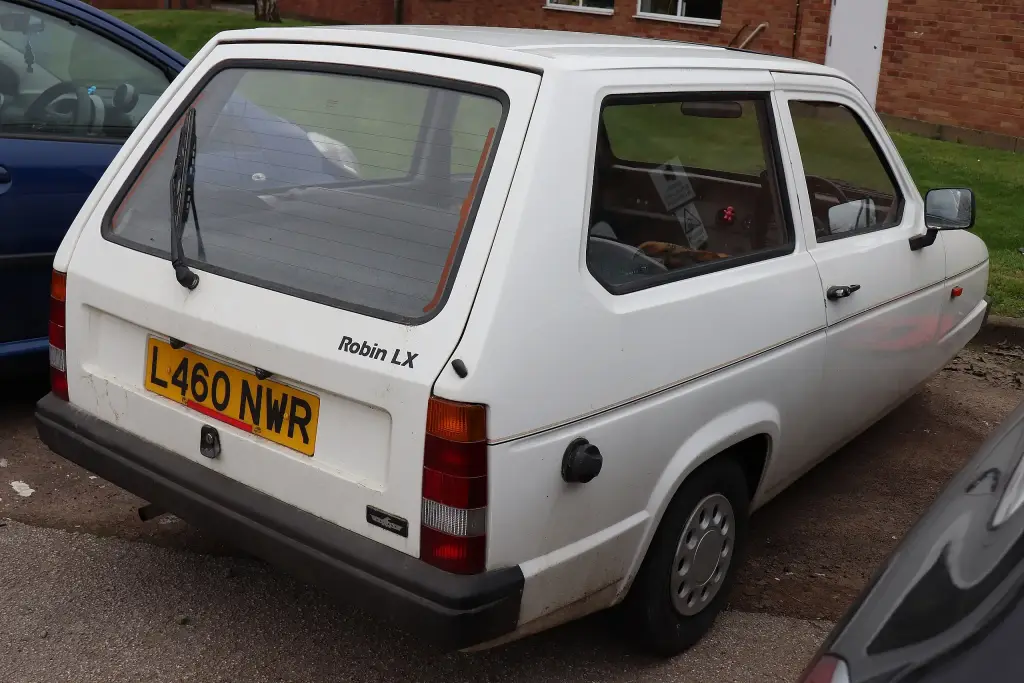
In 1989 Reliant revived the Robin name with a new and totally revamped car: a new fibreglass body with a hatchback, later joined by an estate and a van. The Rialto continued in production alongside the new Robin until 1996 as a cheaper model in saloon, estate and van form. Later in production the Robin received new 12-inch wheels, improved brakes taken from the original Mini and an improved interior with new dials and trim. New models joined the range with the LX, SLX, BRG and Royale names; the Royale and BRG were top of the range and cost over £9,000. New colours such as metallic silver, British racing green, royal blue and NightFire red were used, along with retro-style optional extras such as Minilite alloy wheels and Jaguar-style seat patterns, which then became available on all Robin models.
Mk 3 and the Robin 65
The Robin was redesigned in 1999, with the design by Andy Plumb, chief designer at Reliant at the time. This final version was launched with the biggest changes since the original, with completely new panels and Vauxhall Corsa front lamps, and it was the first Robin designed with the use of a computer. An electric version, a diesel version and a pickup were planned but never made; a hatchback van was manufactured.
In 2000 it was announced that the final Reliant Robin would be built after 65 limited editions had been made. The “Reliant Robin 65” had a very high specification: gold metallic paint, red and grey leather seats, red carpets, walnut dashboards, white dials, Minilite alloy wheels, premium stereo systems, electronic ignition and gold plaques on the dashboard, each individually numbered and bearing the original owner’s engraved name. The price was £10,000, and the last Reliant Robin produced was given away by The Sun newspaper in a Valentine’s Day competition in 2001.
BN-1 and BN-2
Manufacturing of the Robin resumed under licence by B&N Plastics in July 2001. The firm was allowed to produce 250 cars a year but was stalled by problems and production faults, and it ran into financial trouble after building only about 40 complete cars up to October 2002. The BN-1 Robin was based on the Robin 65 and had all the expensive extras with a more modern feature set, a completely redesigned dashboard and interior in black, integrated fibreglass door-hinge skims and a new whole-body fabrication process that reduced weight; the revised car was reapproved for sale in the UK. The BN-2 was a higher specification model with better interior materials, a custom metallic paint finish, a radio-CD and front electric windows, a first for the Robin.
How it drove and who could drive it
The single wheel at the front does the steering, while the engine, also at the front, drives the rear axle. The Robin was meant to be economical and predictable transport: the 850 cc engine gave acceleration from 0 to 60 mph in 14 seconds, a top speed of 85 mph and economy of up to 70 mpg, while the later Mk 3 was quoted at 60 to 100 mpg. Because it was a three-wheeler with an official mass below 450 kg (992 lb), the Robin could traditionally be driven by holders of a B1 category licence and was registered and taxed at motorcycle rates, a saving of £55 a year over a conventional car. Up to 2001 the B1 entitlement came with a category A motorcycle test, which led to the common misconception that a motorcycle licence was all that was needed. From 29 December 2012, in line with European Union law, tricycles such as the Robin were classified under the category A motorcycle licence instead.
Design and features
- Three wheels, low weight: below 450 kg it counted as a tricycle for licensing and taxation.
- Fibreglass body: cheap to build and rust-free, a Reliant speciality.
- Economy: up to 70 mpg from the 850 cc engine, and more in the Mk 3.
- Long life: three generations and about thirty years on the market.
Reliant Robin versions
- Mk 1 (1973–1982): 750 cc, then 850 cc, with the GBS and Jubilee limited editions.
- Mk 2 (1989–1999): new hatchback body, later estate and van, with LX, SLX, BRG and Royale models.
- Mk 3 (1999–2001): new panels and Vauxhall Corsa headlamps.
- Robin 65 (2000): 65 individually numbered cars with gold paint and leather.
- BN-1 and BN-2 (2001–2002): licence-built cars by B&N Plastics.
- Greek-built Robins: assembled by MEBEA from 1974 to 1978.
The Robin replaced the Reliant Regal and was itself restyled as the Reliant Rialto; it shared its engine with the Reliant Kitten. More cars are in the Reliant collection.
Video: Rolling a Reliant Robin | Top Gear | BBC
Video on YouTube.
Sources
- Reliant Robin, English Wikipedia: history, models, specifications, licensing