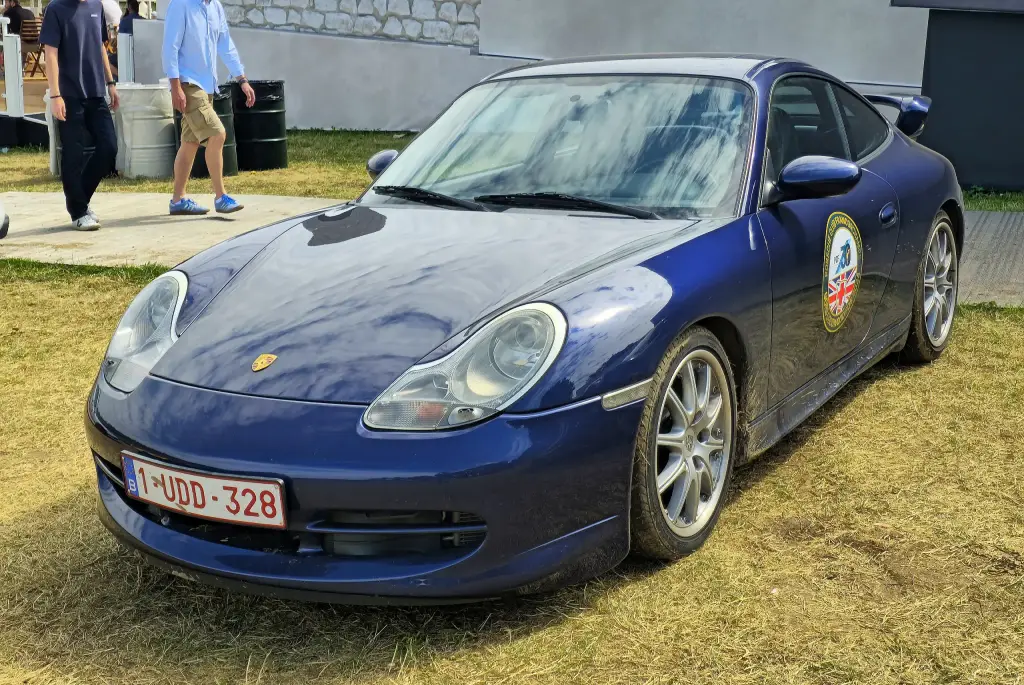
The Porsche 996 is the fifth generation of the 911, made from 1997 until 2006. It replaced the 993 in 2004, though the Turbo S, GT2 and GT3 carried on to 2006. It shared little with its predecessor: the first all-new platform since the original 911 and a new water-cooled engine.
Porsche 996 at a glance
| Maker | Porsche, Stuttgart |
|---|---|
| Production | 1997–2006 |
| Design | Pinky Lai under Harm Lagaay |
| Engine | 3.4-litre water-cooled flat-six, 300 PS |
| From 2002 | 3.6-litre M96, 15 PS more in naturally aspirated form |
| Turbo (2000) | 3.6-litre twin-turbo, 420 PS, all-wheel drive |
| Turbo S (2005) | X50 package as standard, ceramic brakes standard |
| Gearbox | six-speed manual |
| Drag coefficient | 0.30 |
| Size | 185 mm longer and 40 mm wider than the 993, 45% stiffer, 50 kg lighter |
| Headlamps | “fried egg” units, replaced in the 2002 facelift |
History of the Porsche 996
In the 1990s Porsche was in financial trouble and there were rumours of a takeover. The air-cooled flat-six was reaching the limits of its potential, as the 993 showed, and stricter emissions rules worldwide forced a replacement. To overhaul production at Zuffenhausen, Porsche brought in consultants from Toyota, adopting mass-production techniques, and it shared development of the new 911 with the entry-level Boxster to save around 30% of the cost. The front suspension, various interior parts and the engine were common to both, enlarged for the 911, while the multi-link rear suspension came from the 993.
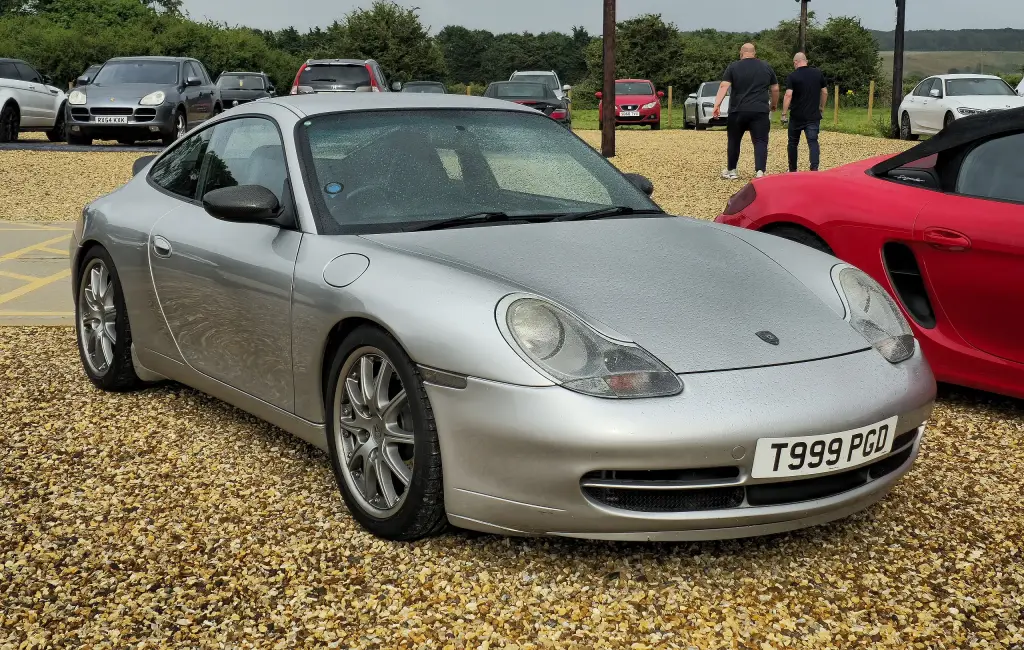
The 996 was designed by Pinky Lai under design chief Harm Lagaay and was the first 911 to be completely redesigned. Only the front suspension, the rear multi-link suspension and the six-speed manual survived in revised form from the 993. The new body had a drag coefficient of 0.30 after hours in the wind tunnel and was 185 mm longer and 40 mm wider than before, 45% stiffer thanks to high-strength steel, and 50 kg lighter despite extra radiators and coolant. The most obvious visual change was the “fried egg” headlamp covers named after their amber indicators, replacing the classic bug-eye lamps; the shape could be traced back to the 1997 911 GT1 racer.
At first the 996 came as a rear-wheel-drive coupé or cabriolet with a 3.4-litre flat-six of 300 PS. The front end looked much like the cheaper Boxster’s, and after Carrera owners complained that their premium cars resembled a lower-priced model, Porsche redesigned the headlamps in 2002 to look like the Turbo’s. In 2000 the Turbo arrived with all-wheel drive and a 3.6-litre twin-turbocharged, intercooled flat-six of 420 PS, reaching 97 km/h in 4.2 seconds; the X50 option of 2002 added bigger turbos and intercoolers and revised software for 450 PS, and the 2005 Turbo S made X50 and ceramic composite brakes standard.
The base Carrera went to 305 PS in 2000, though it also gained weight, reaching 1,370 kg. The 2002 facelift raised the M96 engine to 3.6 litres across the range for 15 PS more, and brought the Targa with its sliding glass roof and rear glass hatch and the wide-bodied Carrera 4S, which shared the Turbo’s brakes and suspension.
Design and features
- Water-cooled engine: the biggest break with 911 tradition, needed for emissions and four-valve heads.
- Shared platform: developed with the Boxster to cut costs and allow interchangeable parts.
- Fried-egg headlamps: the controversial face of the early cars, replaced by the 2002 facelift.
- Turbo and GT cars: a 420 PS all-wheel-drive Turbo, plus the GT2 and GT3.
Porsche 996 versions
- Carrera 3.4 (1997): 300 PS, coupé or cabriolet.
- Turbo (2000): 3.6-litre twin-turbo, 420 PS, all-wheel drive.
- GT3 and GT2: high-performance derivatives that ran to 2006.
- Targa (2002): sliding glass roof and rear hatch.
- Carrera 4S (2002): wide Turbo body with Turbo brakes and suspension.
- Turbo S (2005): X50 engine and ceramic brakes as standard.
The 996 replaced the Porsche 993 and was followed by the Porsche 997; it shares its front end and engine family with the Porsche Boxster. More cars are in the Porsche collection.
Video: PS Profis – Porsche 996
Video by PS Profis on YouTube.
Sources
- Porsche 911 (996), English Wikipedia: development, engines, facelift, variants