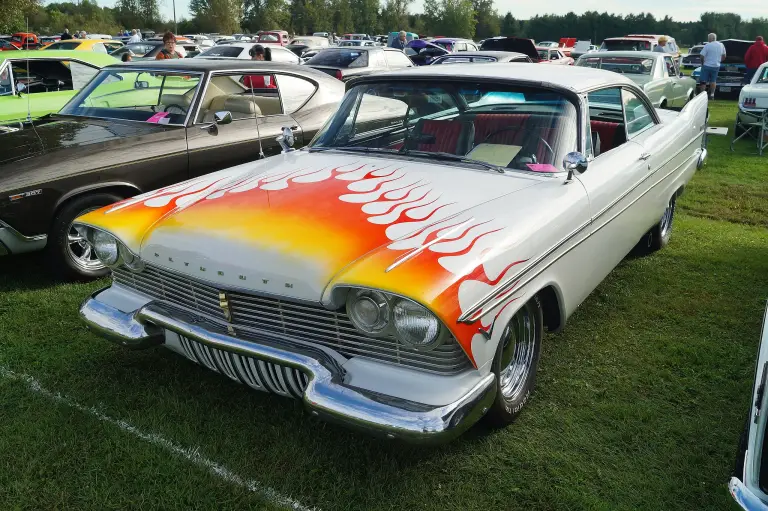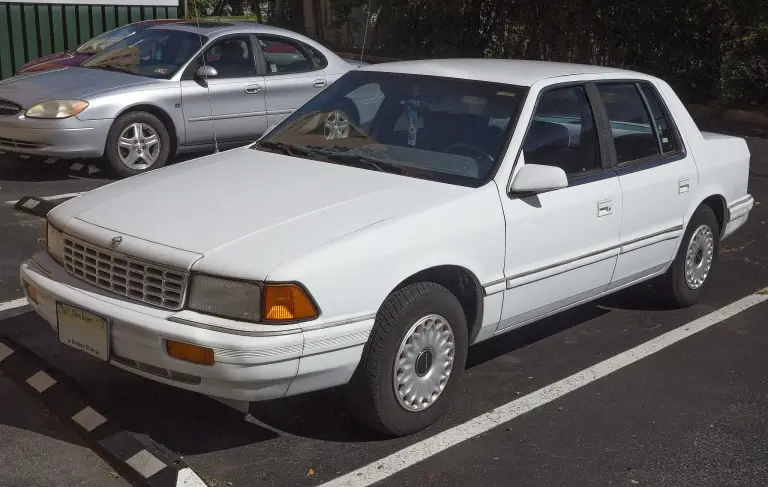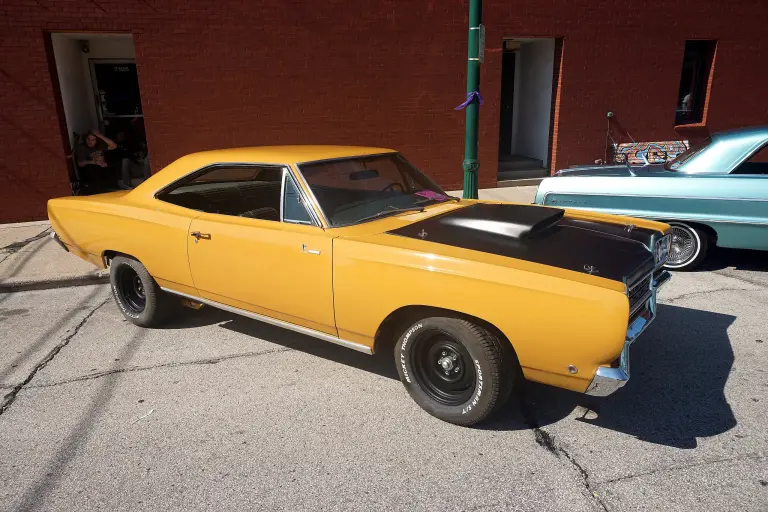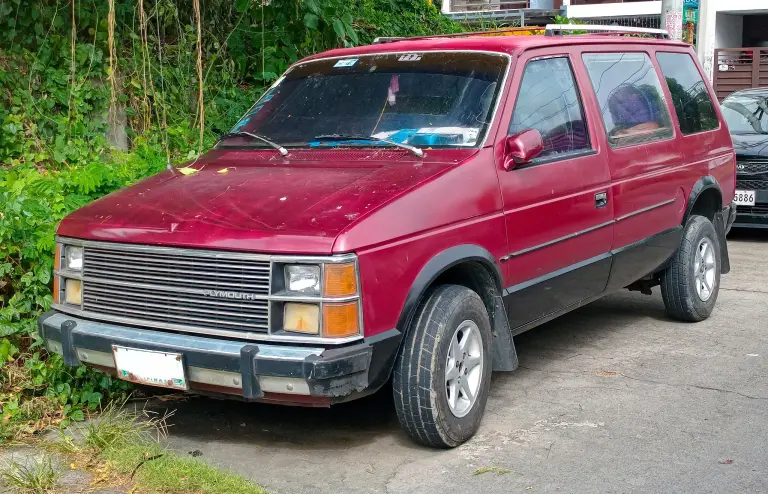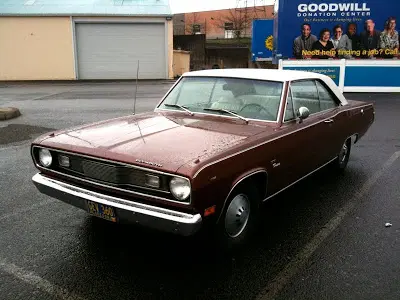
The Plymouth Valiant, first seen in 1959 as simply the Valiant, was marketed by Plymouth in the United States from the 1960 to 1976 model years. It was created to give Chrysler an entry in the compact market of the late 1950s and became known for its durability; Road & Track called it “one of the best all-around domestic cars”.
Plymouth Valiant at a glance
| Maker | Plymouth (Chrysler Corporation) |
|---|---|
| US model years | 1960–1976 |
| Class | compact car |
| First shown | London Motor Show, 26 October 1959 |
| First generation | 1960–1962 |
| Engine | Chrysler slant-six, cylinders canted 30 degrees |
| Aluminium content, 1960 | up to 60 lb (27 kg) |
| Notable first | the alternator |
| Built in | USA, Canada, Mexico, Argentina, Brazil, Australia, New Zealand, South Africa, Finland, Sweden, Switzerland |
| Replaced by | Plymouth Volaré, 1976 |
History of the Plymouth Valiant
Origins
In May 1957 Chrysler president Lester Lum “Tex” Colbert set up a committee to develop a competitor for the growing compact market, which included the Volkswagen Beetle, the new Rambler and upcoming cars from GM, Ford and Studebaker. Design chief Virgil Exner created a car smaller and lighter than a full-size model without giving up passenger or luggage space. It was first named Falcon, after Exner’s 1955 Chrysler Falcon concept, and renamed Valiant after Henry Ford II asked to use Falcon for his own car. The Valiant debuted at the 44th British International Motor Show in London on 26 October 1959, was introduced as a 1960 model and was marketed as a brand of its own with the line “Nobody’s kid brother, this one stands on its own four tires”. For 1961 it was classified as a Plymouth model; the 1961–62 Dodge Lancer was essentially a rebadged Valiant, and for 1962 the Valiant returned without Plymouth branding. From 1964 it was sold in the United States only as a Plymouth Valiant.
Design
The Valiant was less radical in layout than the rear-engined Chevrolet Corvair but more daring in appearance than the Falcon and the Studebaker Lark, continuing Exner’s “Forward Look” with sleek lines that flowed forward in a dart or wedge shape. Its flush sides, carried over from Chrysler’s Ghia-built D’Elegance and Adventure concepts, gave extra interior room. Canted tailfins with cat’s-eye taillamps and a simulated Continental spare tyre pressed into the boot lid tied it visually to the Imperial and the 300F.
The slant-six
The Valiant introduced an all-new overhead-valve six whose cylinders were canted 30 degrees to the right, allowing a lower bonnet line. The water pump moved from the front to the side to shorten the engine, and a long-branch individual-runner intake manifold benefited from Chrysler’s work on tuned intakes. The slant-six produced more power and better economy than similar American economy sixes and quickly earned a reputation for reliability; project engineer Willem Weertman and his team designed a simple, robust engine with a four-main forged crankshaft and a simplified mechanical valve train. Block and head castings were unusually thick because both were meant to be cast in either iron or aluminium with the same tooling, and over 50,000 die-cast aluminium-block 225 cu in engines were sold as extra-cost options between late 1961 and early 1963.
The 1960 Valiant showed off Chrysler’s aluminium die-casting: it contained as much as 60 lb of aluminium in structural and decorative parts, including the oil pump, water pump, alternator housing (the first car to have an alternator), Hyper Pak and standard intake manifolds and the Torqueflite A-904 automatic transmission case, roughly 60 percent lighter than the equivalent cast-iron parts.
Design and features
- Slant-six: a canted six that gave a lower bonnet and a reputation for long life.
- Aluminium parts: up to 60 lb of the 1960 car was aluminium, including the first alternator housing.
- Forward Look styling: flush sides, canted fins and cat’s-eye lamps.
- Worldwide reach: built and sold far beyond North America, from Argentina to Finland.
Plymouth Valiant versions
- Valiant (1960–1962): the first generation, sold at first as a brand of its own.
- Dodge Lancer (1961–1962): the rebadged Valiant with different trim and styling.
- Valiant by Plymouth (from 1964): the US range sold clearly under the Plymouth name.
- Aluminium-block 225 (1961–1963): the extra-cost die-cast engine option.
The Valiant underpinned the Barracuda and the Duster, and it was replaced by the Volaré. More cars are in the Plymouth collection.
Video: My first car: 1971 Plymouth Valiant
Video by josiah currier on YouTube.
Sources
- Plymouth Valiant, English Wikipedia: origins, styling, slant-six, aluminium parts