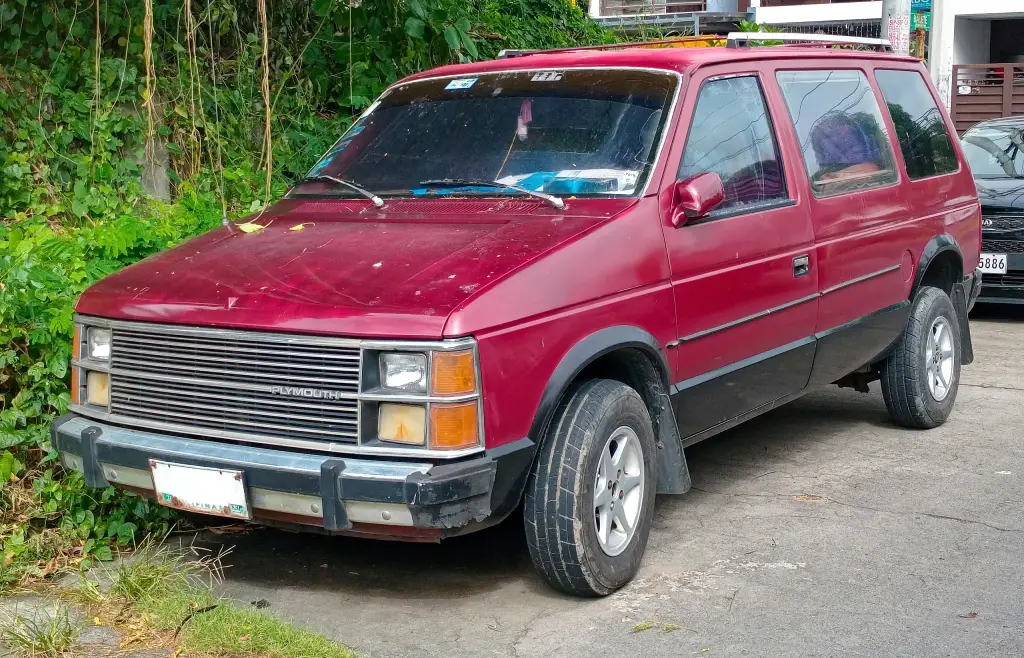
Plymouth Voyager is the nameplate Plymouth used for a range of vans sold from 1974 to 2000. The Voyager began as a full-size passenger van and later became one of the first minivans successfully marketed in North America.
Plymouth Voyager at a glance
| Maker | Plymouth (Chrysler Corporation) |
|---|---|
| Years | 1974–2000 |
| Full-size van | 1974–1983, counterpart of the Dodge Sportsman |
| Minivan | from 1984, counterpart of the Dodge Caravan |
| Extended model | Plymouth Grand Voyager, from 1987 |
| Seats, full-size | up to 15 depending on body length |
| Full-size series | PB100, PB200 and PB300 |
| Built at | Windsor; Saint Louis from 1987 to 2000; Pillette Road to 1983 |
| Luxury twin | Chrysler Town & Country, from 1990 |
| End | Plymouth brand closed during the 2000 model year |
History of the Plymouth Voyager
Full-size van (1974–1983)
For 1974 Plymouth introduced light trucks under its own brand for the first time since 1942, adding the Voyager full-size van and the Trail Duster sport utility. The Voyager was the Plymouth counterpart of the Dodge Sportsman van; unlike Dodge, Plymouth sold it only as a passenger van, with seating for up to 15 depending on body length, and the 18-inch longer Extended Body came from the Dodge MaxiWagon. It was offered in PB100, PB200 and PB300 series and, from 1976, in Voyager Custom and Voyager Sport versions to match the Dodge range. For 1977 the single-panel rear door, an option since 1975, became standard and the rear seat mountings were redesigned for easier removal.
For 1978 and 1979 the Voyager followed its Dodge twin through a two-year transition into a second generation. The 1978 cars brought structural changes, including a redesigned B-pillar on long-wheelbase models, wraparound rear corner windows on extended vans, and an all-new interior with a redesigned dashboard. For 1979 the bonnet line grew taller and longer, the grille larger and the headlamp clusters were redesigned, with four headlamps as standard. From 1981, when Dodge dropped the Sportsman name for the Ram Wagon, the Voyager kept the 1979 badging. The full-size van was discontinued after 1983 and the nameplate moved to the new minivan; with the Trail Duster gone after 1981, it was the last full-size truck Plymouth offered.
The minivan (1984–2000)
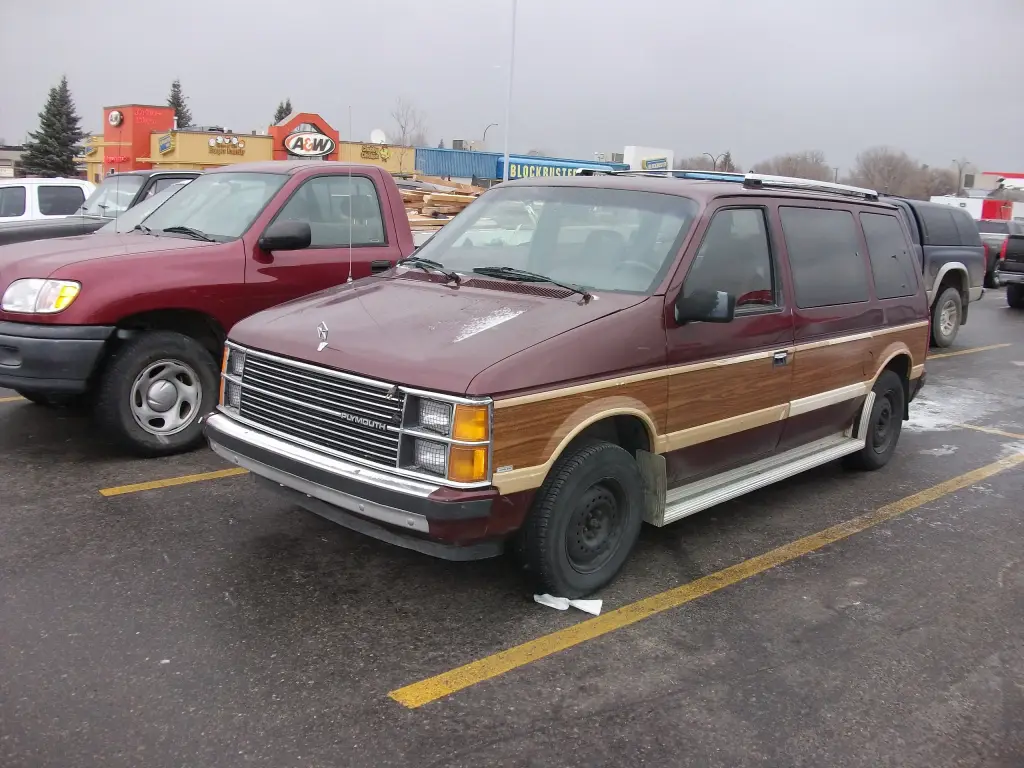
For 1984 the Voyager returned as a minivan, the Plymouth counterpart of the Dodge Caravan. Both grew out of early-1970s work on “garageable vans”, smaller people carriers with a lower roofline than a full-size van; Ford developed and then cancelled its own Carousel project, while Dodge Truck Engineering worked on a small van of its own before the project was shelved for lack of funds. The Voyager minivan was assembled at Windsor, Ontario, and from 1987 to 2000 also at Saint Louis Assembly in Fenton, Missouri. In 1987 the range was extended with the long-wheelbase Plymouth Grand Voyager, and in 1990 the luxury Chrysler Town & Country joined the family. Three generations of the minivan were sold before the Plymouth brand was closed during the 2000 model year. The Voyager name later returned on Chrysler-badged vans, including export-market Chrysler Voyagers from 1988 to 2016.
Design and features
- Two kinds of van: a full-size passenger van first, then a compact minivan.
- Minivan pioneer: the Plymouth version of the Dodge Caravan that created the class.
- Grand Voyager: the long-wheelbase version added in 1987.
- Family range: the same platform also gave Chrysler the Town & Country.
Plymouth Voyager versions
- Voyager full-size (1974–1983): the PB100, PB200 and PB300 passenger vans.
- Voyager Custom and Sport (1976–1983): the two trim levels added to match Dodge.
- Voyager minivan (1984–2000): the Plymouth Caravan twin.
- Grand Voyager (1987–2000): the extended-wheelbase minivan.
The Voyager was Plymouth’s family carrier, sold alongside the Reliant and later the Acclaim. More cars are in the Plymouth collection.
Sources
- Plymouth Voyager, English Wikipedia: full-size van, minivan history, production sites