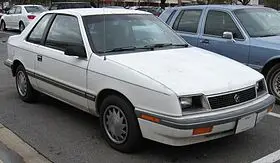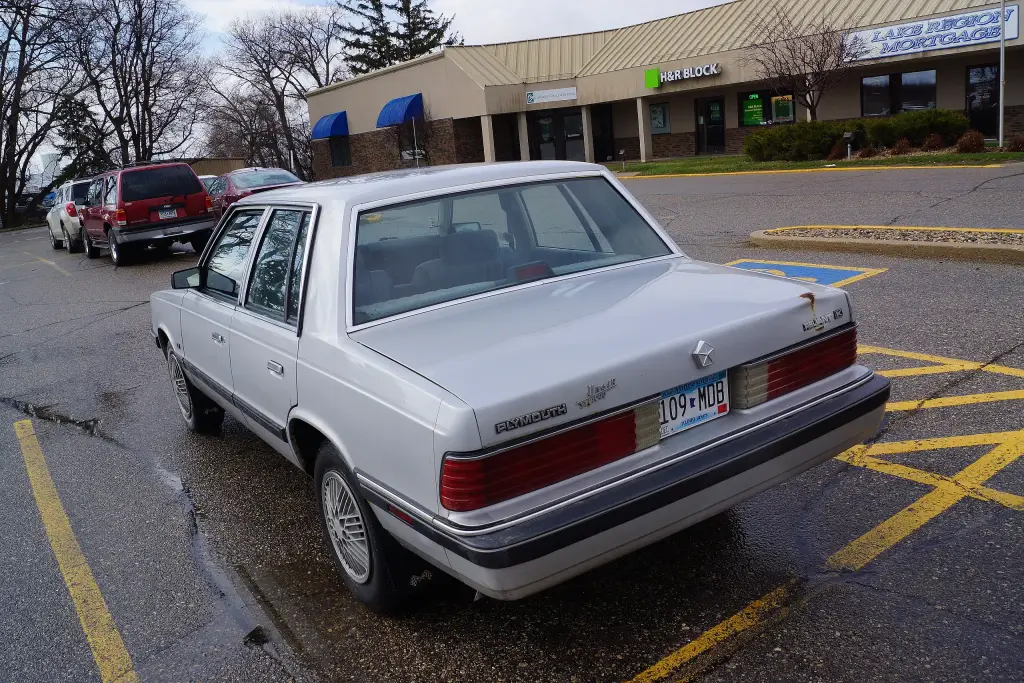
The Plymouth Reliant and the Dodge Aries were mid-size cars introduced for the 1981 model year as the first K-cars built and sold by Chrysler Corporation. The Reliant replaced the Plymouth Volare and, over nine years, about 1.1 million were built.
Plymouth Reliant at a glance
| Maker | Plymouth (Chrysler Corporation) |
|---|---|
| Model years | 1981–1989 |
| Class | mid-size, front-wheel drive |
| Bodies | two-door coupe, four-door sedan, four-door wagon |
| Trims | base, Custom and SE; wagons in Custom and SE only |
| Standard engine | 2.2 L SOHC four |
| Optional engine | 2.6 L Mitsubishi Silent Shaft four, with ‘HEMI’ badges in 1981 |
| Seating | six, on two bench seats with a column shifter |
| Built at | Newark, Delaware; Detroit; Toluca, Mexico |
| Award | Motor Trend Car of the Year 1981 |
| Production | about 1.1 million Reliants |
History of the Plymouth Reliant
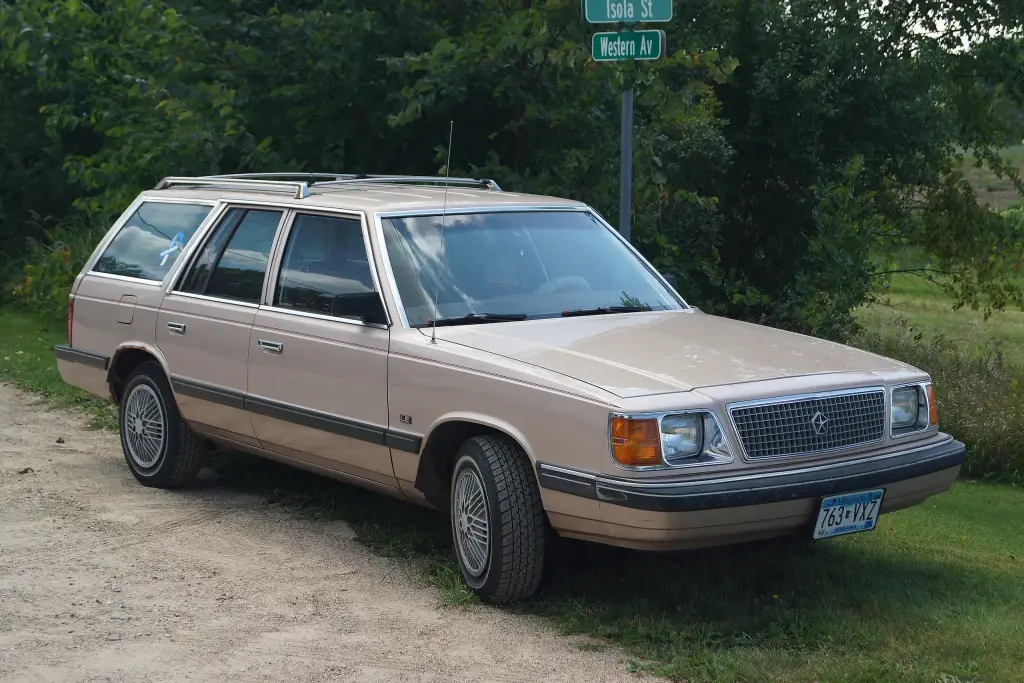
The Reliant and Aries were the smallest cars to offer the traditional American six-passenger, two-bench-seat layout with a column shifter, and Chrysler marketed the car as able to seat “six Americans”. They were powered by the then-new 2.2-litre SOHC four, with a 2.6-litre Mitsubishi “Silent Shaft” engine as an option; that engine had hemispherical combustion chambers, and every 1981 car ordered with it wore “HEMI” badges on the front wings. The Reliant came as a two-door coupe, a four-door sedan and a four-door wagon in base, Custom and SE trims, with wagons restricted to Custom and SE. After launch the cars were marketed as the “Reliant K” and “Aries K”.
The car that saved Chrysler
Chrysler was close to collapse at the end of the 1970s. Years of minimal spending on new platforms, a policy of building cars whether or not they had been ordered, unsold stock, rebates, new emissions and safety rules and the troubled launch of the Volare and Aspen had left the company short of money. The Dodge Omni and Plymouth Horizon of 1978, the first domestic front-wheel-drive subcompacts, arrived in a year when buyers wanted larger cars. The K-platform had been designed during 1978, but the company could not afford to put it into production; after Lee Iacocca became chairman he argued for a federal loan guarantee before Congress, and the bailout was approved once Chrysler had laid out its plans for the new front-wheel-drive platform. The first K-cars came off the line at Detroit’s Jefferson Avenue plant in late 1980.
The Reliant and Aries were downsized replacements for the six-passenger Volare and Aspen, which were themselves modernised versions of the Valiant and Dart. Using experience from the Omni and Horizon, the K-cars set out to be family-sized front-wheel-drive cars with four-cylinder engines, while keeping six-passenger seating on two benches. The Reliant and Aries were chosen together as Motor Trend’s Car of the Year for 1981; both sold over 150,000 units that year and the Reliant reached about 1.1 million over its nine-year run.
Design and features
- First K-car: the front-wheel-drive platform that underpinned a generation of Chryslers.
- Six seats: two benches and a column shifter in a compact front-drive package.
- Two engines: the 2.2-litre Chrysler four or the 2.6-litre Mitsubishi Silent Shaft.
- Three bodies: coupe, sedan and wagon, the last two in the better trims.
Plymouth Reliant versions
- Reliant base and Custom: the volume trims, in coupe, sedan and wagon form.
- Reliant SE: the top trim, also offered as a wagon.
- Dodge Aries: the same car with Dodge badges, sold as the Dart K in Mexico and the Michigan in Japan.
- Later K-cars: the platform went on to underpin the Reliant’s successors, including the Acclaim.
The Reliant replaced the Volare and was succeeded by the Acclaim, while the Horizon sat below it. More cars are in the Plymouth collection.
Sources
- Plymouth Reliant, English Wikipedia: engines, trims, company background, sales