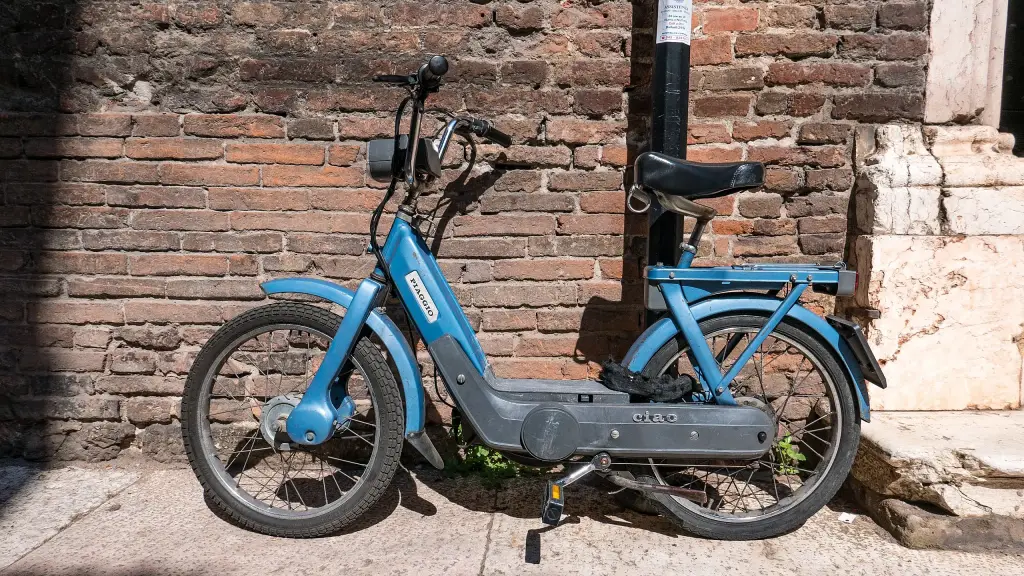
The Piaggio Ciao — ciao means “hi” or “bye” in Italian — is a family of mopeds produced by Piaggio from 1967 through 2006. It has a rigid rear and a leading-link front suspension, and its engine and drivetrain are cleanly enclosed like those of Piaggio’s scooters.
Piaggio Ciao at a glance
| Production | 1967–2006 |
|---|---|
| Type | moped |
| Rear suspension | rigid; some models with a sprung seat post |
| Front suspension | leading-link |
| Drive | belt, unlike the chain of most mopeds |
| Transmission | some models with an automatic continuously variable transmission |
| Brakes | drums front and rear |
| Electric system | magneto, no battery; a 6-volt battery only for the indicators |
| Fuel cap | on newer models a measuring cup for the 2% oil–petrol mixture |
| Canadian name | Vespa Ciao |
| Versions | SC, L, P, Px and Mix |
The article is based on a single source, the English Wikipedia page on the Ciao, and is shorter than usual for that reason.
History of the Piaggio Ciao
The Ciao was built for almost forty years with the same basic recipe: a pressed-steel frame, a small two-stroke engine and belt drive instead of a chain. The engine and drivetrain are enclosed as on Piaggio’s scooters. The rear is rigid, though some models have a sprung seat post, while the front uses a leading-link suspension. Braking is by drums at both ends. Power for the lamps, the horn and the ignition comes from a magneto, and there is no battery; only the models with indicator lights carried a 6-volt battery to make the blinkers work. On newer models the plastic fuel cap also serves as a measuring cup for the 2% oil and fuel mixture.
The five versions
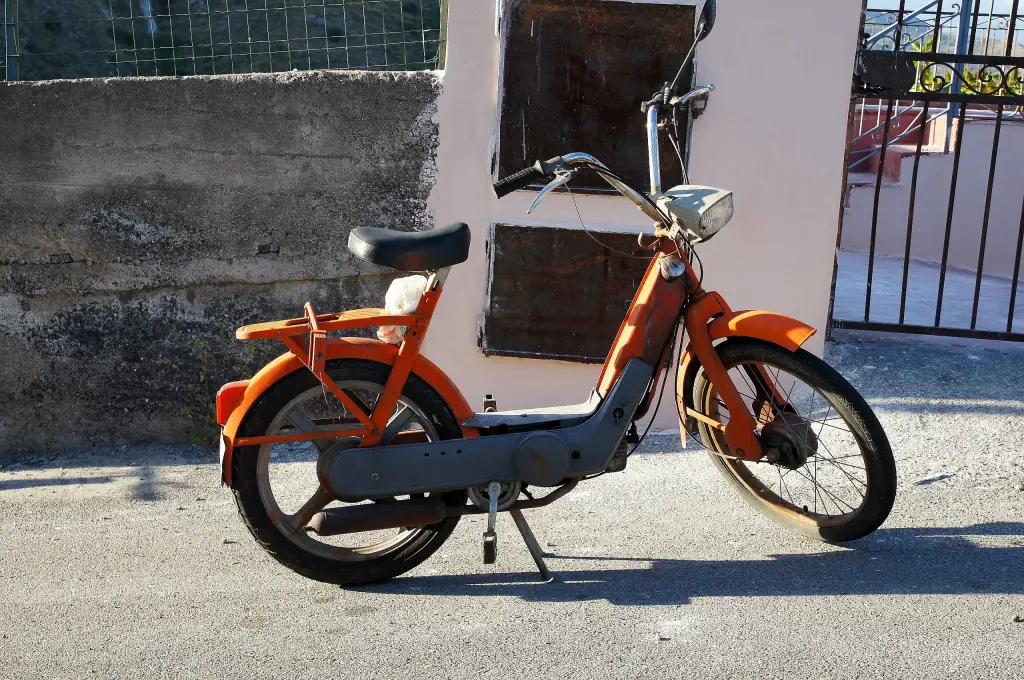
The Ciao was offered in several versions. The SC had a round saddle rack, a saddle with a suspension seat post, a light on the rear fender, racks that could not be removed and chrome fenders. The L had a square saddle rack, only semi-suspension, a light on the rear fender and removable racks. The P also had a square saddle rack and semi-suspension, but its light was on the rear rack and the racks were removable. The Px had a round saddle rack, a saddle with a suspension seat post, the light on the rear rack and luggage racks that could not be removed. The Mix had the same round saddle rack and suspension post as the Px, with the light on the rear rack, fixed racks and an oil tank built into the luggage rack.
Vespa Ciao and the family
In some countries the Ciao was sold under another name: in Canada in the 1970s it was branded as the Vespa Ciao. Piaggio also built a group of stablemates around it: the Si, with a telescopic front fork; the Grillo, with 14-inch wheels; the Boxer, which was the Si’s ancestor; the Boss, with a kick starter, a mass button and a speedometer; and the Bravo, with a telescopic front fork and a rear shock absorber.
Design and features
- Belt drive: quiet and clean, unlike the chain of most mopeds of the period.
- Enclosed engine: the drivetrain is covered as on a scooter.
- No battery: a magneto feeds the lights, the horn and the ignition.
- Measuring fuel cap: the cap doubles as a cup for the 2% oil mixture.
- Many small differences: racks, fenders, lights and seat posts changed between the SC, L, P, Px and Mix.
Piaggio Ciao versions
- Ciao SC: round saddle rack, suspension seat post, chrome fenders, fixed racks.
- Ciao L: square saddle rack, semi-suspension, removable racks.
- Ciao P: square saddle rack, light on the rear rack, removable racks.
- Ciao Px: round saddle rack, light on the rear rack, fixed racks.
- Ciao Mix: oil tank in the luggage rack.
- Vespa Ciao: the Canadian name of the same moped.
The Ciao was the starting point for the Si, the Boxer and the Bravo. More mopeds and scooters are in the Piaggio collection.
Video: First Summerfeeling | Piaggio Ciao Wheelies | Cops
Video by LimitRiderZ on YouTube.
Sources
- Piaggio Ciao, English Wikipedia: specification, versions, derivatives